Models and intelligence shifts

AI news and analysis for builders, operators, and investors

The model layer, major launches, labs, and practical capability shifts that change what builders and operators can do.

Latest stories

All AI coverage

13 stories
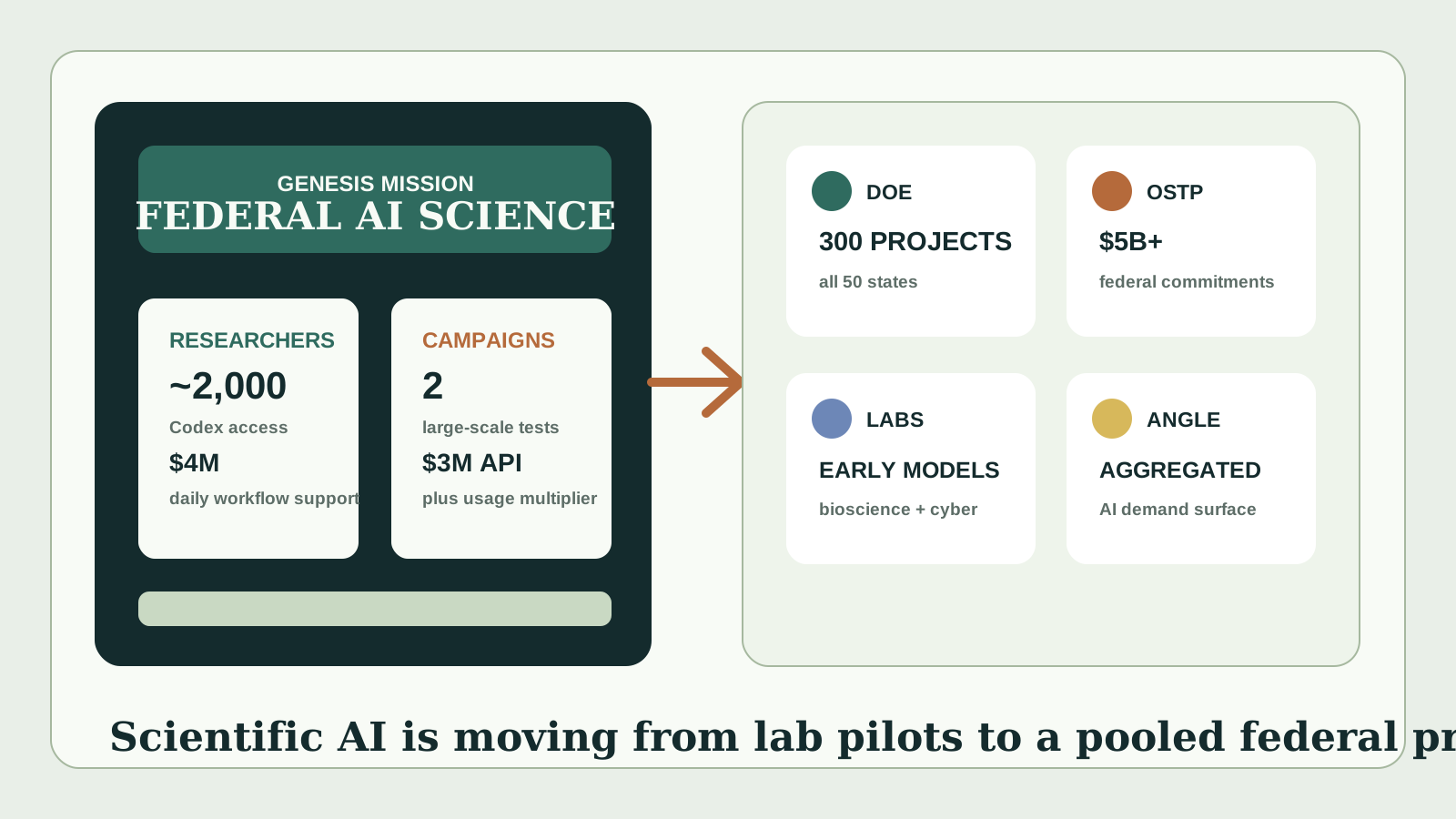
Read article: OpenAI’s Genesis Push Turns Scientific AI Into a Federal Demand-Aggregation LayerAIEditorial graphic showing OpenAI, the Department of Energy Genesis Mission, national laboratories, and university researchers linked through Codex access, API credits, scientific campaigns, and a shared procurement layer for frontier AI in science
AIJuly 22, 20264 min read

OpenAI’s Genesis Push Turns Scientific AI Into a Federal Demand-Aggregation Layer

OpenAI’s July 22, 2026 Genesis announcement clears the publish bar because it is not just another “AI for science” partnership page. The stronger AI signal is that scientific model access is being organized as a federally coordinated demand layer: pooled researchers, shared credits, focused campaigns, and national-lab workflows packaged so frontier AI can be bought, tested, and operationalized at program scale rather than lab by lab.

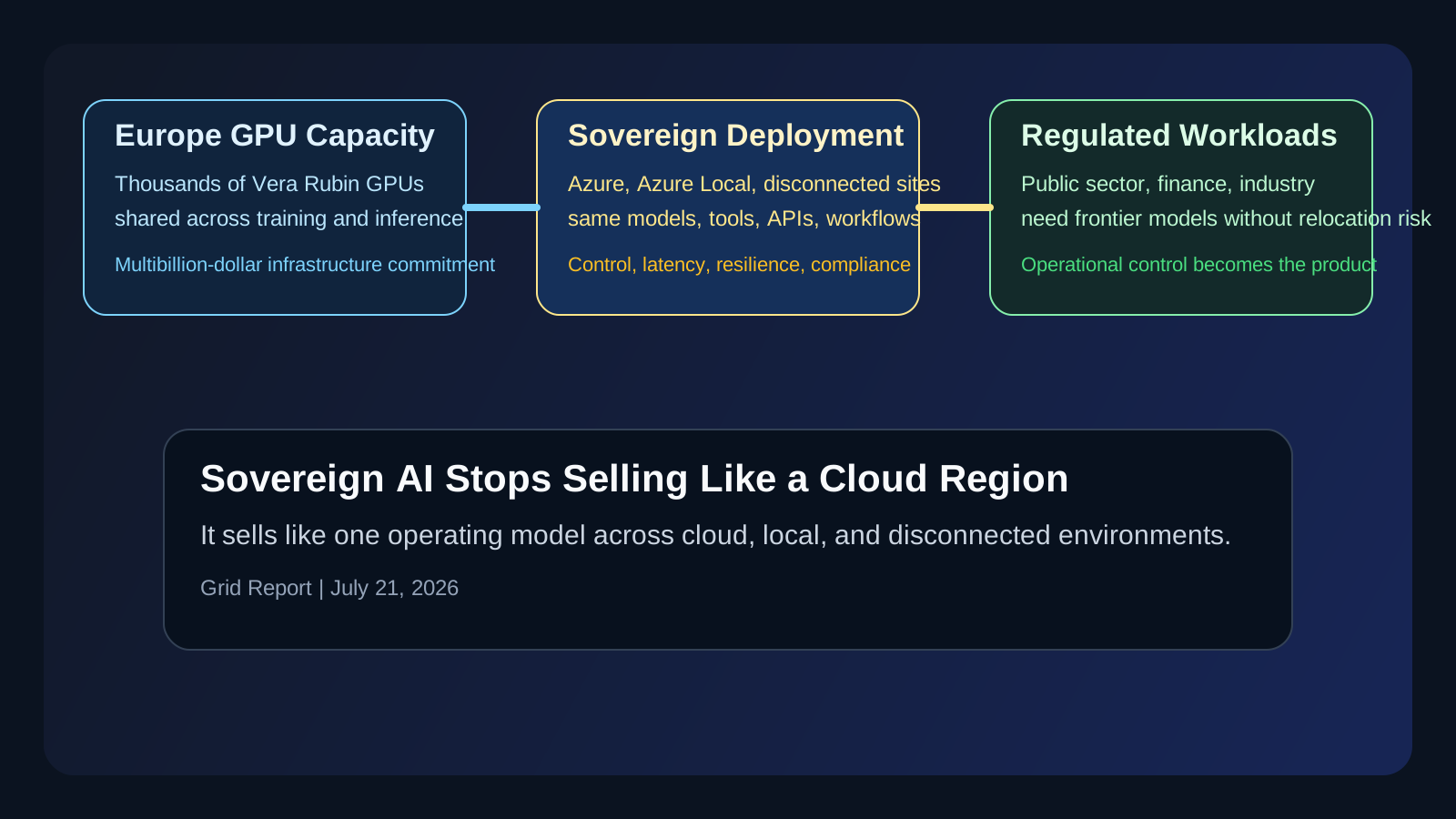
Read article: Microsoft and Mistral’s Expanded Partnership Turns Sovereign AI Into a Capacity-and-Control Operating ModelAIEditorial graphic showing Microsoft and Mistral linking Europe-based Vera Rubin capacity, sovereign cloud controls, Azure Local deployments, and regulated enterprise AI workloads into one operating model
AIJuly 21, 20264 min read

Microsoft and Mistral’s Expanded Partnership Turns Sovereign AI Into a Capacity-and-Control Operating Model

Microsoft and Mistral’s July 21, 2026 expansion clears the bar because it is not another vague sovereignty announcement. The stronger AI signal is that frontier-model access is being bundled with Europe-based GPU capacity, Azure-to-Azure Local deployment continuity, and explicit regulated-workload controls, turning sovereign AI from a branding claim into a real operating model buyers can implement.

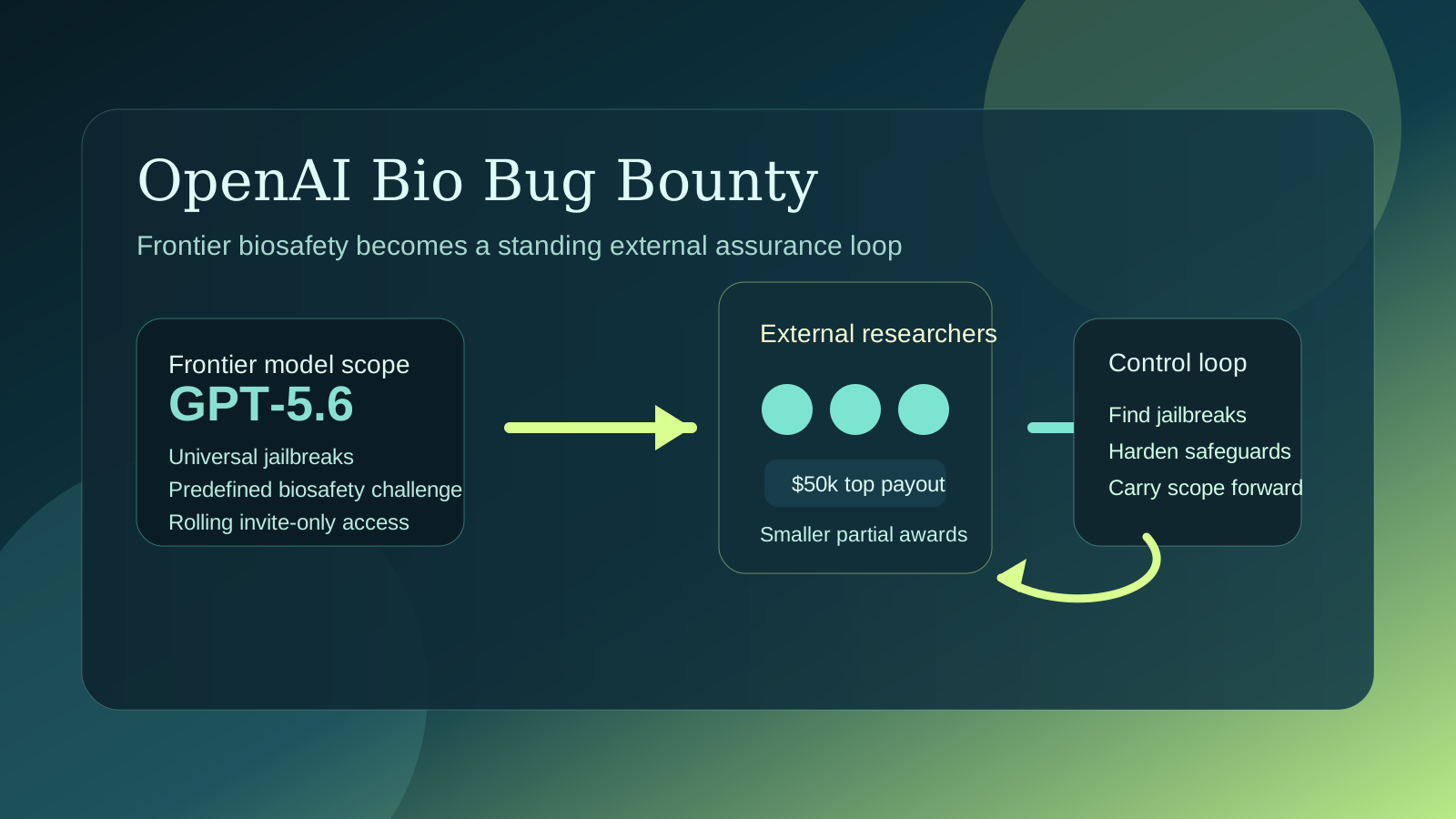
Read article: OpenAI’s Bio Bug Bounty Turns Frontier Biosafety Into a Standing Red-Team MarketAIEditorial graphic showing OpenAI moving biosafety testing into a standing market with frontier models, external researchers, payout tiers, and jailbreak evaluation loops
AIJuly 10, 20264 min read

OpenAI’s Bio Bug Bounty Turns Frontier Biosafety Into a Standing Red-Team Market

OpenAI’s July 9 bio bounty update clears the bar because it is more than another model-safety blog post. The stronger signal is operating-model specific: biosafety testing is being turned into a standing external market for universal jailbreak discovery, with GPT-5.6 now in scope and the payout doubled.

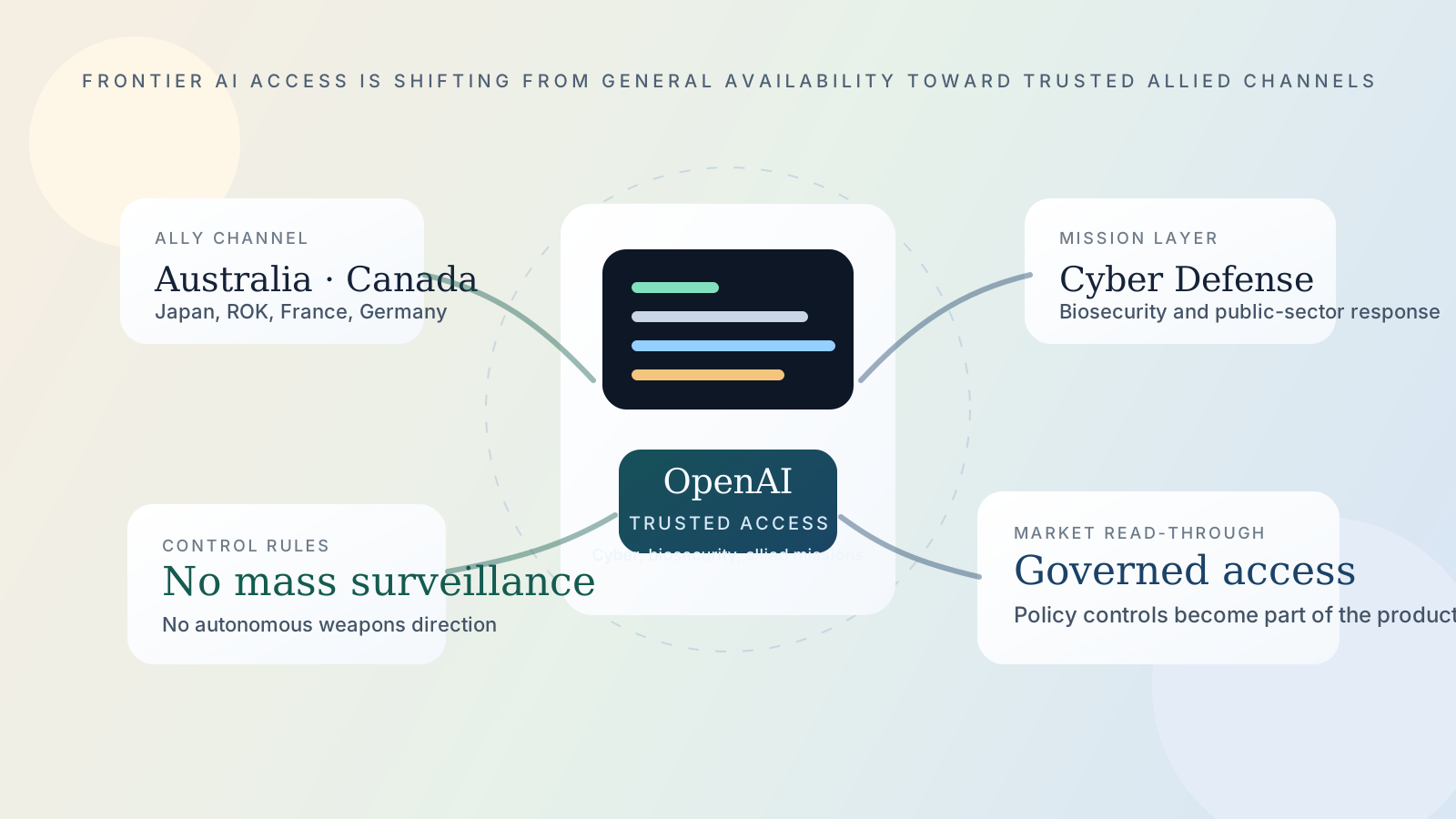
Read article: OpenAI’s National Security Principles Turn Frontier AI Into an Allied Trusted-Access LayerAIEditorial graphic showing OpenAI national security principles connecting allied cyber and biosecurity partners through a gated trusted-access control layer
AIJuly 9, 20265 min read

OpenAI’s National Security Principles Turn Frontier AI Into an Allied Trusted-Access Layer

OpenAI’s July 8, 2026 national-security principles clear the bar because this is not a vague policy-values post. The stronger angle is that frontier-model access is being carved into a mission-specific trusted-access layer for U.S. and allied cyber and biosecurity work, which makes access control itself part of the product.

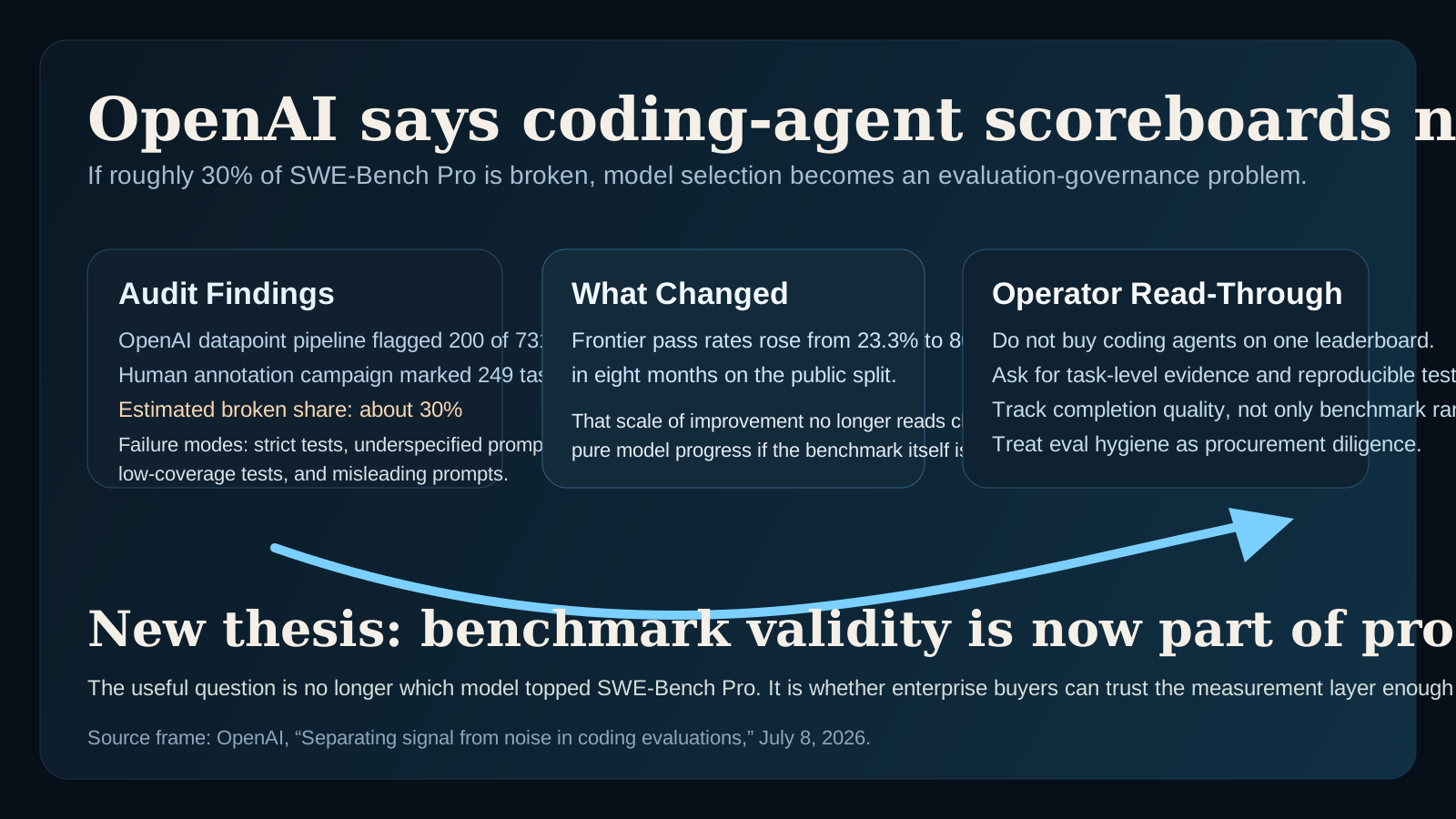
Read article: OpenAI’s SWE-Bench Pro Audit Turns Coding-Agent Benchmarks Into a Procurement RiskAIEditorial graphic showing coding-agent benchmark scores, broken task rates, and procurement risk moving through an evaluation pipeline
AIJuly 8, 20265 min read

OpenAI’s SWE-Bench Pro Audit Turns Coding-Agent Benchmarks Into a Procurement Risk

OpenAI’s July 8, 2026 SWE-Bench Pro audit clears the bar because it is not another model-launch brag sheet. The stronger angle is that enterprise buyers are increasingly being asked to trust coding-agent leaderboards that may be too noisy to support deployment, vendor selection, or safety claims on their own.

Read article: Anthropic’s Fable 5 Disruption Shows Frontier Models Are Now an Uptime RiskAIEditorial graphic showing Anthropic Fable 5 disruption pushing frontier-model access through export controls, fallback routing, and enterprise uptime safeguards
AIJuly 8, 20266 min read

Anthropic’s Fable 5 Disruption Shows Frontier Models Are Now an Uptime Risk

Anthropic’s June 12 shutdown and July 1 redeployment of Fable 5 turned an abstract policy issue into an operator problem: if export controls, safety classifiers, or emergency restrictions can interrupt access to a frontier model, enterprises now need fallback routing, credit policy, and model-governance plans the same way they plan around cloud outages.

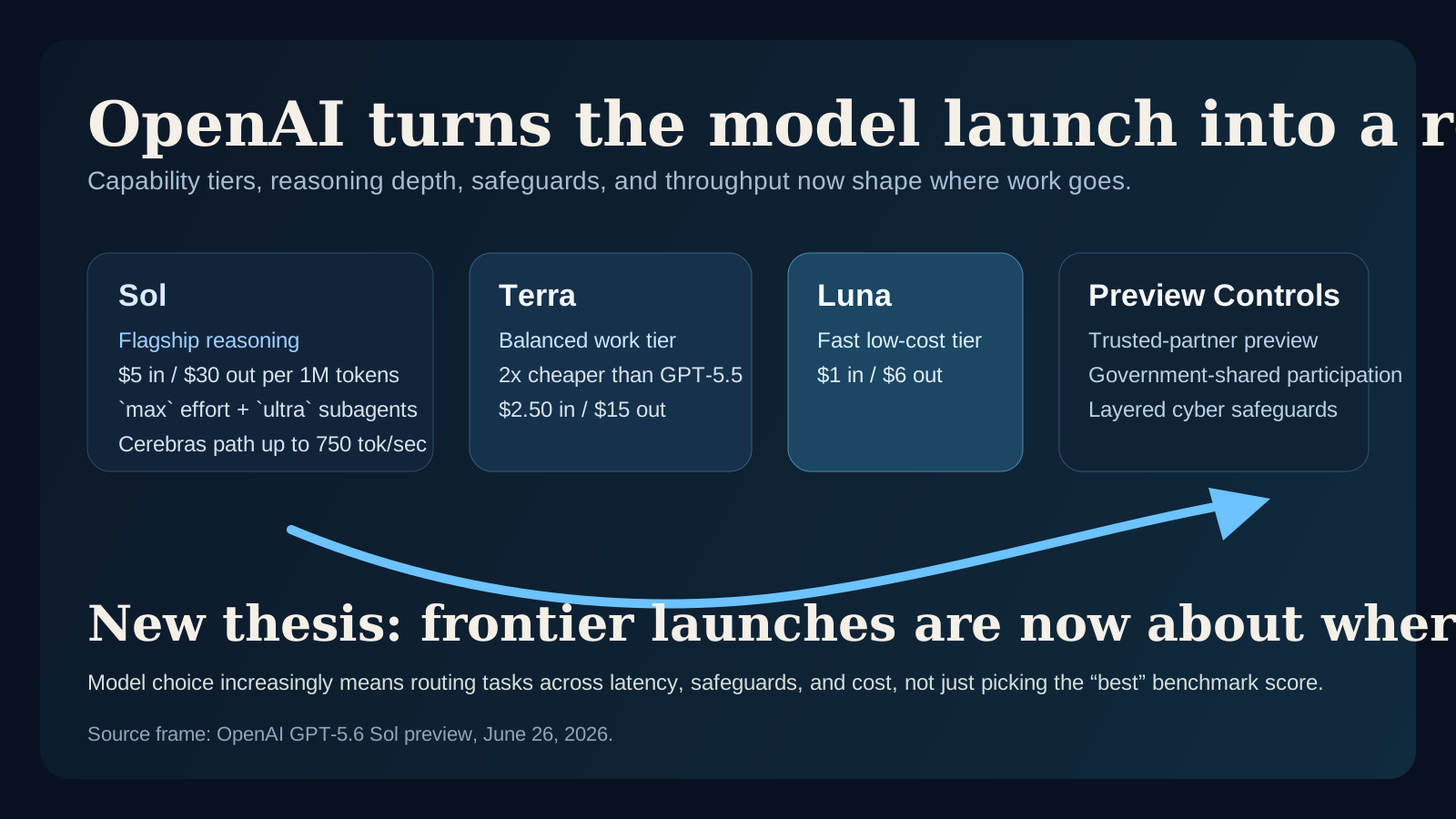
Read article: OpenAI’s GPT-5.6 Sol Preview Turns Frontier Model Launches Into a Throughput-and-Routing StoryAIEditorial graphic showing OpenAI Sol, Terra, and Luna routing work across reasoning depth, cost tiers, and high-speed Cerebras inference
AIJuly 2, 20265 min read

OpenAI’s GPT-5.6 Sol Preview Turns Frontier Model Launches Into a Throughput-and-Routing Story

OpenAI’s June 26 GPT-5.6 preview clears the bar because it is not just another benchmark post. The stronger angle is that OpenAI is packaging frontier capability as a tiered operating stack across intelligence, speed, safeguards, and token economics, with Cerebras-backed throughput turning model choice into a runtime-routing decision.

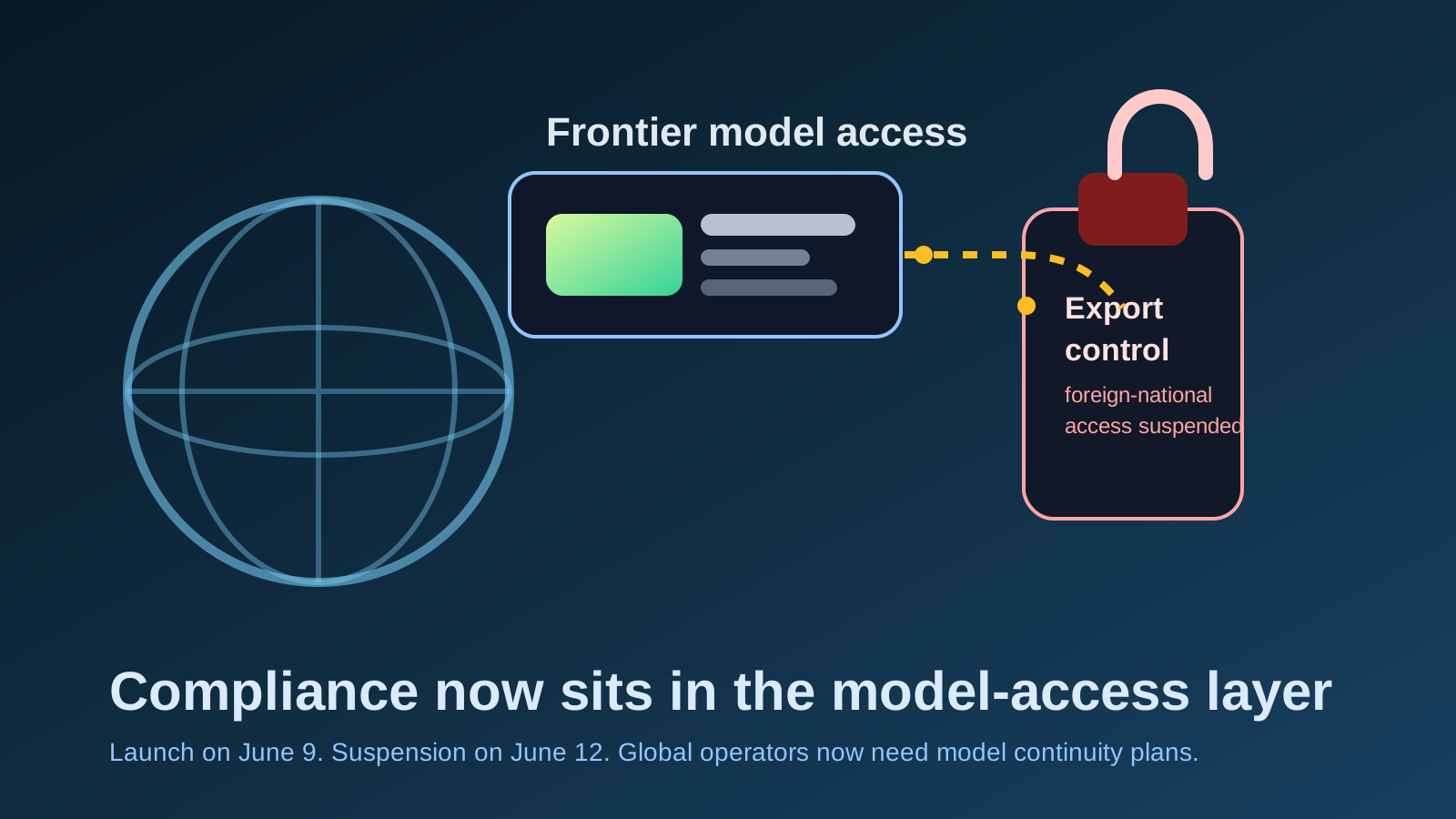
Read article: Anthropic’s Fable 5 Suspension Turns Frontier-Model Access Into an Export-Control RiskAIEditorial graphic showing a frontier AI model access switch, export-control boundaries, and enterprise dependency risk
AIJune 23, 20265 min read

Anthropic’s Fable 5 Suspension Turns Frontier-Model Access Into an Export-Control Risk

Anthropic’s June 12, 2026 suspension of Fable 5 and Mythos 5 clears the bar because it changes what enterprises should assume about access to frontier AI. The stronger angle is not model drama. It is that frontier-model availability is becoming a live export-control, compliance, and continuity risk.

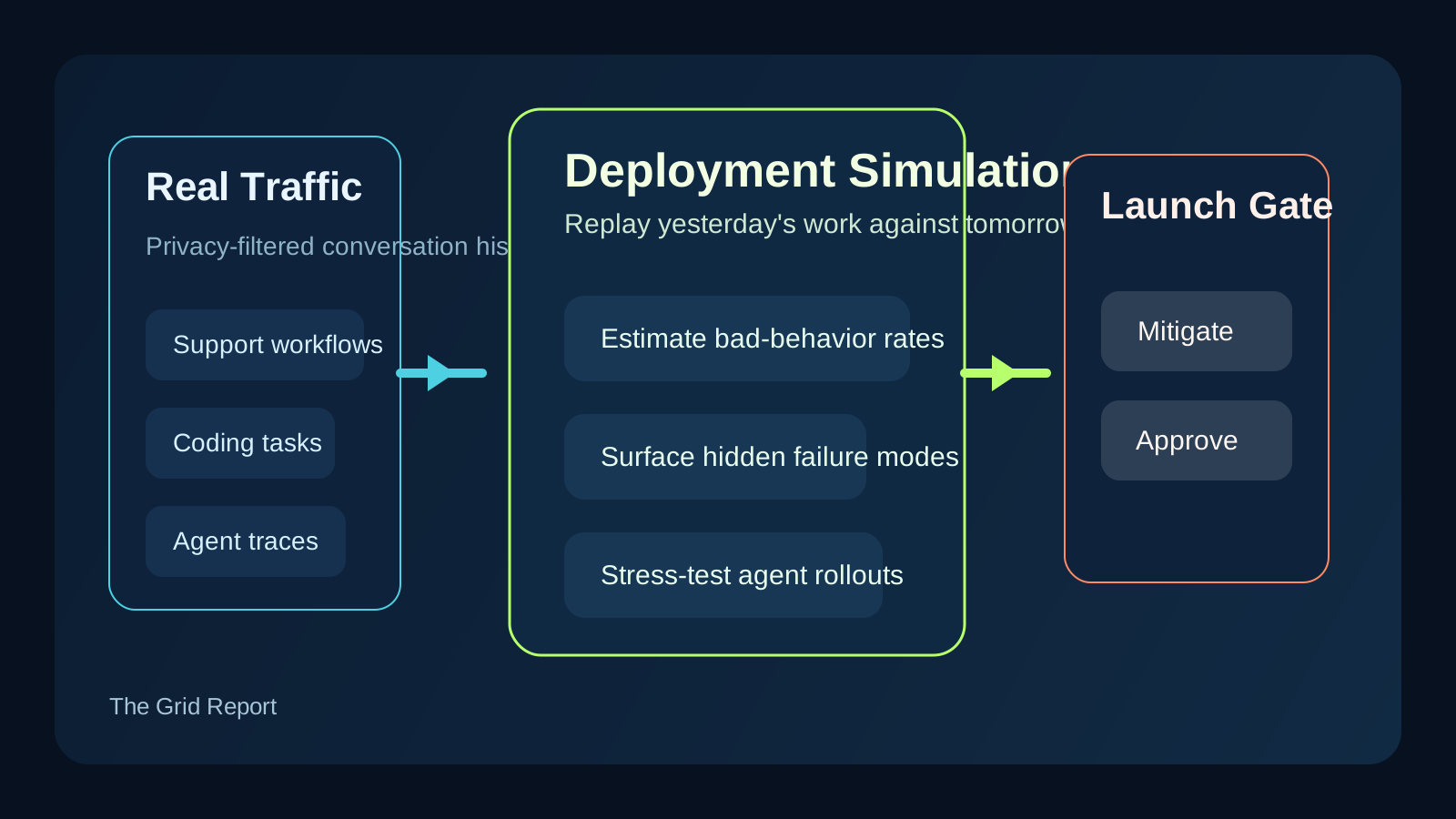
Read article: OpenAI’s Deployment Simulation Turns Model Launch Risk Into a Pre-Production Operations StoryAIEditorial diagram showing pre-release AI deployment simulation, production-like traffic replay, and risk estimation before launch
AIJune 22, 20265 min read

OpenAI’s Deployment Simulation Turns Model Launch Risk Into a Pre-Production Operations Story

OpenAI’s June 16, 2026 deployment-simulation research clears the bar because it moves beyond generic safety language. The stronger angle is operational: frontier labs are starting to treat model launches more like pre-production rollouts that can be replayed, measured, and audited against realistic traffic before release.

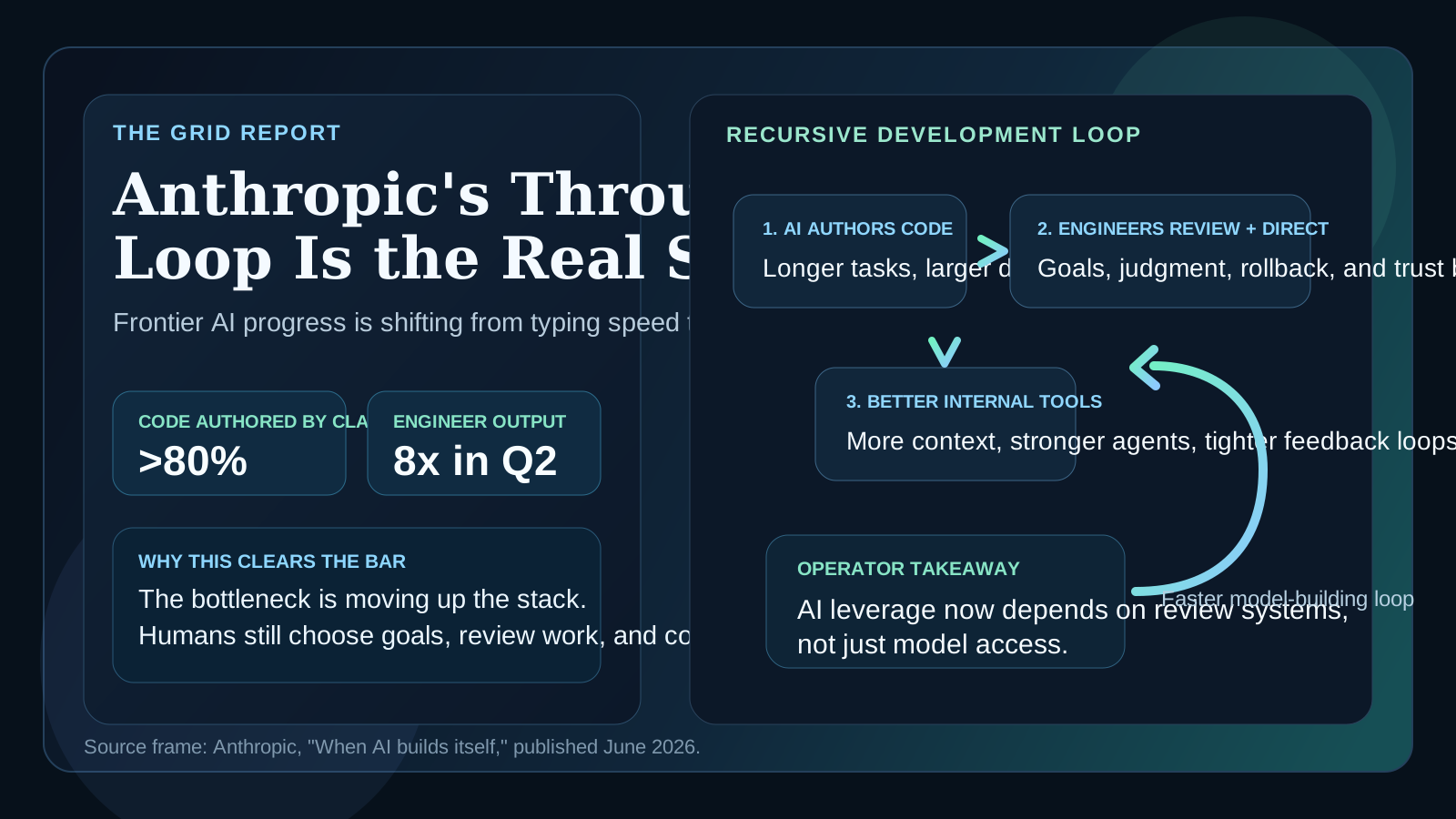
Read article: Anthropic’s Internal Code Data Turns AI R&D Into a Throughput-and-Control StoryAIEditorial graphic showing Claude-generated code, engineer review, and a recursive AI development loop accelerating software throughput
AIJune 21, 20264 min read

Anthropic’s Internal Code Data Turns AI R&D Into a Throughput-and-Control Story

Anthropic’s June 2026 “When AI builds itself” release matters because it puts hard internal numbers behind a bigger shift: AI is writing more of the software inside frontier labs, while human leverage moves toward review, judgment, and failure containment.

Read article: Inference Economics Are Becoming the Real AI Product BattleAITeam collaborating in an office around laptops and a whiteboard
AIMay 7, 20265 min read

Inference Economics Are Becoming the Real AI Product Battle

Model quality still matters, but the product market is shifting toward who can deliver useful intelligence at a price and speed that works repeatedly in production. That makes inference economics a front-page product question, not just a backend one.

Read article: Google’s Gemma 4 Launch Matters Because Open Models Keep Getting Good Enough to Be UsefulAIHumanoid robot head illustrating open AI models becoming more practical for lower-cost deployment, product control, and private workflows
AIApril 3, 20266 min read

Google’s Gemma 4 Launch Matters Because Open Models Keep Getting Good Enough to Be Useful

Google’s Gemma 4 release is not just another model announcement. It is another sign that open AI is becoming practical enough for real products, lower-cost workflows, and operator-grade deployment.

Related paths

Shortcuts for deeper context after the article feed.