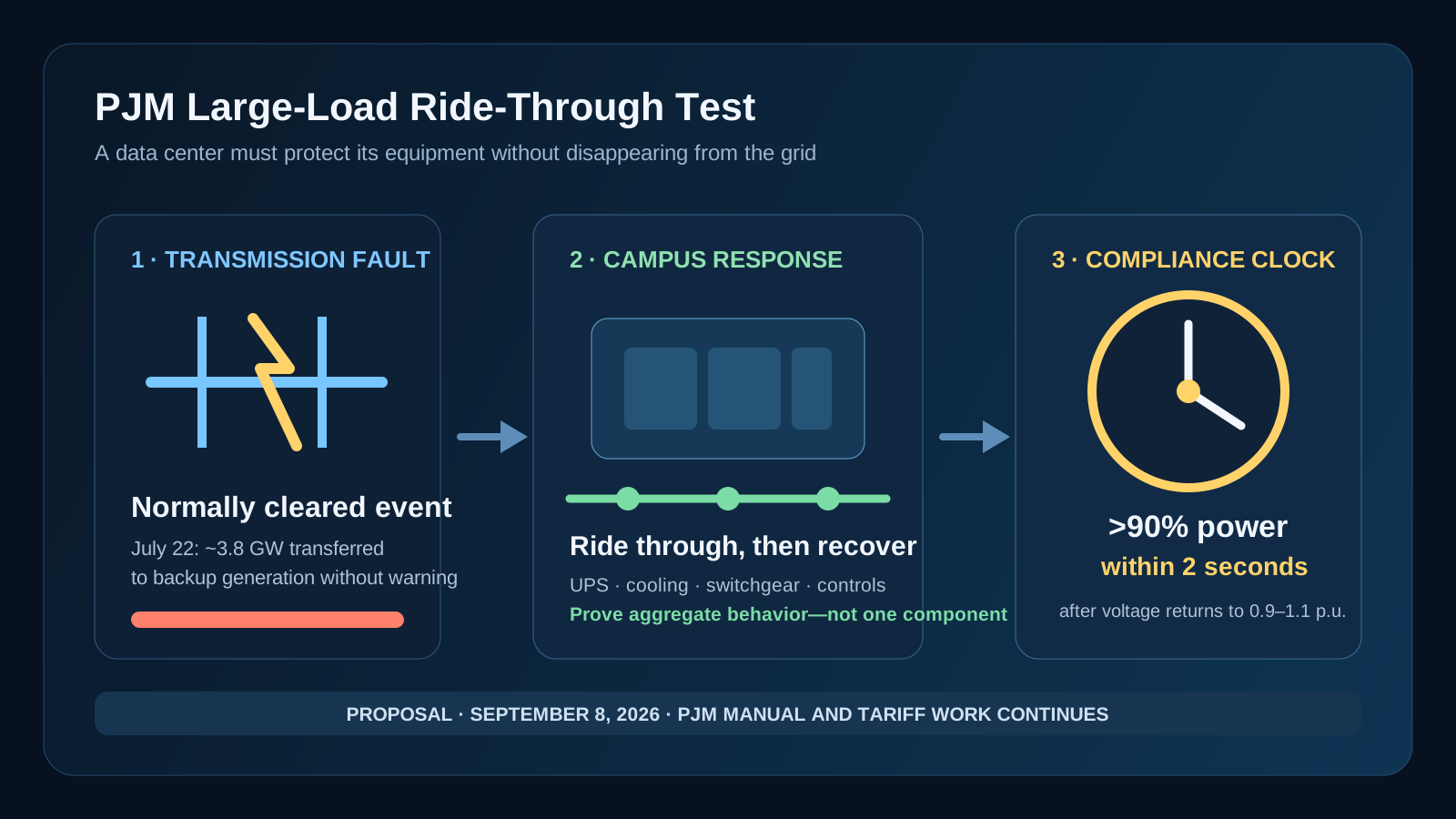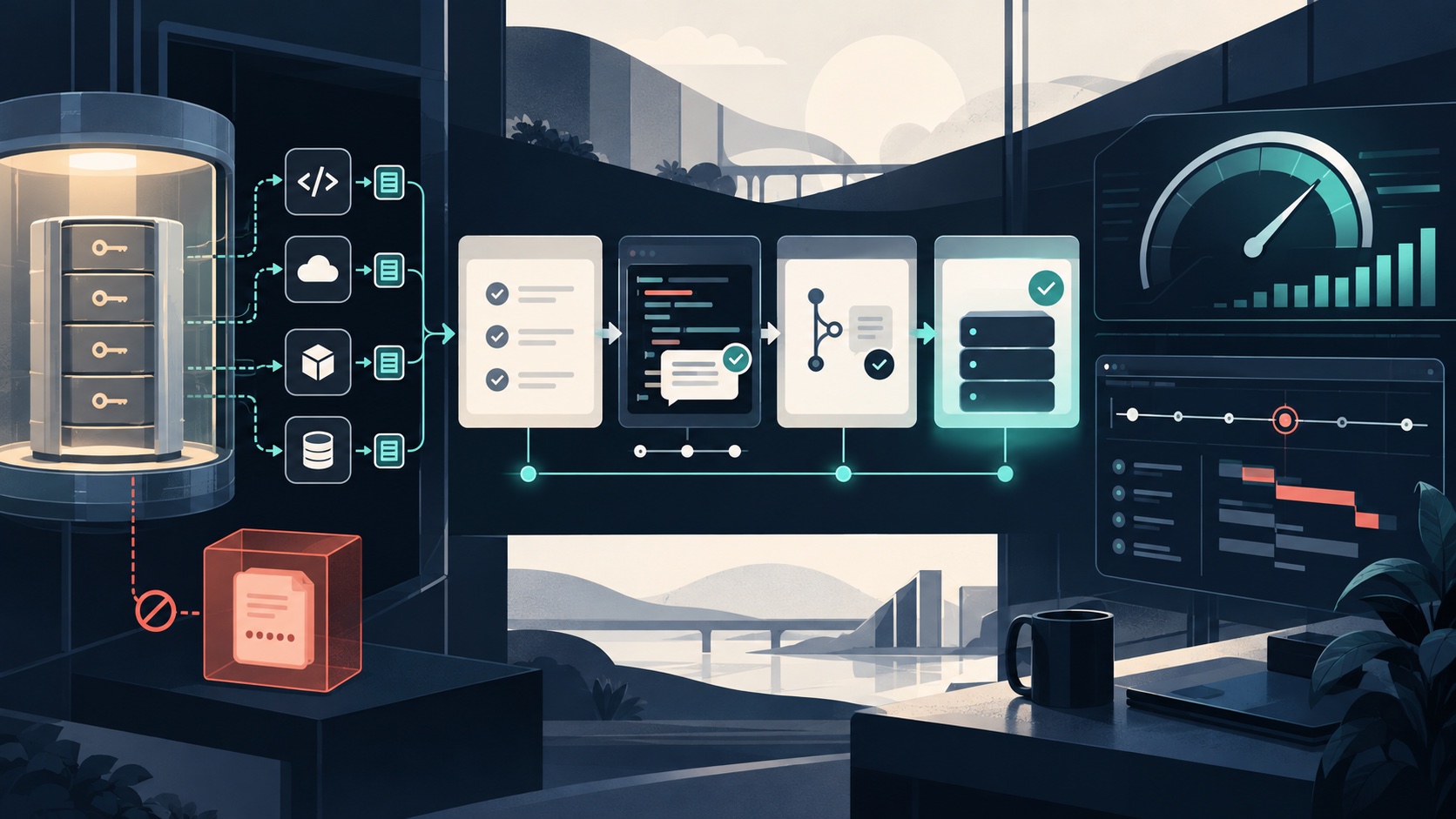
Read lead story: PJM’s Data-Center Load-Drop Risk Turns AI Power Quality Into a Grid-Contract ProblemEditorial graphic showing a PJM transmission line fault, a large AI data center dropping load to backup power, grid-frequency and voltage disturbance indicators, and a new contract layer for ride-through, telemetry, reactive support, and control settings
Lead story
Energy GridJuly 24, 20264 min read

AI infrastructure, energy, and data center news for the physical AI economy

PJM’s Data-Center Load-Drop Risk Turns AI Power Quality Into a Grid-Contract Problem

This July 24, 2026 story clears the publish bar because it is not another broad article about AI power demand. The stronger signal is that grid operators are being forced to care about how hyperscale AI loads behave during faults, not just how many megawatts they want. In practice, that pushes data-center siting toward a new contract stack around ride-through, dynamic models, reactive support, monitoring, and backup-power coordination.

Daily intelligence product
Latest drop: July 24, 2026

Make the site a habit: fresh posts, live markets, and a reason to subscribe.

The strongest news products make the reader understand what changed today, what to open next, and why the email brief is worth keeping. This strip now turns the homepage into that loop.

152+
published stories
6
coverage lanes
3
chart-backed briefs
Coverage areas

Five lanes. One physical AI economy.

Start with these

The strongest current Grid Report stories

Reader starting point
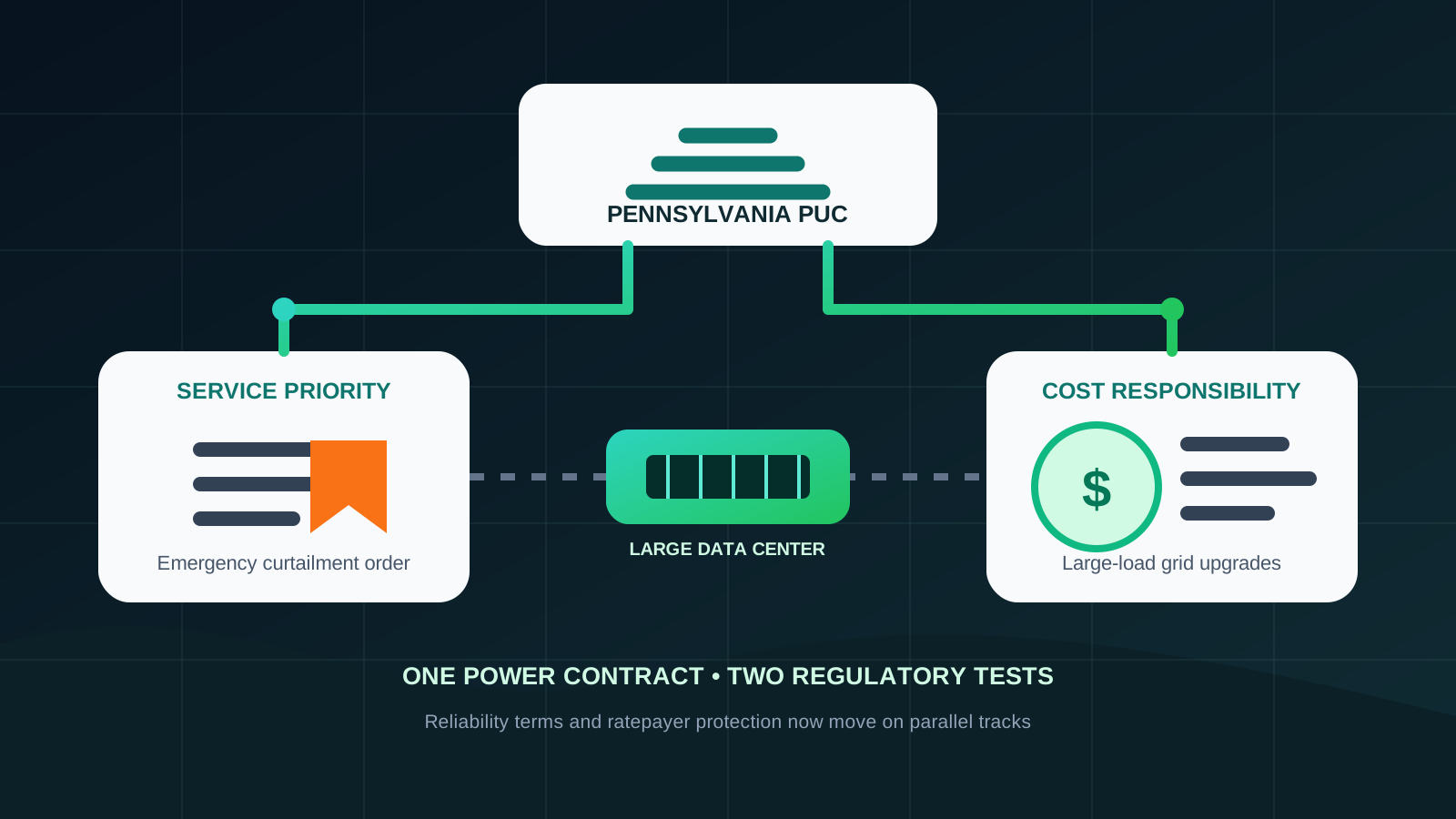
Read article: PJM’s Data-Center Load-Drop Risk Turns AI Power Quality Into a Grid-Contract ProblemEnergy GridEditorial graphic showing a PJM transmission line fault, a large AI data center dropping load to backup power, grid-frequency and voltage disturbance indicators, and a new contract layer for ride-through, telemetry, reactive support, and control settings
#1Energy Grid

PJM’s Data-Center Load-Drop Risk Turns AI Power Quality Into a Grid-Contract Problem

This July 24, 2026 story clears the publish bar because it is not another broad article about AI power demand. The stronger signal is that grid operators are being forced to care about how hyperscale AI loads behave during faults, not just how many megawatts they want. In practice, that pushes data-center siting toward a new contract stack around ride-through, dynamic models, reactive support, monitoring, and backup-power coordination.

By Nawaz Lalani

July 24, 2026

4 min read
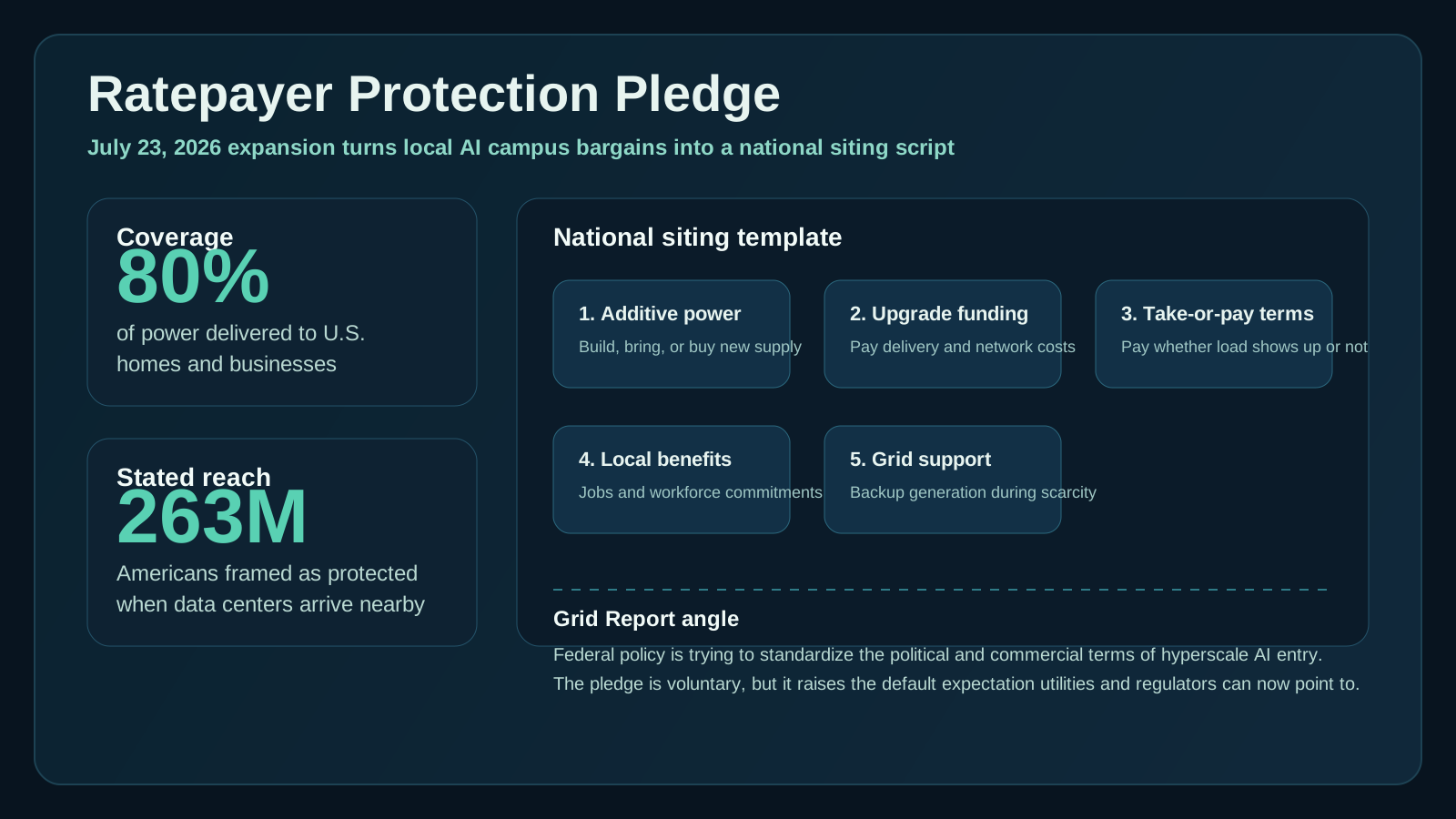
Read article: The White House’s Ratepayer Pledge Expansion Turns AI Siting Into a National Social-License TemplatePolicyEditorial graphic showing a national U.S. grid map linked to data center icons, ratepayer shields, new generation, transmission upgrades, take-or-pay utility contracts, and backup power commitments under the Ratepayer Protection Pledge
#2Policy

The White House’s Ratepayer Pledge Expansion Turns AI Siting Into a National Social-License Template

The White House’s July 23, 2026 Ratepayer Protection Pledge expansion clears the publish bar because this is not just another political statement about data centers and electric bills. The more useful signal is that Washington is trying to standardize a national admission test for large AI campuses: bring or buy additive power, fund the delivery upgrades, accept take-or-pay economics, and show ordinary customers a visible benefit.

By Nawaz Lalani

July 24, 2026

4 min read
Read article: Intel’s Q2 Turns AI Compute Demand Into an Equipment-, Substrate-, and Foundry-Capacity StoryMarketsEditorial graphic showing Intel second-quarter 2026 revenue, Data Center and AI growth, foundry growth, and new spending on equipment, clean room space, and substrates connected into one AI capacity stack
#3Markets

Intel’s Q2 Turns AI Compute Demand Into an Equipment-, Substrate-, and Foundry-Capacity Story

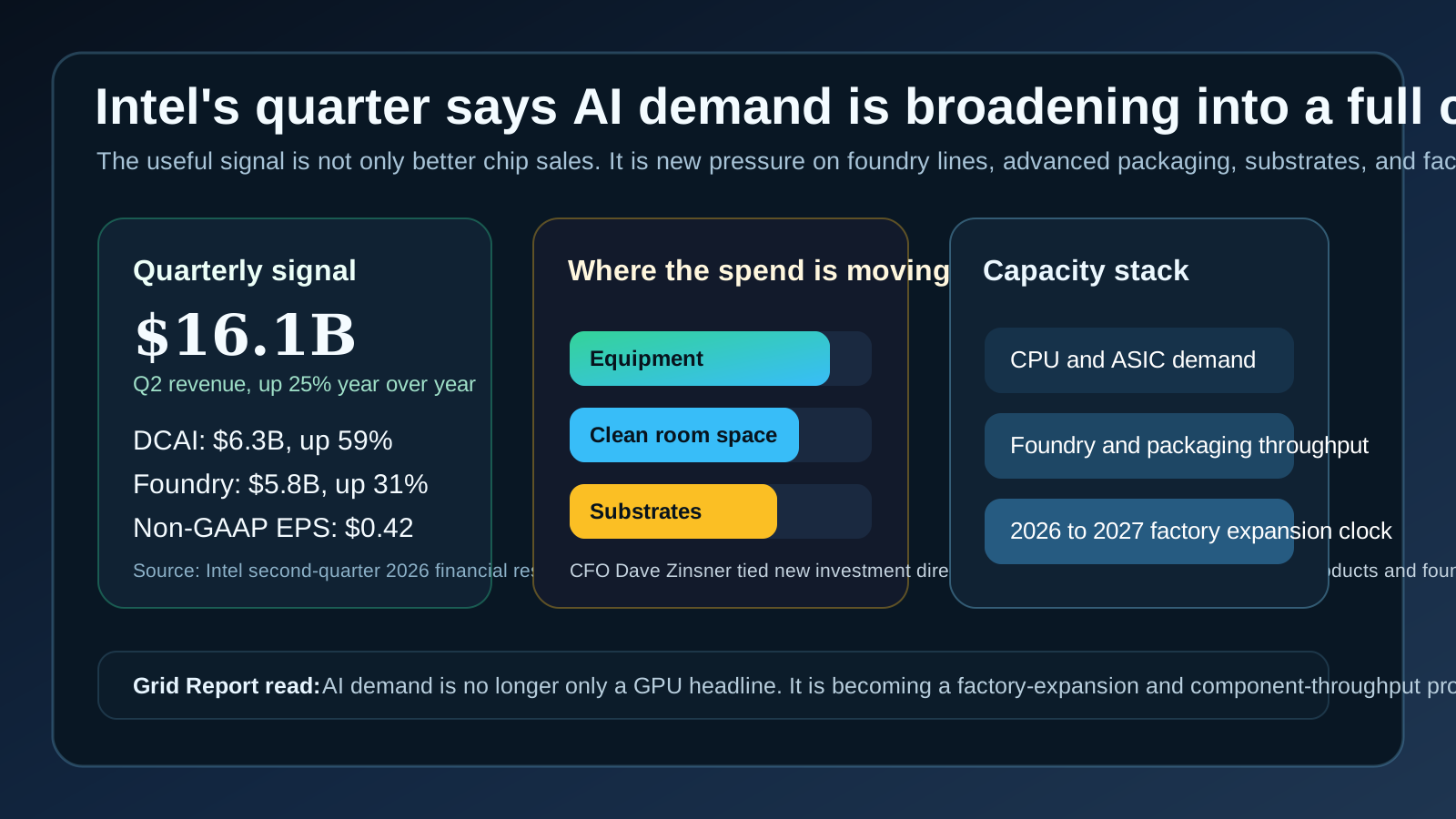
Intel’s July 23, 2026 results clear the publish bar because this is not just another semiconductor earnings rebound. The more useful signal is that AI demand is broadening beyond a narrow GPU narrative and into the harder capacity stack underneath it: CPUs, ASICs, foundry lines, advanced packaging, clean room space, and substrates.

By Nawaz Lalani

July 24, 2026

4 min read
Data desk

Charts first. Narrative second.

The Grid Report should be known for numbers readers can cite. These are the newest stories with a data snapshot, source trail, and operator takeaway.

ChartsSourcesLinkedIn-readySearch-friendly
Energy Grid7 min read

Where the AI electricity story gets harder

Per-task efficiencyImproving

Power use per AI task is falling rapidly, which can hide the scale of total demand growth.

Total usageRising

More users, more inference, and more agent-like workloads can overwhelm efficiency gains.

Data center concentrationCritical

The power problem becomes acute when large new facilities cluster around the same substations and regions.

Energy Grid7 min read

Typical U.S. household benchmark

Average monthly use899 kWh

EIA says the average U.S. residential customer bought about 899 kilowatthours per month.

Average 2026 residential price18.2 cents/kWh

EIA forecasts the U.S. residential electricity price averages 18.2 cents per kilowatthour in 2026.

Illustrative monthly bill~$164/month

This is an implied national estimate from usage times price, not a universal household bill.

Why readers come back

Physical AI economy coverage, with receipts.

01
Source
02
Data
03
Visual
04
Takeaway
152+
articles
3
data visuals
6
coverage lanes
Primary sourcesChartsMarket signalsGrid timing
Editorial standard
Latest stories

The latest reporting across the physical AI economy

View all stories
Read article: The White House’s Ratepayer Pledge Expansion Turns AI Siting Into a National Social-License TemplatePolicyEditorial graphic showing a national U.S. grid map linked to data center icons, ratepayer shields, new generation, transmission upgrades, take-or-pay utility contracts, and backup power commitments under the Ratepayer Protection Pledge
PolicyJuly 24, 20264 min read

The White House’s Ratepayer Pledge Expansion Turns AI Siting Into a National Social-License Template

The White House’s July 23, 2026 Ratepayer Protection Pledge expansion clears the publish bar because this is not just another political statement about data centers and electric bills. The more useful signal is that Washington is trying to standardize a national admission test for large AI campuses: bring or buy additive power, fund the delivery upgrades, accept take-or-pay economics, and show ordinary customers a visible benefit.

Read article: Intel’s Q2 Turns AI Compute Demand Into an Equipment-, Substrate-, and Foundry-Capacity StoryMarketsEditorial graphic showing Intel second-quarter 2026 revenue, Data Center and AI growth, foundry growth, and new spending on equipment, clean room space, and substrates connected into one AI capacity stack
MarketsJuly 24, 20264 min read

Intel’s Q2 Turns AI Compute Demand Into an Equipment-, Substrate-, and Foundry-Capacity Story

Intel’s July 23, 2026 results clear the publish bar because this is not just another semiconductor earnings rebound. The more useful signal is that AI demand is broadening beyond a narrow GPU narrative and into the harder capacity stack underneath it: CPUs, ASICs, foundry lines, advanced packaging, clean room space, and substrates.

Read article: GE Vernova’s Q2 Turns AI Power Into a Turbine-Slot and Grid-Equipment QueueEnergy GridEditorial graphic showing GE Vernova gas turbine slots, data center power demand, transformer and switchgear backlog, and a sold-through timeline stretching into 2031
Energy GridJuly 23, 20264 min read

GE Vernova’s Q2 Turns AI Power Into a Turbine-Slot and Grid-Equipment Queue

GE Vernova’s July 22, 2026 results clear the publish bar because this is not just another industrial earnings beat. The stronger signal is that AI power buildout is hardening into a manufacturing queue for gas turbines, transformers, and switchgear, which means power readiness now depends as much on equipment-slot timing as on land, interconnection, and capital.

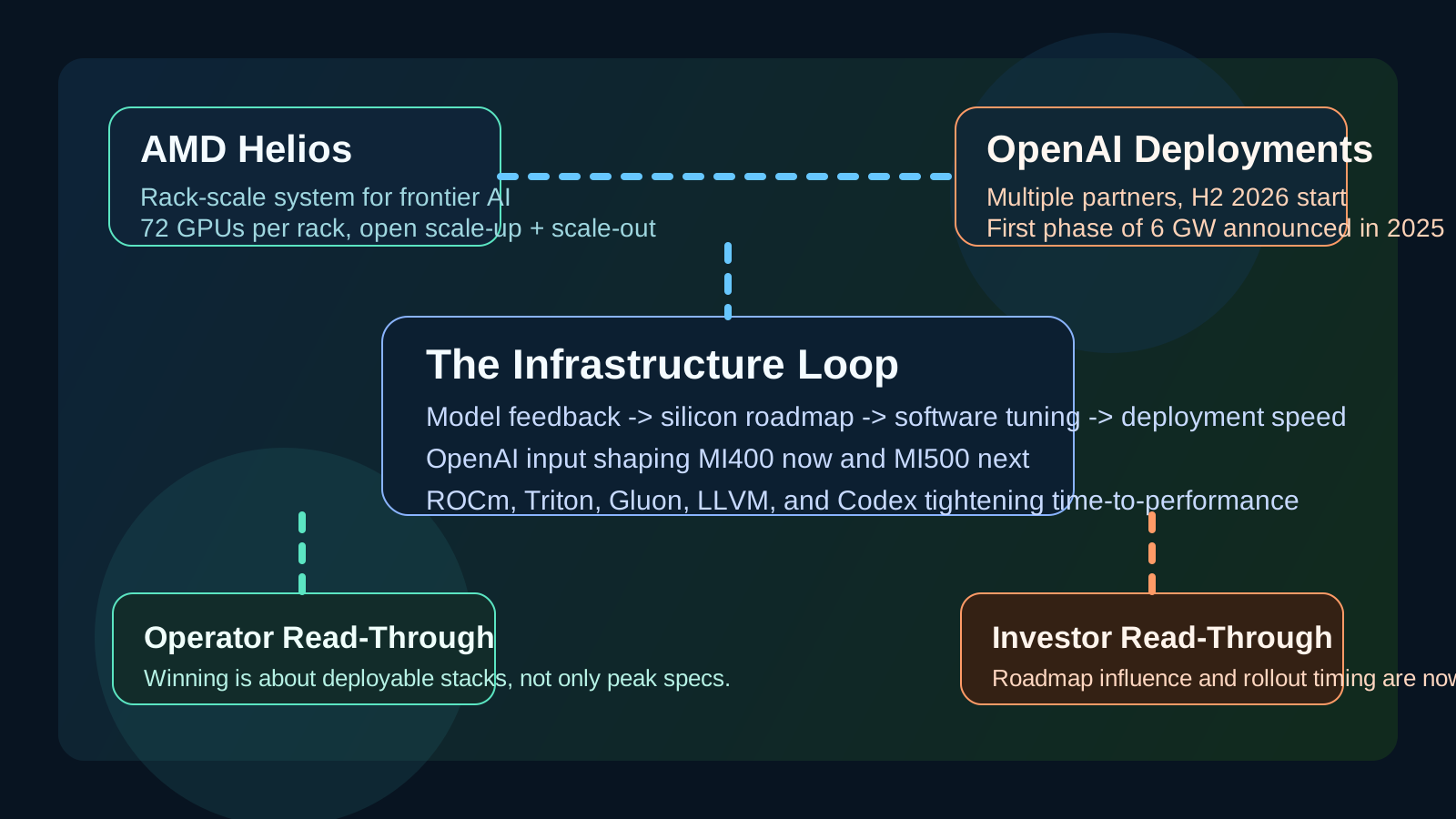
Read article: AMD and OpenAI’s July 23 Update Turns AI Infrastructure Competition Into a Co-Design-and-Deployment ClockInfrastructureEditorial graphic showing AMD Helios racks, OpenAI model feedback, MI400 and MI500 roadmaps, ROCm software, deployment partners, and a 6 gigawatt scale-up timeline connected into one infrastructure loop
InfrastructureJuly 23, 20264 min read

AMD and OpenAI’s July 23 Update Turns AI Infrastructure Competition Into a Co-Design-and-Deployment Clock

AMD’s Advancing AI announcements on July 23, 2026 clear the publish bar because this is not just another accelerator-spec day. The stronger signal is that frontier AI infrastructure competition is hardening into a co-design-and-deployment race, where model feedback, software readiness, and rollout timing now matter as much as peak chip claims.

Read article: Naval Postgraduate School’s DGX GB300 Turns Military AI Advantage Into a Training-Capacity StoryInfrastructureEditorial graphic showing the Naval Postgraduate School linked to an on-prem NVIDIA DGX GB300 system, defense research workflows, operational analysis, cyber training, and AI decision-speed education
InfrastructureJuly 23, 20264 min read

Naval Postgraduate School’s DGX GB300 Turns Military AI Advantage Into a Training-Capacity Story

The July 22, 2026 commissioning of the first NVIDIA DGX GB300 in the U.S. military clears the publish bar because it is not just another hardware installation. The more useful signal is that defense AI advantage is being treated as a training-throughput, experimentation, and decision-speed capacity problem that has to live on campus and close to operators, not only in distant cloud contracts.

Read article: Microsoft and Databricks Turn Enterprise AI Into a Business-Context and Governance StackAI AutomationEditorial graphic showing Microsoft and Databricks connecting enterprise data, Genie, Unity AI Gateway, Microsoft 365 workflows, Azure Cobalt infrastructure, and governance controls into one operating stack
AI AutomationJuly 23, 20264 min read

Microsoft and Databricks Turn Enterprise AI Into a Business-Context and Governance Stack

Microsoft and Databricks’ July 23, 2026 expansion clears the publish bar because it is not just another ecosystem partnership headline. The sharper operator signal is that enterprise AI is still bottlenecked by business context, governance, and infrastructure efficiency: models are not enough if the system cannot understand company data, run inside existing workflows, and keep cost and control intact.

AI

Models and intelligence shifts

View section
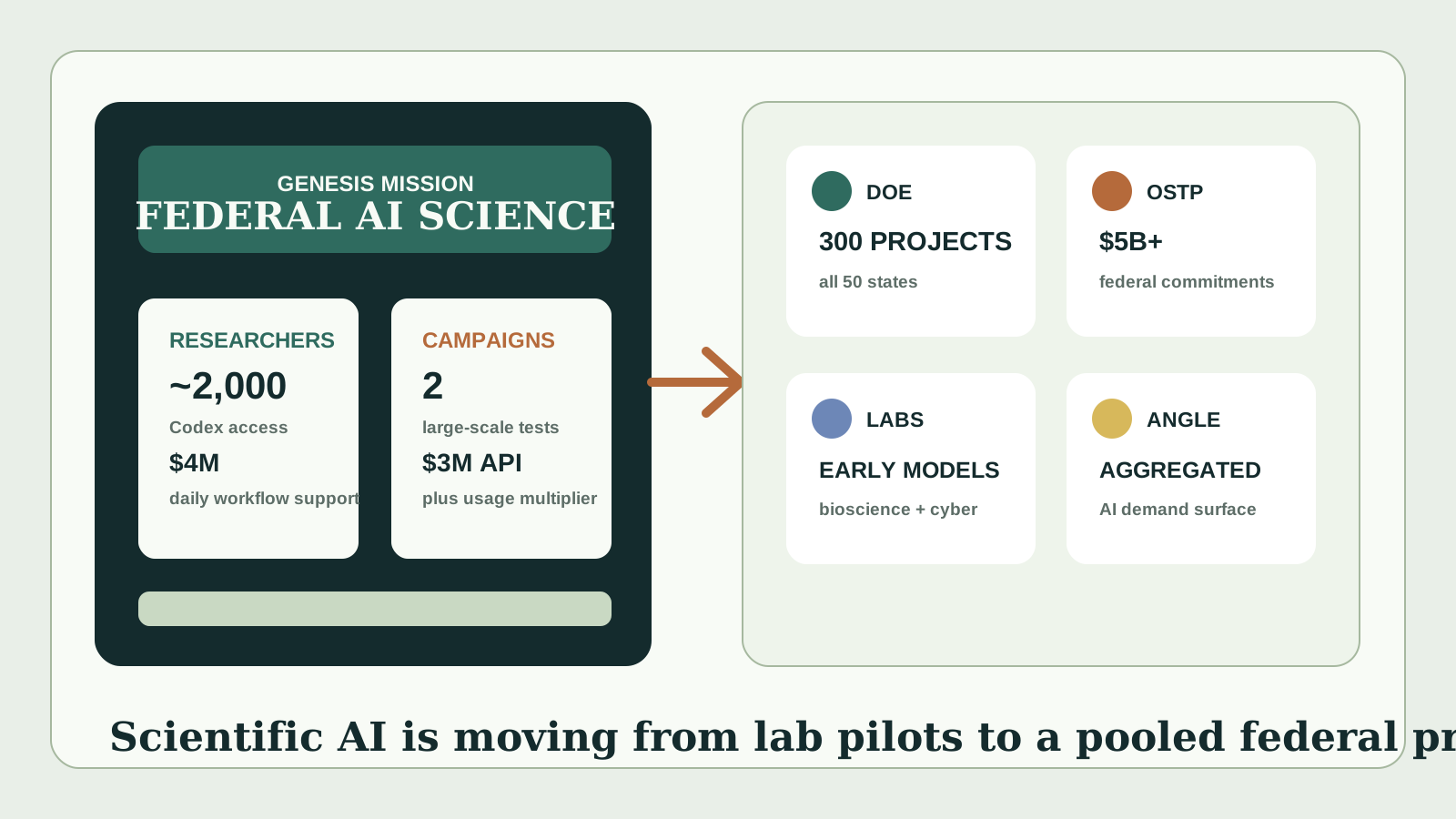
Read article: OpenAI’s Genesis Push Turns Scientific AI Into a Federal Demand-Aggregation LayerAIEditorial graphic showing OpenAI, the Department of Energy Genesis Mission, national laboratories, and university researchers linked through Codex access, API credits, scientific campaigns, and a shared procurement layer for frontier AI in science
AIJuly 22, 20264 min read

OpenAI’s Genesis Push Turns Scientific AI Into a Federal Demand-Aggregation Layer

OpenAI’s July 22, 2026 Genesis announcement clears the publish bar because it is not just another “AI for science” partnership page. The stronger AI signal is that scientific model access is being organized as a federally coordinated demand layer: pooled researchers, shared credits, focused campaigns, and national-lab workflows packaged so frontier AI can be bought, tested, and operationalized at program scale rather than lab by lab.

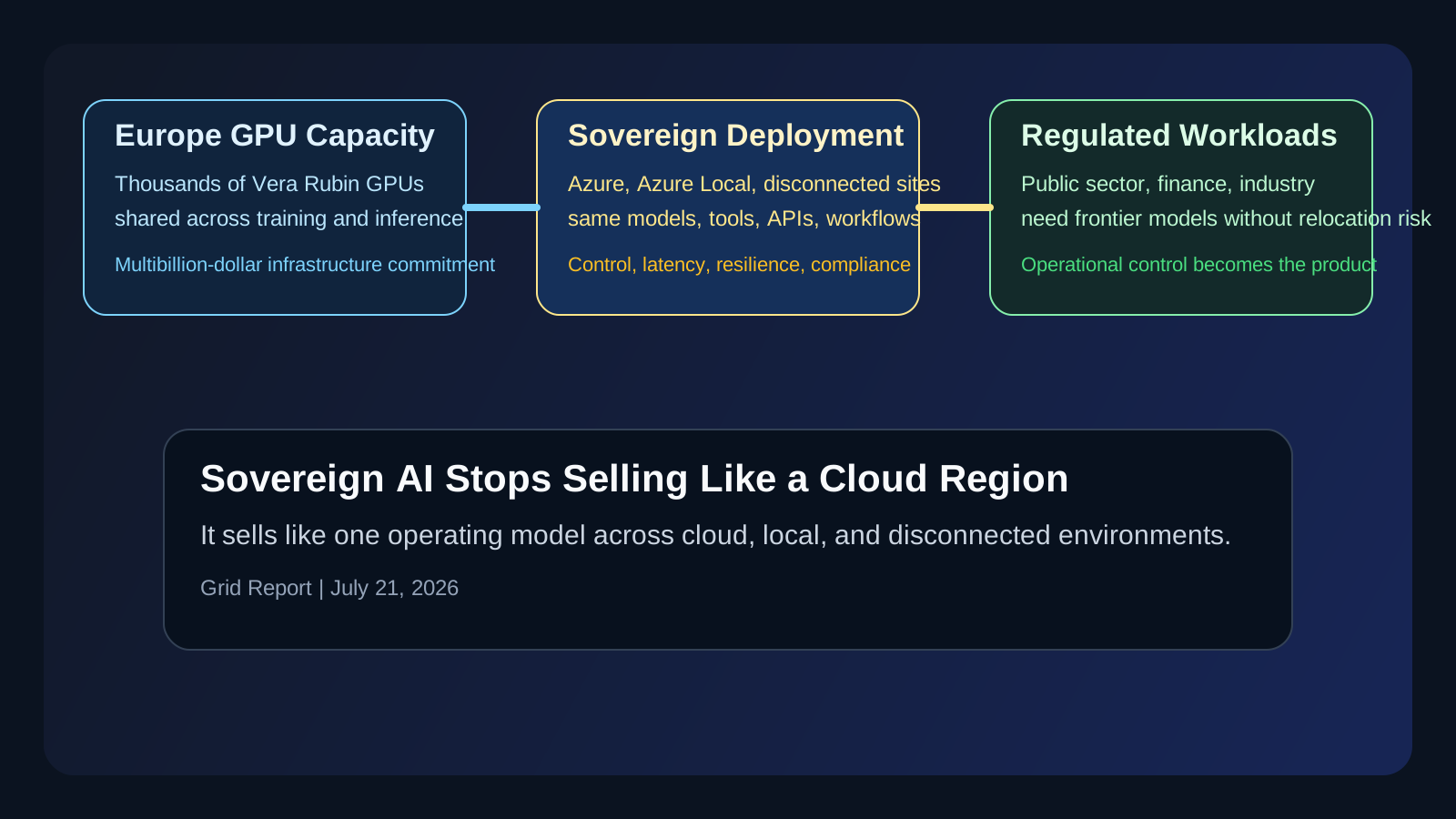
Read article: Microsoft and Mistral’s Expanded Partnership Turns Sovereign AI Into a Capacity-and-Control Operating ModelAIEditorial graphic showing Microsoft and Mistral linking Europe-based Vera Rubin capacity, sovereign cloud controls, Azure Local deployments, and regulated enterprise AI workloads into one operating model
AIJuly 21, 20264 min read

Microsoft and Mistral’s Expanded Partnership Turns Sovereign AI Into a Capacity-and-Control Operating Model

Microsoft and Mistral’s July 21, 2026 expansion clears the bar because it is not another vague sovereignty announcement. The stronger AI signal is that frontier-model access is being bundled with Europe-based GPU capacity, Azure-to-Azure Local deployment continuity, and explicit regulated-workload controls, turning sovereign AI from a branding claim into a real operating model buyers can implement.

Read article: OpenAI’s Bio Bug Bounty Turns Frontier Biosafety Into a Standing Red-Team MarketAIEditorial graphic showing OpenAI moving biosafety testing into a standing market with frontier models, external researchers, payout tiers, and jailbreak evaluation loops
AIJuly 10, 20264 min read

OpenAI’s Bio Bug Bounty Turns Frontier Biosafety Into a Standing Red-Team Market

OpenAI’s July 9 bio bounty update clears the bar because it is more than another model-safety blog post. The stronger signal is operating-model specific: biosafety testing is being turned into a standing external market for universal jailbreak discovery, with GPT-5.6 now in scope and the payout doubled.

Energy

Power, grid, and load growth

View section
Read article: PJM’s Data-Center Load-Drop Risk Turns AI Power Quality Into a Grid-Contract ProblemEnergy GridEditorial graphic showing a PJM transmission line fault, a large AI data center dropping load to backup power, grid-frequency and voltage disturbance indicators, and a new contract layer for ride-through, telemetry, reactive support, and control settings
Energy GridJuly 24, 20264 min read

PJM’s Data-Center Load-Drop Risk Turns AI Power Quality Into a Grid-Contract Problem

This July 24, 2026 story clears the publish bar because it is not another broad article about AI power demand. The stronger signal is that grid operators are being forced to care about how hyperscale AI loads behave during faults, not just how many megawatts they want. In practice, that pushes data-center siting toward a new contract stack around ride-through, dynamic models, reactive support, monitoring, and backup-power coordination.

Read article: GE Vernova’s Q2 Turns AI Power Into a Turbine-Slot and Grid-Equipment QueueEnergy GridEditorial graphic showing GE Vernova gas turbine slots, data center power demand, transformer and switchgear backlog, and a sold-through timeline stretching into 2031
Energy GridJuly 23, 20264 min read

GE Vernova’s Q2 Turns AI Power Into a Turbine-Slot and Grid-Equipment Queue

GE Vernova’s July 22, 2026 results clear the publish bar because this is not just another industrial earnings beat. The stronger signal is that AI power buildout is hardening into a manufacturing queue for gas turbines, transformers, and switchgear, which means power readiness now depends as much on equipment-slot timing as on land, interconnection, and capital.

Read article: OpenAI’s Project Camellia Turns 3.2 GW of AI Load Into a Community Operating ContractEnergy GridEditorial graphic showing OpenAI Project Camellia in Georgia connected to 3.2 gigawatts of phased power, one gigawatt of demand reduction, ratepayer protections, closed-loop cooling, and an independent annual audit
Energy GridJuly 22, 20264 min read

OpenAI’s Project Camellia Turns 3.2 GW of AI Load Into a Community Operating Contract

OpenAI’s July 22, 2026 plan for Project Camellia clears the publish bar because it does more than announce another giant campus. The stronger grid signal is the operating package around the 3.2-gigawatt load: full infrastructure cost recovery, up to 1 gigawatt of peak demand reduction, closed-loop cooling, community benefits, and an independent annual audit.

Infrastructure

Datacenters, chips, and capacity

View section
Read article: AMD and OpenAI’s July 23 Update Turns AI Infrastructure Competition Into a Co-Design-and-Deployment ClockInfrastructureEditorial graphic showing AMD Helios racks, OpenAI model feedback, MI400 and MI500 roadmaps, ROCm software, deployment partners, and a 6 gigawatt scale-up timeline connected into one infrastructure loop
InfrastructureJuly 23, 20264 min read

AMD and OpenAI’s July 23 Update Turns AI Infrastructure Competition Into a Co-Design-and-Deployment Clock

AMD’s Advancing AI announcements on July 23, 2026 clear the publish bar because this is not just another accelerator-spec day. The stronger signal is that frontier AI infrastructure competition is hardening into a co-design-and-deployment race, where model feedback, software readiness, and rollout timing now matter as much as peak chip claims.

Read article: Naval Postgraduate School’s DGX GB300 Turns Military AI Advantage Into a Training-Capacity StoryInfrastructureEditorial graphic showing the Naval Postgraduate School linked to an on-prem NVIDIA DGX GB300 system, defense research workflows, operational analysis, cyber training, and AI decision-speed education
InfrastructureJuly 23, 20264 min read

Naval Postgraduate School’s DGX GB300 Turns Military AI Advantage Into a Training-Capacity Story

The July 22, 2026 commissioning of the first NVIDIA DGX GB300 in the U.S. military clears the publish bar because it is not just another hardware installation. The more useful signal is that defense AI advantage is being treated as a training-throughput, experimentation, and decision-speed capacity problem that has to live on campus and close to operators, not only in distant cloud contracts.

Read article: AMD and Anthropic’s 2 GW Deal Turns AI Infrastructure Competition Into a Vertical Lock-In RaceInfrastructureEditorial graphic showing Anthropic Claude demand connected to 2 gigawatts of AMD Helios racks, MI450 GPUs, ROCm software, and a 5 billion dollar strategic investment locking software and hardware into one AI infrastructure stack
InfrastructureJuly 22, 20264 min read

AMD and Anthropic’s 2 GW Deal Turns AI Infrastructure Competition Into a Vertical Lock-In Race

AMD and Anthropic’s July 22, 2026 partnership clears the publish bar because it is not just another chip-supply announcement. The stronger infrastructure signal is that frontier compute is now being secured through a single stacked relationship: gigawatt-scale hardware deployment, software co-development, and a strategic equity tie that binds buyer and supplier together across the AI stack.

AI Automation

Agents, workflows, and execution

View section
Read article: Microsoft and Databricks Turn Enterprise AI Into a Business-Context and Governance StackAI AutomationEditorial graphic showing Microsoft and Databricks connecting enterprise data, Genie, Unity AI Gateway, Microsoft 365 workflows, Azure Cobalt infrastructure, and governance controls into one operating stack
AI AutomationJuly 23, 20264 min read

Microsoft and Databricks Turn Enterprise AI Into a Business-Context and Governance Stack

Microsoft and Databricks’ July 23, 2026 expansion clears the publish bar because it is not just another ecosystem partnership headline. The sharper operator signal is that enterprise AI is still bottlenecked by business context, governance, and infrastructure efficiency: models are not enough if the system cannot understand company data, run inside existing workflows, and keep cost and control intact.

Read article: OpenAI Presence Turns Enterprise Agents Into a Managed Reliability-and-Escalation ServiceAI AutomationEditorial graphic showing an enterprise voice and chat agent stack with policy rules, simulations, approved actions, escalation paths, production health monitoring, and a Codex improvement loop arranged as one managed operations surface
AI AutomationJuly 22, 20264 min read

OpenAI Presence Turns Enterprise Agents Into a Managed Reliability-and-Escalation Service

OpenAI’s July 22, 2026 Presence launch clears the publish bar because it is not just another agent product page. The stronger systems signal is that enterprise deployment is being sold as an operational service: tightly scoped jobs, simulations, policy controls, approved actions, human takeovers, and a post-launch improvement loop designed to keep agents reliable in production.

Read article: OpenAI’s Small-Business Program Turns AI Adoption Into a Local-Services and Workflow-Capture RaceAI AutomationEditorial graphic showing ChatGPT Work connected to small-business workflows across ecommerce, bookkeeping, collaboration, and local operator training, with partner tools and implementation support arranged as one adoption funnel
AI AutomationJuly 22, 20264 min read

OpenAI’s Small-Business Program Turns AI Adoption Into a Local-Services and Workflow-Capture Race

OpenAI’s July 21, 2026 small-business program clears the publish bar because it is not another broad “AI for SMBs” marketing push. The stronger systems signal is that OpenAI is trying to win the next adoption layer by bundling workflow training, local events, partner integrations, and agent templates into one implementation funnel, turning small-business AI from a self-serve software sale into a services-and-execution capture contest.

Markets

Capital, pricing, and power economics

View section
Read article: Intel’s Q2 Turns AI Compute Demand Into an Equipment-, Substrate-, and Foundry-Capacity StoryMarketsEditorial graphic showing Intel second-quarter 2026 revenue, Data Center and AI growth, foundry growth, and new spending on equipment, clean room space, and substrates connected into one AI capacity stack
MarketsJuly 24, 20264 min read

Intel’s Q2 Turns AI Compute Demand Into an Equipment-, Substrate-, and Foundry-Capacity Story

Intel’s July 23, 2026 results clear the publish bar because this is not just another semiconductor earnings rebound. The more useful signal is that AI demand is broadening beyond a narrow GPU narrative and into the harder capacity stack underneath it: CPUs, ASICs, foundry lines, advanced packaging, clean room space, and substrates.

Read article: Alphabet’s Q2 Turns Google Into the Market’s Clearest AI Financing TestMarketsEditorial graphic showing Alphabet AI infrastructure spending connected to Google Cloud growth, negative free cash flow, equity proceeds, debt issuance, and data-center buildout
MarketsJuly 23, 20264 min read

Alphabet’s Q2 Turns Google Into the Market’s Clearest AI Financing Test

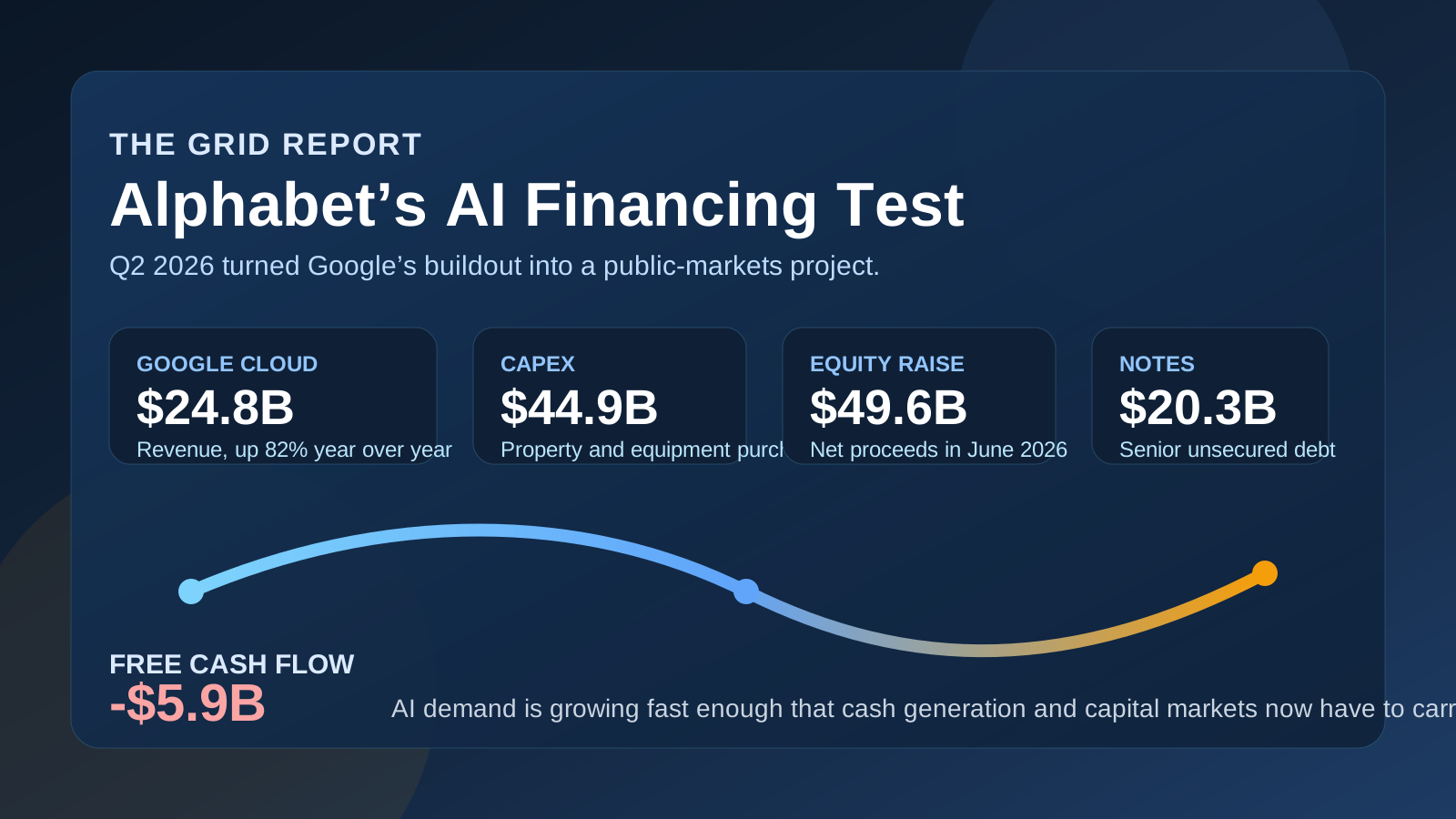
Alphabet’s July 22, 2026 second-quarter results clear the publish bar because they are not just another “AI spending is high” earnings recap. The stronger markets signal is that Google is now financing AI infrastructure in full public view: explosive cloud demand, nearly $45 billion of quarterly capital expenditures, negative free cash flow, and fresh equity and debt capital all packed into one quarter.

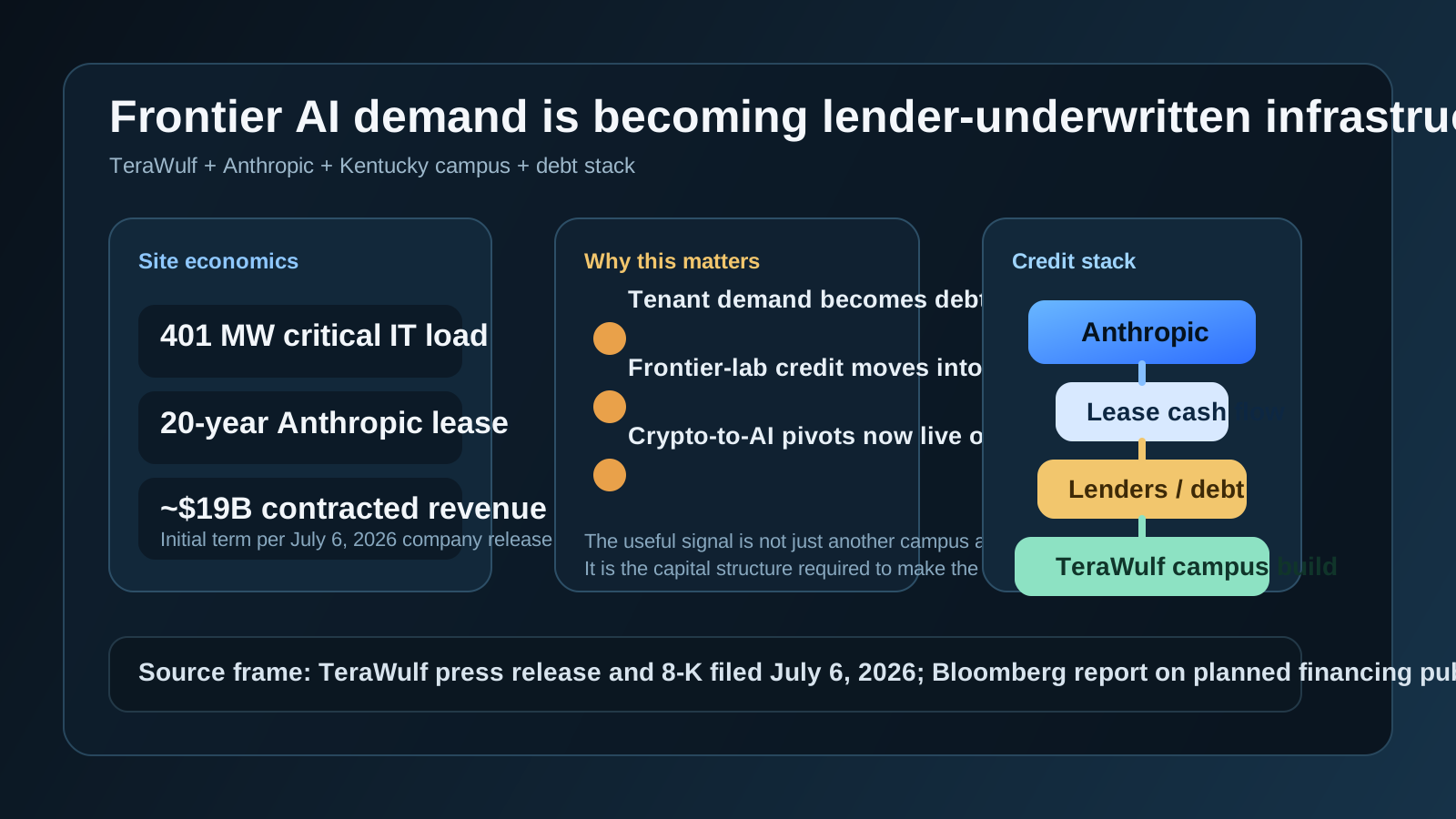
Read article: TeraWulf’s Anthropic Lease Turns Frontier AI Demand Into a Structured-Credit StoryMarketsEditorial graphic showing a Kentucky AI campus connected to a 20-year Anthropic lease, lender capital, and revenue-backed debt layers around TeraWulf infrastructure
MarketsJuly 22, 20264 min read

TeraWulf’s Anthropic Lease Turns Frontier AI Demand Into a Structured-Credit Story

TeraWulf’s July 6, 2026 Anthropic lease clears the publish bar because it is not just another AI-campus headline. The stronger markets signal is that frontier-lab demand is now being turned into lender-underwritten infrastructure: a 20-year tenant contract, a power-secured campus, and a planned multibillion-dollar financing stack that pushes AI buildout risk deeper into credit markets.

Policy

Rules, permitting, and interconnection

View section
Read article: The White House’s Ratepayer Pledge Expansion Turns AI Siting Into a National Social-License TemplatePolicyEditorial graphic showing a national U.S. grid map linked to data center icons, ratepayer shields, new generation, transmission upgrades, take-or-pay utility contracts, and backup power commitments under the Ratepayer Protection Pledge
PolicyJuly 24, 20264 min read

The White House’s Ratepayer Pledge Expansion Turns AI Siting Into a National Social-License Template

The White House’s July 23, 2026 Ratepayer Protection Pledge expansion clears the publish bar because this is not just another political statement about data centers and electric bills. The more useful signal is that Washington is trying to standardize a national admission test for large AI campuses: bring or buy additive power, fund the delivery upgrades, accept take-or-pay economics, and show ordinary customers a visible benefit.

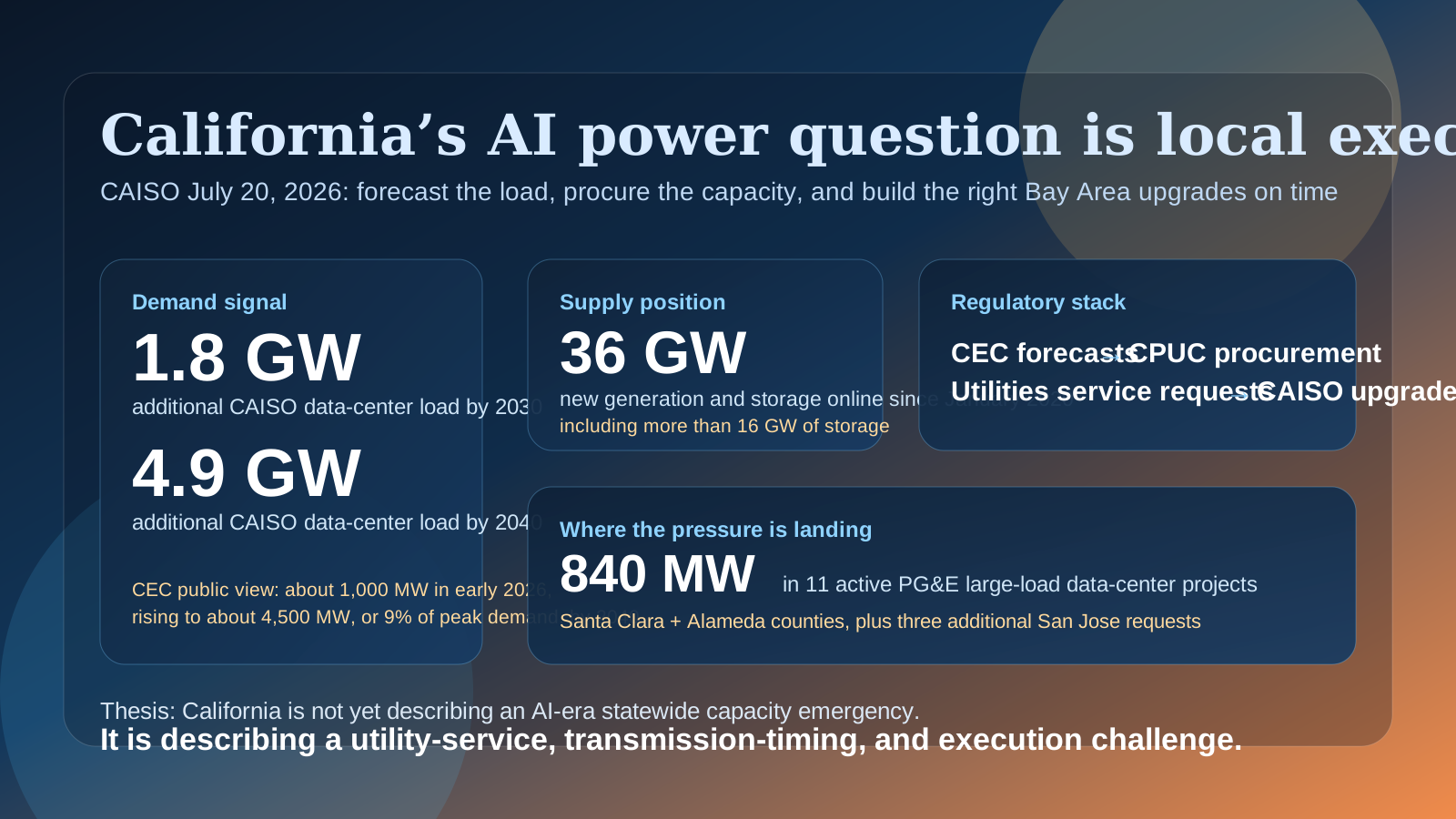
Read article: CAISO’s Large-Load Filing Turns California AI Buildout Into a Utility-Service Execution StoryPolicyEditorial graphic showing California data-center load growth linked to CEC demand forecasts, CPUC procurement orders, PG&E service requests, and CAISO transmission upgrades across the Greater Bay Area
PolicyJuly 23, 20265 min read

CAISO’s Large-Load Filing Turns California AI Buildout Into a Utility-Service Execution Story

CAISO’s July 20, 2026 filing clears the publish bar because it is not another vague warning that AI will overwhelm the grid. The sharper California signal is that the state is treating data-center growth as a utility-service and localized transmission execution problem: forecast the load earlier, contract enough clean capacity, and get the right upgrades built where the requests are actually landing.

Read article: Savannah River’s Amentum Selection Turns Federal AI Siting Into a Counterparty-and-Power-Credibility TestPolicyEditorial graphic showing the Savannah River Site paired with an AI data center lease, a 1 gigawatt compute block, 2 gigawatts of on-site generation, and the federal approvals and negotiation gates that still control delivery
PolicyJuly 21, 20264 min read

Savannah River’s Amentum Selection Turns Federal AI Siting Into a Counterparty-and-Power-Credibility Test

NNSA’s July 20, 2026 Savannah River announcement clears the bar because it moves the federal-site story past land inventory and into named-project execution. The more useful policy signal is that Washington now has to prove a real counterparty can carry lease negotiations, a 1-gigawatt AI campus, and a 2-gigawatt gas-to-nuclear power stack through approvals without dumping costs onto surrounding ratepayers.

Newsletter signup

Get the daily Grid brief in your inbox.

Daily intelligence on AI, energy, infrastructure, systems, and markets with a cleaner, more professional editorial read.

Daily briefPrimary sourcesMarkets + powerFree
Email address

Enter your email once. You’ll get the daily Grid brief and the strongest new reporting.

No spam. Unsubscribe anytime.