Rules, permitting, and interconnection

AI infrastructure policy news on interconnection, tariffs, and permitting

FERC, NERC, PUCs, permitting, transmission, rate design, and large-load rules shaping where AI infrastructure can actually get built.

Latest stories

All Policy coverage

10 stories
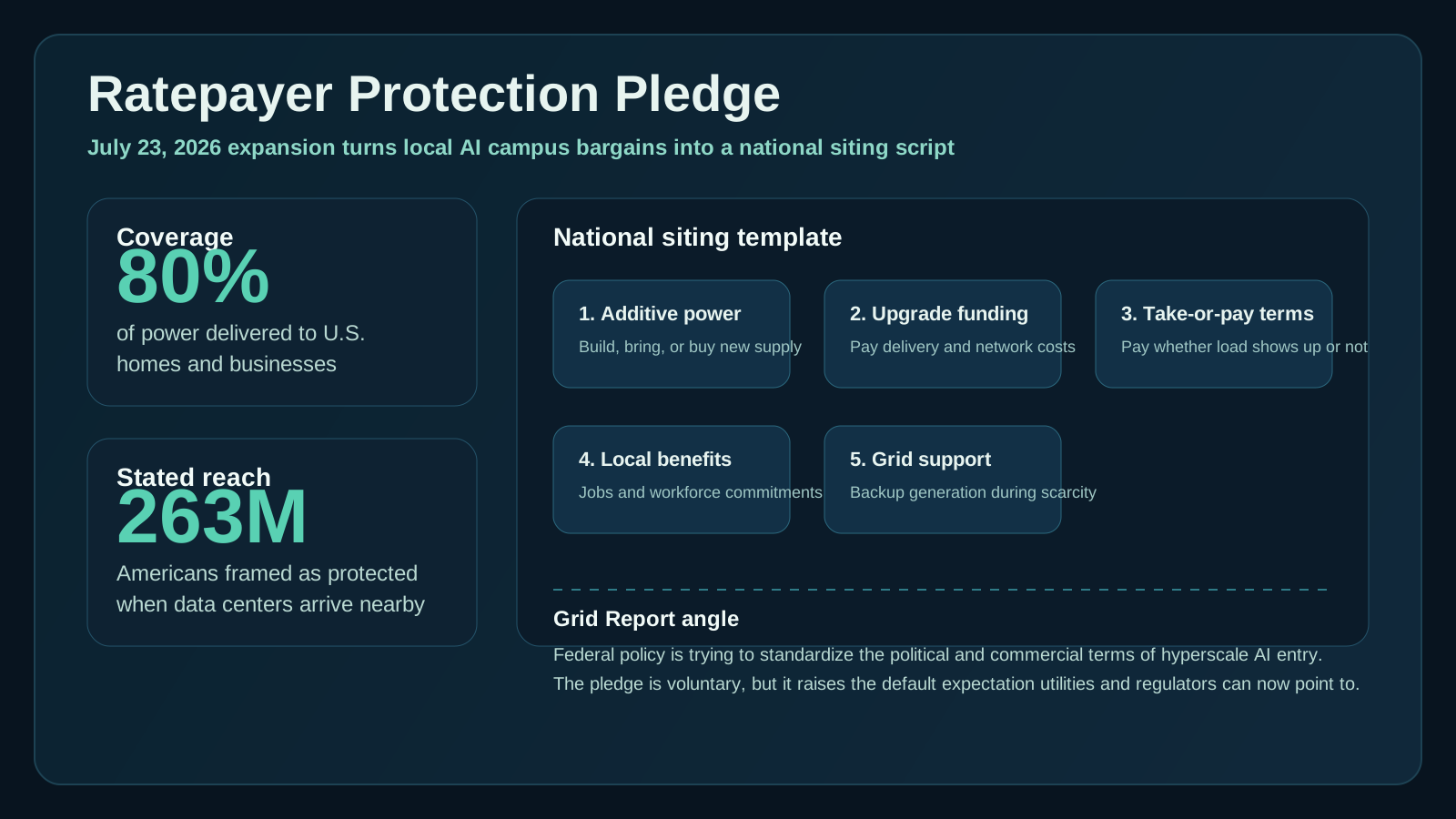
Read article: The White House’s Ratepayer Pledge Expansion Turns AI Siting Into a National Social-License TemplatePolicyEditorial graphic showing a national U.S. grid map linked to data center icons, ratepayer shields, new generation, transmission upgrades, take-or-pay utility contracts, and backup power commitments under the Ratepayer Protection Pledge
PolicyJuly 24, 20264 min read

The White House’s Ratepayer Pledge Expansion Turns AI Siting Into a National Social-License Template

The White House’s July 23, 2026 Ratepayer Protection Pledge expansion clears the publish bar because this is not just another political statement about data centers and electric bills. The more useful signal is that Washington is trying to standardize a national admission test for large AI campuses: bring or buy additive power, fund the delivery upgrades, accept take-or-pay economics, and show ordinary customers a visible benefit.

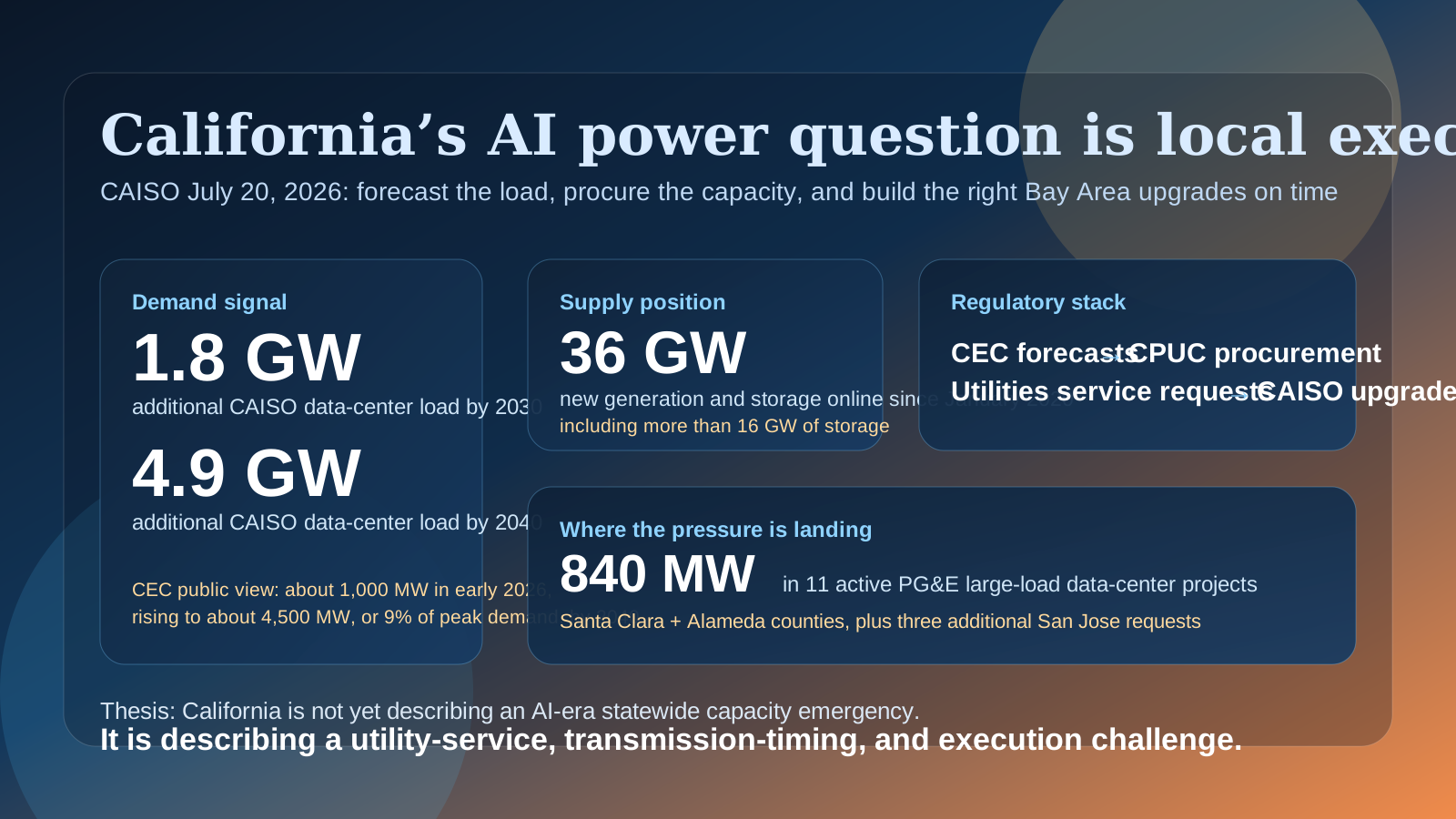
Read article: CAISO’s Large-Load Filing Turns California AI Buildout Into a Utility-Service Execution StoryPolicyEditorial graphic showing California data-center load growth linked to CEC demand forecasts, CPUC procurement orders, PG&E service requests, and CAISO transmission upgrades across the Greater Bay Area
PolicyJuly 23, 20265 min read

CAISO’s Large-Load Filing Turns California AI Buildout Into a Utility-Service Execution Story

CAISO’s July 20, 2026 filing clears the publish bar because it is not another vague warning that AI will overwhelm the grid. The sharper California signal is that the state is treating data-center growth as a utility-service and localized transmission execution problem: forecast the load earlier, contract enough clean capacity, and get the right upgrades built where the requests are actually landing.

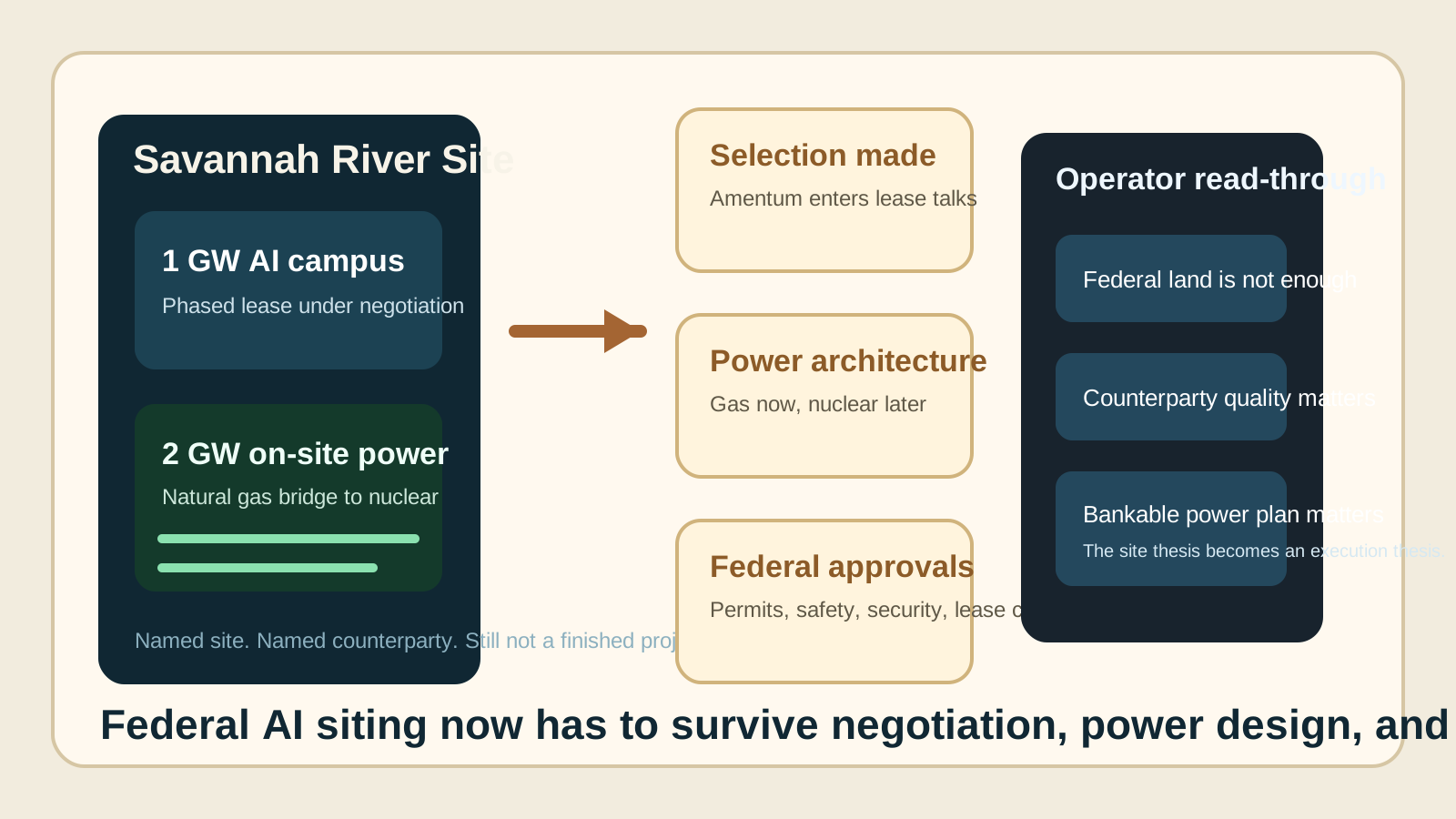
Read article: Savannah River’s Amentum Selection Turns Federal AI Siting Into a Counterparty-and-Power-Credibility TestPolicyEditorial graphic showing the Savannah River Site paired with an AI data center lease, a 1 gigawatt compute block, 2 gigawatts of on-site generation, and the federal approvals and negotiation gates that still control delivery
PolicyJuly 21, 20264 min read

Savannah River’s Amentum Selection Turns Federal AI Siting Into a Counterparty-and-Power-Credibility Test

NNSA’s July 20, 2026 Savannah River announcement clears the bar because it moves the federal-site story past land inventory and into named-project execution. The more useful policy signal is that Washington now has to prove a real counterparty can carry lease negotiations, a 1-gigawatt AI campus, and a 2-gigawatt gas-to-nuclear power stack through approvals without dumping costs onto surrounding ratepayers.

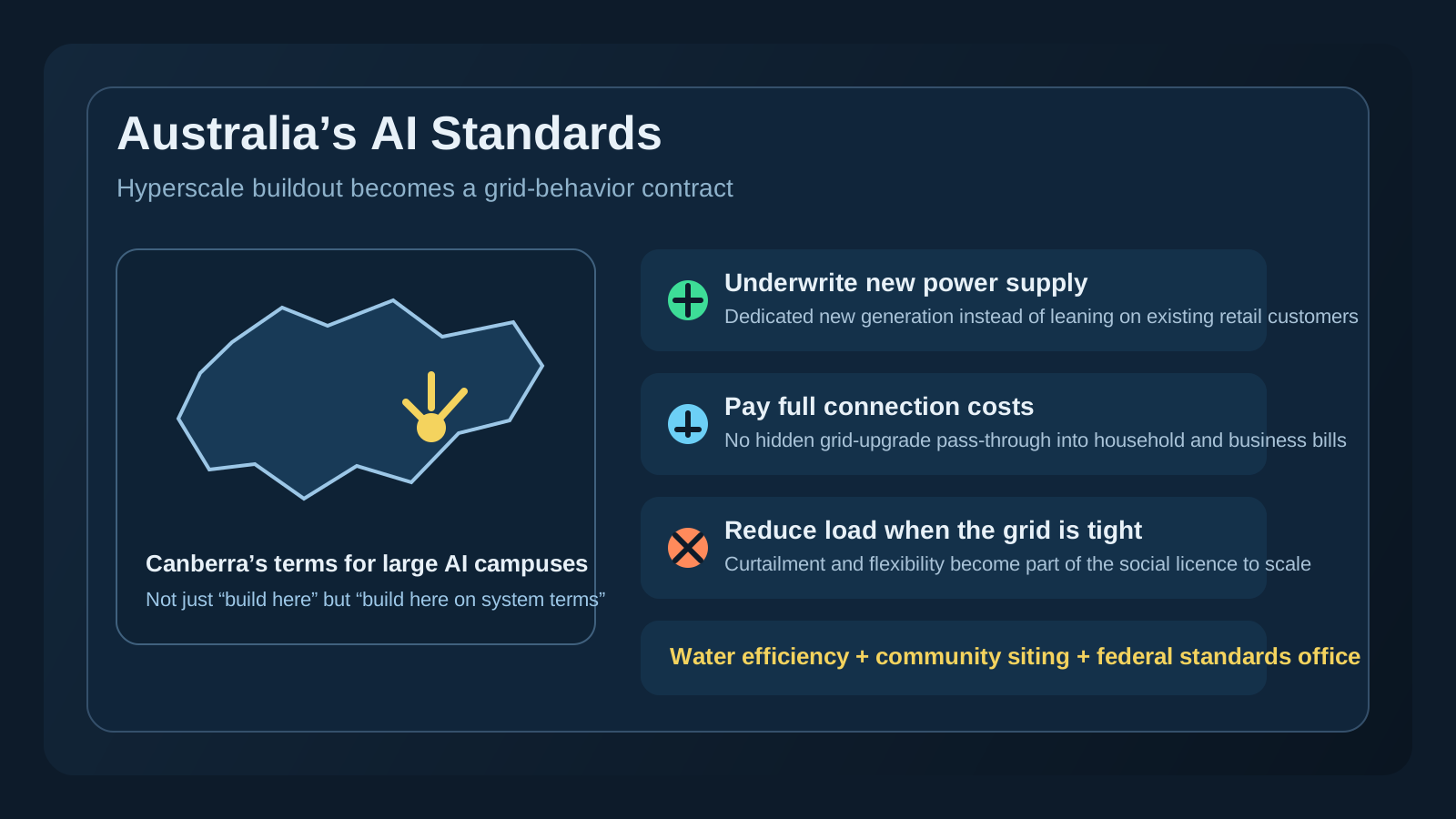
Read article: Australia’s AI Standards Turn Hyperscale Buildout Into a Grid-Behavior ContractPolicyEditorial graphic showing Australia overlaying new legal AI standards onto a hyperscale data center, with dedicated power supply, full connection-cost recovery, demand curtailment, water efficiency, and community siting rules called out as one operating contract
PolicyJuly 20, 20264 min read

Australia’s AI Standards Turn Hyperscale Buildout Into a Grid-Behavior Contract

Australia’s July 15, 2026 AI framework clears the bar because it is not another loose safety-principles document. The stronger policy signal is operational: Canberra is trying to turn hyperscale AI into a legally enforced grid-behavior contract, where developers must bring new power, absorb their own connection costs, curtail when the system is tight, and prove they can scale without socializing the downside.

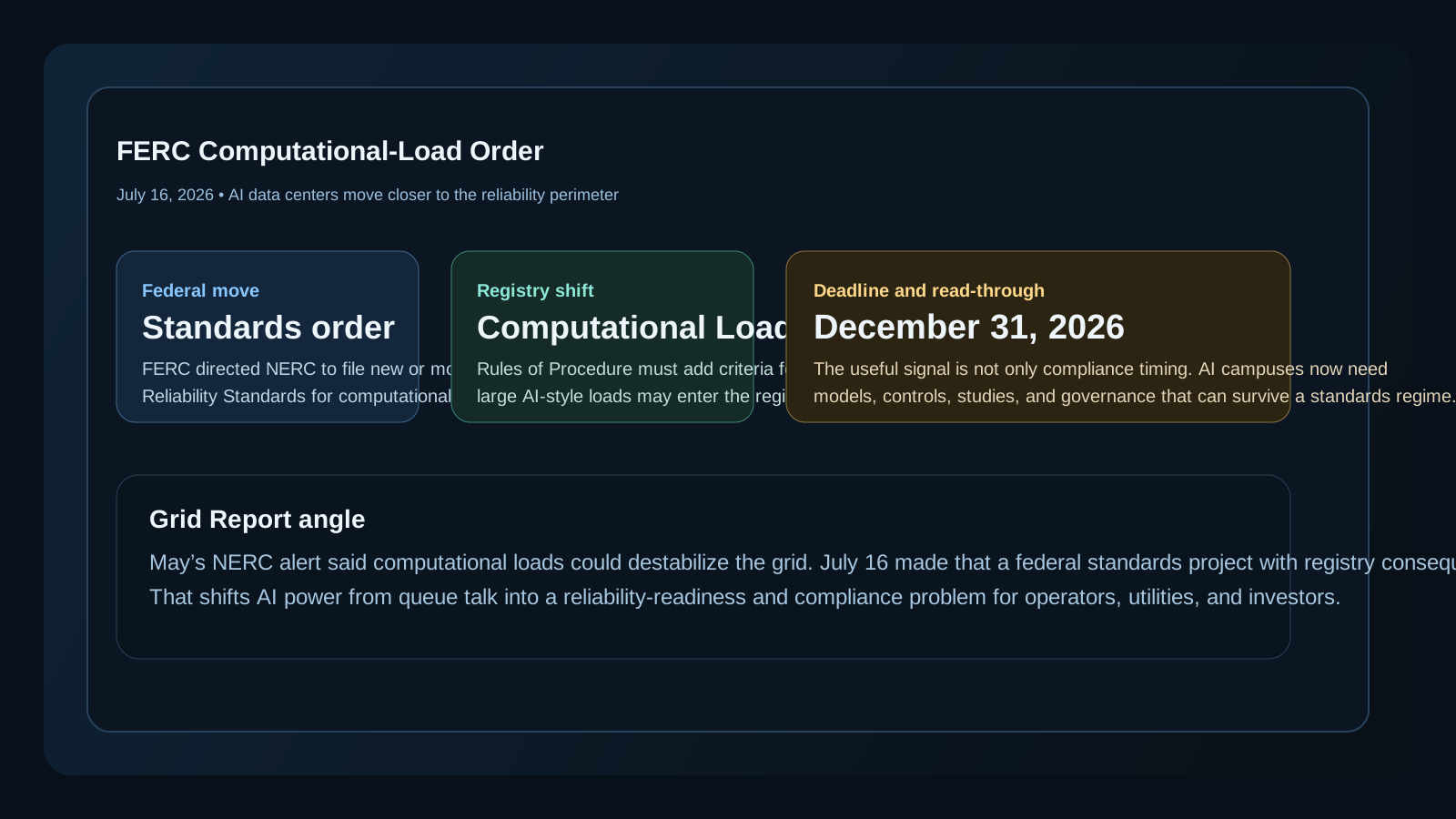
Read article: FERC’s Computational-Load Order Turns AI Data Centers Into a Standards-and-Registry ProblemPolicyEditorial graphic showing FERC ordering NERC to create computational-load reliability standards, registry criteria, and a December 31, 2026 deadline for AI data center compliance rules
PolicyJuly 19, 20265 min read

FERC’s Computational-Load Order Turns AI Data Centers Into a Standards-and-Registry Problem

FERC’s July 16, 2026 computational-load order clears the bar because it does more than acknowledge large AI loads as a reliability concern. The stronger signal is that the federal reliability regime is moving from alerts and queue theory toward mandatory standards and registry criteria that could pull some AI campuses closer to direct compliance obligations.

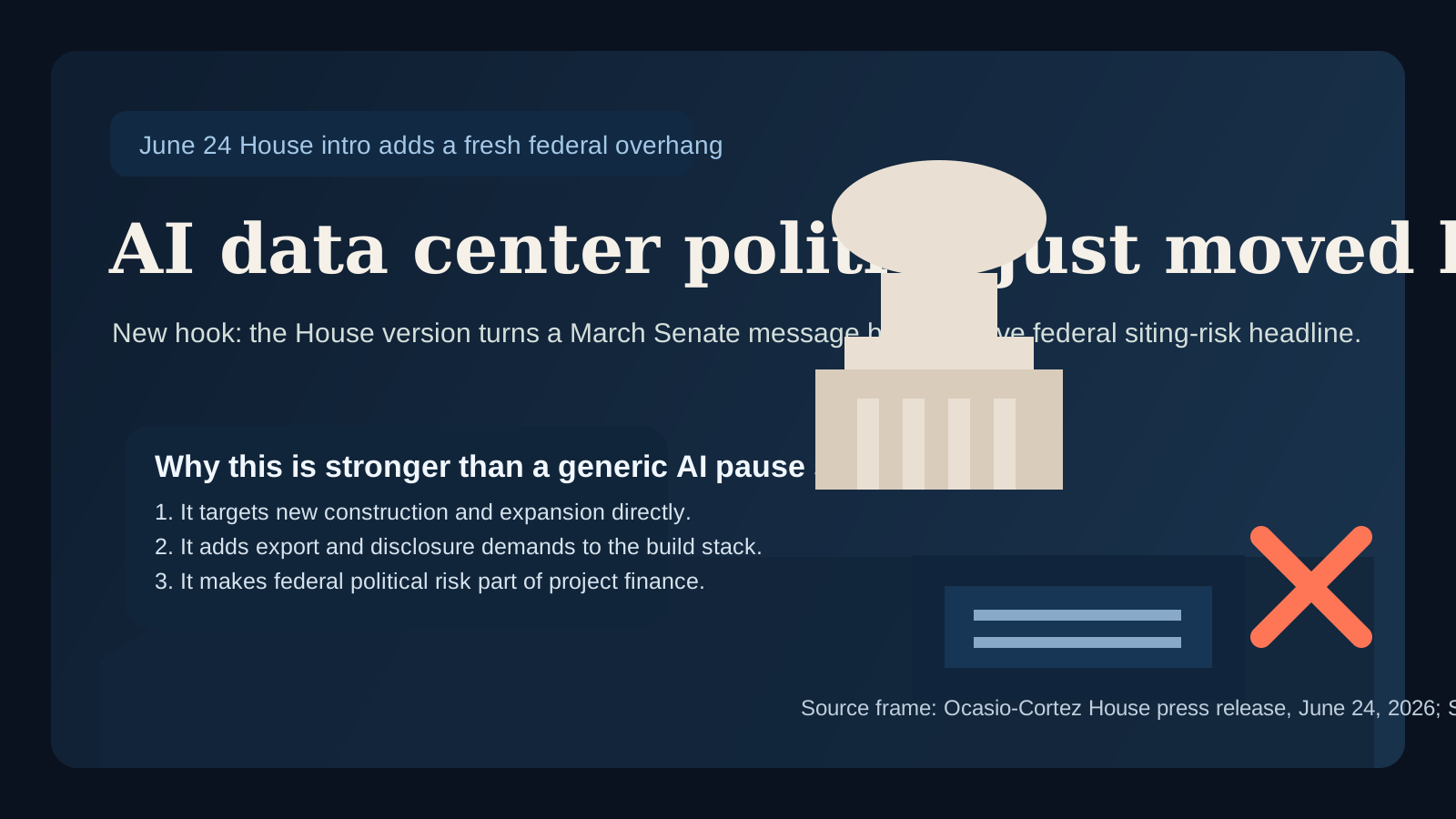
Read article: Ocasio-Cortez’s House Bill Turns the AI Data Center Moratorium Act Into a Federal Siting-RiskPolicyEditorial graphic showing the U.S. Capitol, a paused AI data center campus, and federal policy risk moving into the construction and permitting timeline
PolicyJune 25, 20265 min read

Ocasio-Cortez’s House Bill Turns the AI Data Center Moratorium Act Into a Federal Siting-Risk

Representative Alexandria Ocasio-Cortez’s June 24, 2026 House introduction clears the bar because it gives the AI Data Center Moratorium Act a fresh federal hook after the March Senate rollout. The stronger angle is not another abstract AI-doom debate. It is that a proposal to halt new data center construction and expansion now creates a national siting and financing overhang that operators, investors, and power planners cannot ignore.

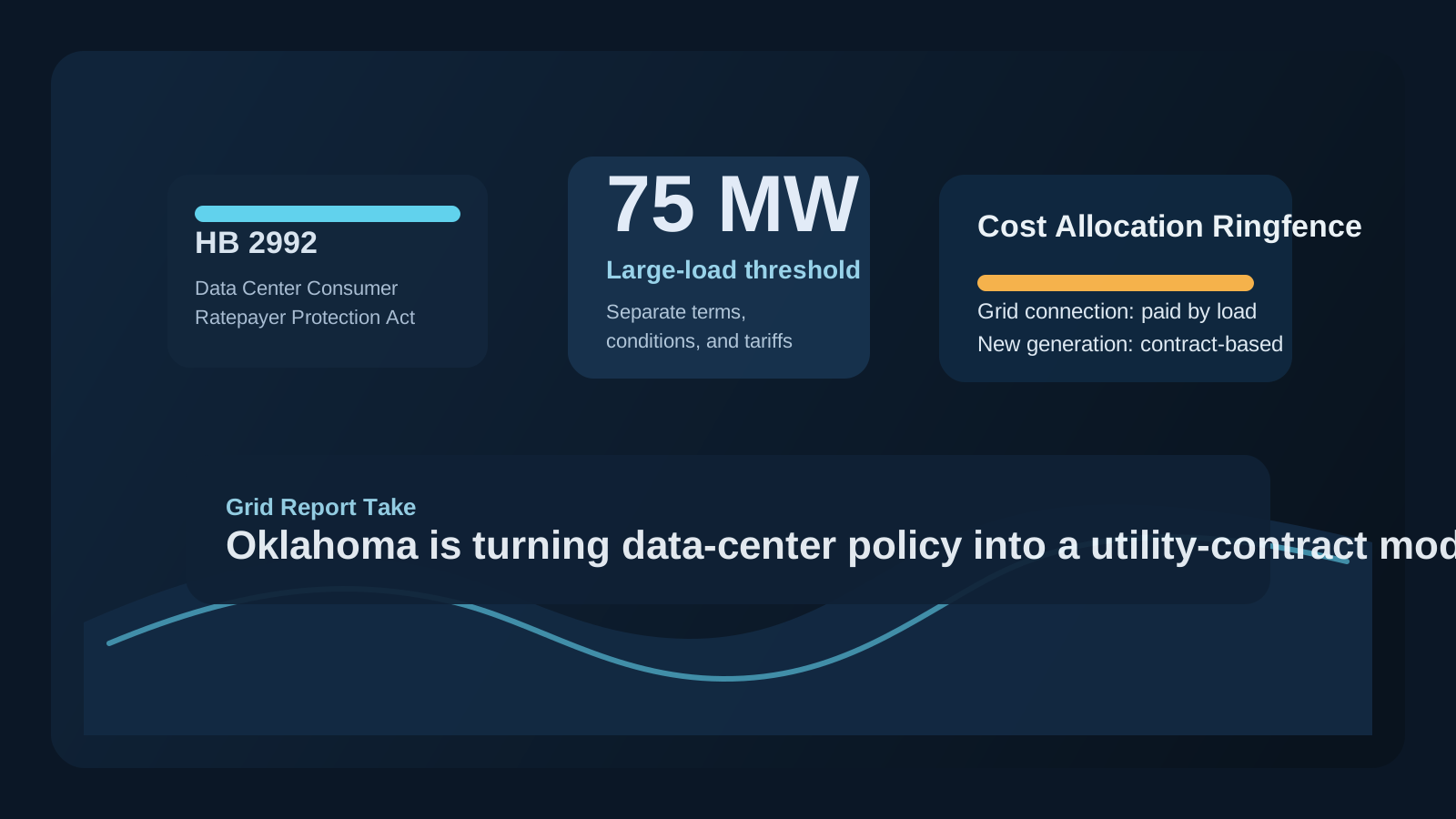
Read article: Oklahoma’s Data Center Ratepayer Law Turns Large-Load Policy Into a Utility Contract ModelPolicyEditorial graphic showing Oklahoma House Bill 2992, a 75 megawatt large-load threshold, and a ringfence around grid connection and generation costs for data center customers
PolicyJune 24, 20265 min read

Oklahoma’s Data Center Ratepayer Law Turns Large-Load Policy Into a Utility Contract Model

OG&E’s June 18 large-load tariff filing gives Oklahoma a sharper AI-power signal than another abstract ratepayer debate. The stronger angle is that the state is turning data-center politics into an operating model: threshold-based contracts, upfront connection payments, long commitments, and a defined mechanism for shielding households if large loads impose system costs.

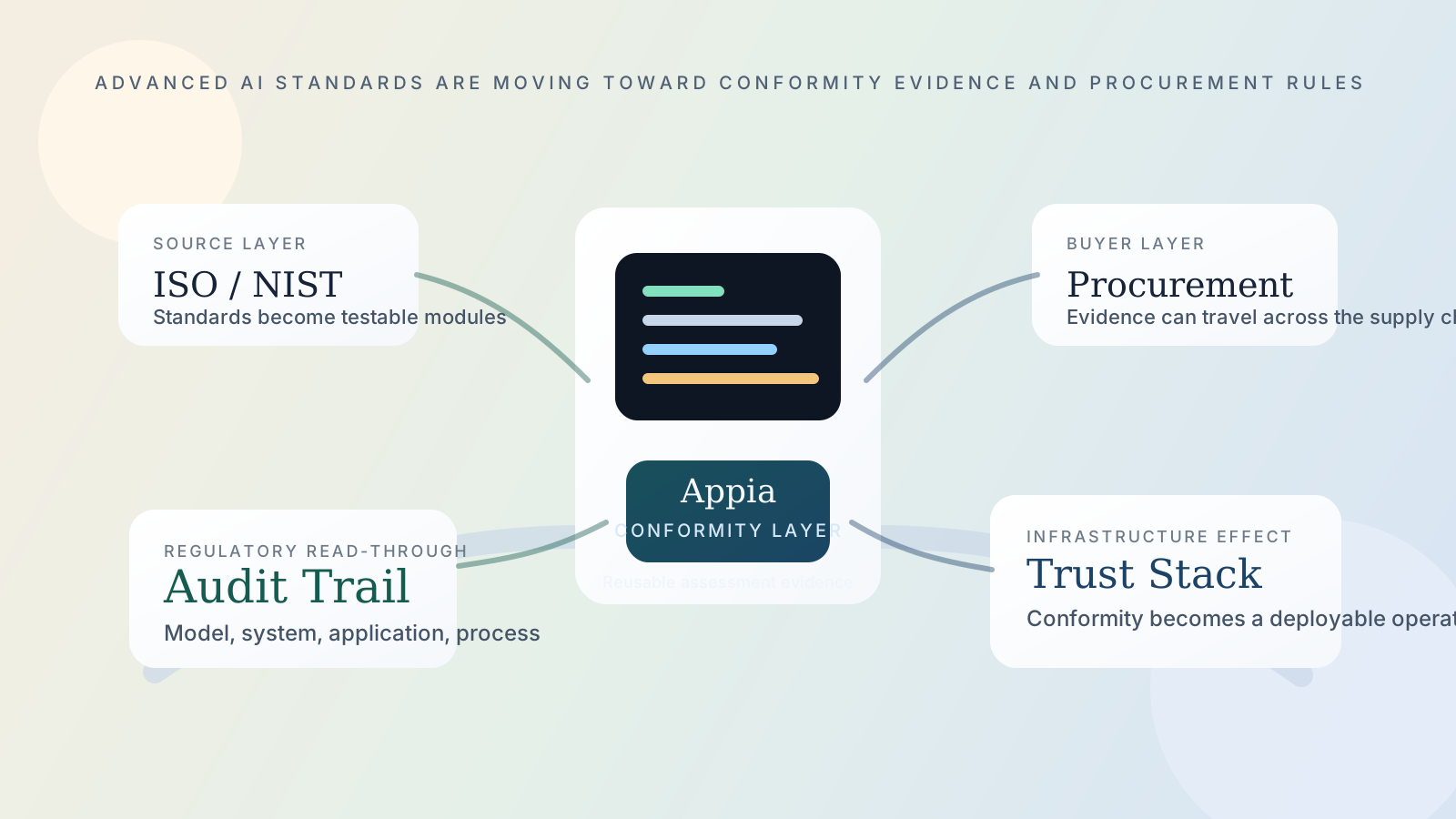
Read article: OpenAI’s Appia Push Turns AI Standards Into a Conformity-and-Procurement LayerPolicyEditorial graphic showing advanced AI standards flowing through conformity assessments, reusable evidence, regulators, and enterprise procurement decisions
PolicyJune 24, 20264 min read

OpenAI’s Appia Push Turns AI Standards Into a Conformity-and-Procurement Layer

OpenAI’s June 23 Appia announcement clears the bar because it is more than another AI-governance statement. The stronger angle is that advanced-AI standards are being translated into modular conformity checks and reusable evidence that could shape procurement, audits, and cross-border regulation.

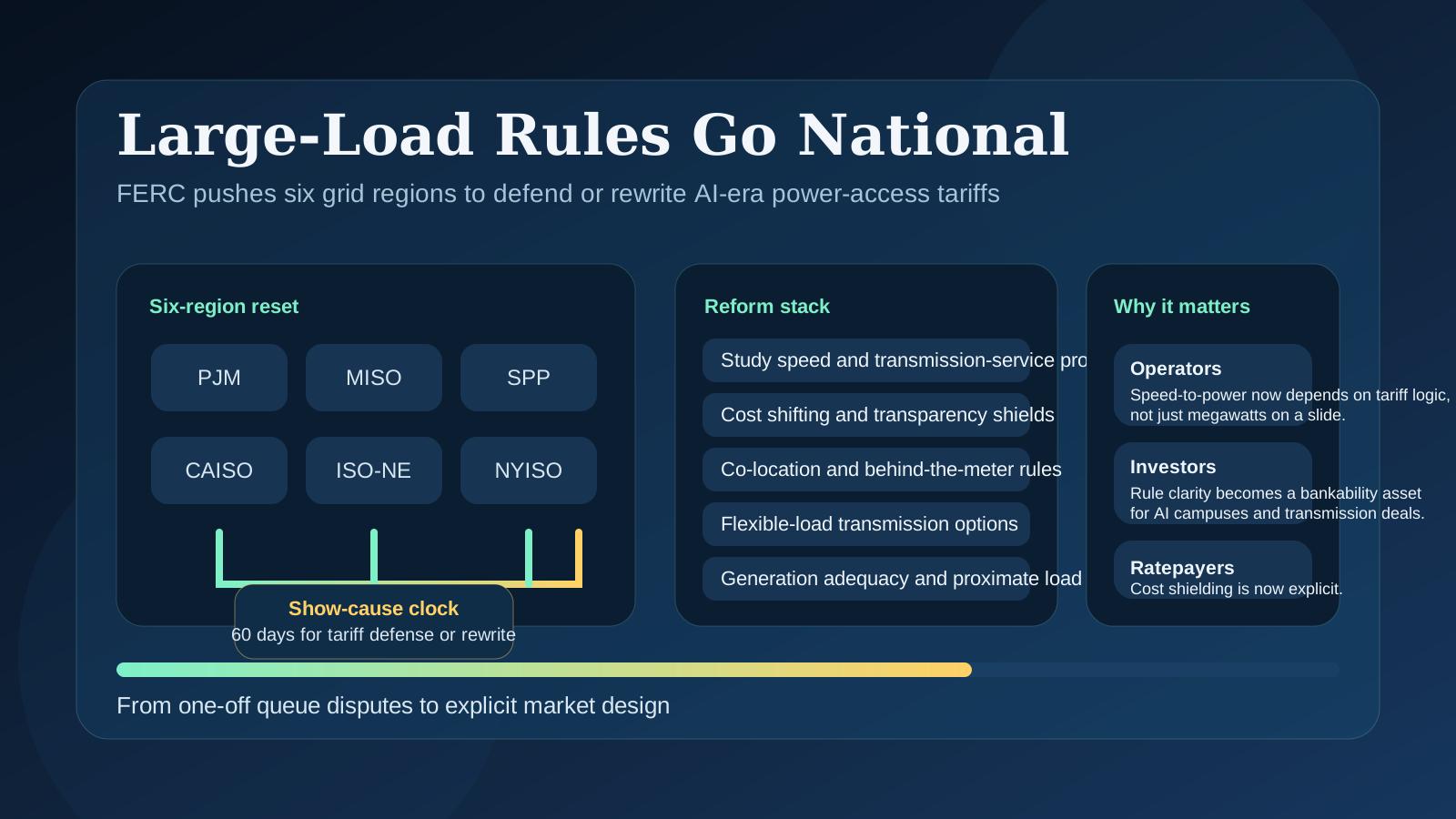
Read article: FERC’s June 18 Show-Cause Orders Turn AI Power Into a National Tariff RewritePolicyEditorial graphic showing six regional grid operators, transmission pathways, and large-load tariff reform for data centers
PolicyJune 22, 20264 min read

FERC’s June 18 Show-Cause Orders Turn AI Power Into a National Tariff Rewrite

FERC’s June 18, 2026 action matters because large-load policy is no longer a PJM-only fight. The commission just told all six major U.S. grid operators to justify or rewrite the tariff rules that will govern how data centers, manufacturers, and other giant loads get access to power.

Read article: Who Pays for AI Data Center Grid Upgrades?PolicyLarge electrical substation with transmission lines and utility equipment
PolicyMay 14, 20267 min read

Who Pays for AI Data Center Grid Upgrades?

AI data centers are turning a quiet utility-planning question into a public policy fight: when a massive new load needs substations, transmission, transformers, and reliability work, should the developer pay, should all customers share the cost, or should regulators create a new large-load tariff before the bill lands on households?

Related paths

Shortcuts for deeper context after the article feed.