
Data Center Grid Costs Hub

Data Center Grid Costs: who pays for AI load, substations, and transmission

A policy and utility-readiness hub for the cost-allocation fights behind AI data centers: interconnection, large-load tariffs, ratepayer protection, and grid upgrade responsibility.

Core question

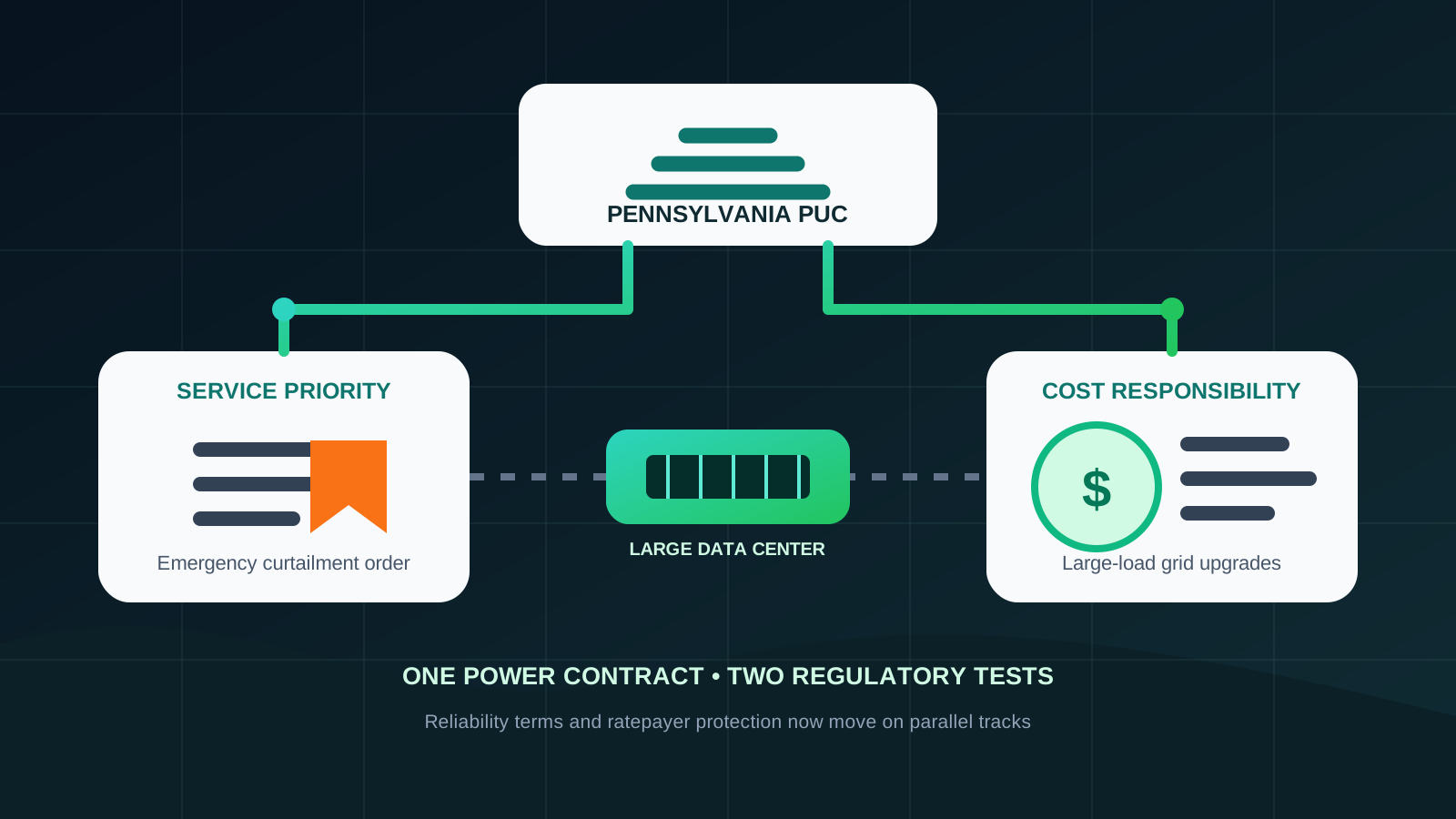
When AI data centers require grid upgrades, which costs belong to developers, utilities, ratepayers, or public policy?

Large electrical substation with transmission lines and utility equipment
Start with this

Who Pays for AI Data Center Grid Upgrades?

AI data centers are turning a quiet utility-planning question into a public policy fight: when a massive new load needs substations, transmission, transformers, and reliability work, should the developer pay, should all customers share the cost, or should regulators create a new large-load tariff before the bill lands on households?

Read the anchor story
Read article: Will Your Electricity Bill Go Up Because of AI?Energy GridResidential electricity meter and utility equipment mounted on the outside of a home
Energy GridMay 13, 20267 min read

Will Your Electricity Bill Go Up Because of AI?

The uncomfortable answer is yes in some places, but not in the simple way most people assume. Household bills are more likely to rise when utilities socialize new infrastructure costs, when capacity-market rules price in projected AI load early, or when local grid bottlenecks force expensive upgrades.

Read article: FERC’s Large-Load Clock Turns AI Power Into a Rules-and-Cost Allocation StoryEnergy GridHigh-voltage transmission towers crossing an open landscape at sunset
Energy GridMay 10, 20266 min read

FERC’s Large-Load Clock Turns AI Power Into a Rules-and-Cost Allocation Story

AI data center demand is no longer only a utility forecast problem. FERC’s large-load interconnection work shows the next constraint is governance: who studies massive new loads, who pays for upgrades, how quickly they can connect, and what happens when speculative projects crowd the queue.

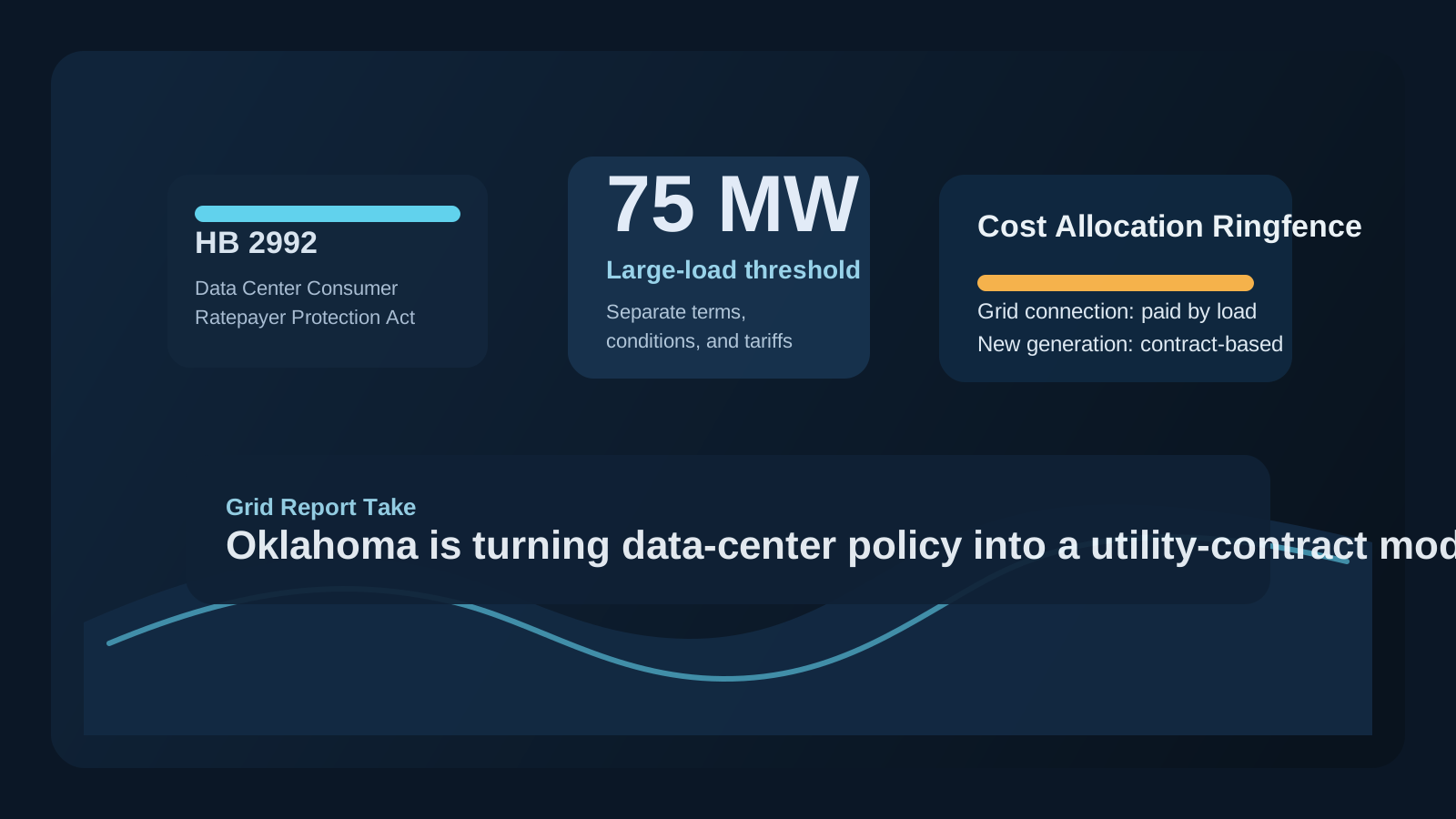
Read article: Oklahoma’s Data Center Ratepayer Law Turns Large-Load Policy Into a Utility Contract ModelPolicyEditorial graphic showing Oklahoma House Bill 2992, a 75 megawatt large-load threshold, and a ringfence around grid connection and generation costs for data center customers
PolicyJune 24, 20265 min read

Oklahoma’s Data Center Ratepayer Law Turns Large-Load Policy Into a Utility Contract Model

OG&E’s June 18 large-load tariff filing gives Oklahoma a sharper AI-power signal than another abstract ratepayer debate. The stronger angle is that the state is turning data-center politics into an operating model: threshold-based contracts, upfront connection payments, long commitments, and a defined mechanism for shielding households if large loads impose system costs.

Read article: NERC’s Level 3 Alert Turns AI Data Centers Into a Grid Reliability ProblemEnergy GridHigh-voltage transmission towers crossing open land during sunset
Energy GridMay 14, 20267 min read

NERC’s Level 3 Alert Turns AI Data Centers Into a Grid Reliability Problem

NERC’s May 2026 computational-load alert is a quiet but important shift: AI data centers are no longer being treated only as big electricity customers. They are becoming reliability actors that utilities and grid operators need to model, instrument, commission, and control more carefully.

Read article: AI Procurement Is Becoming a Government Infrastructure QuestionInfrastructureOffice strategy meeting with a presenter and policy-style planning session
InfrastructureMay 6, 20266 min read

AI Procurement Is Becoming a Government Infrastructure Question

Public-sector AI adoption is moving beyond picking a model vendor. The harder issue is how governments buy, govern, secure, and continuously operate AI systems across agencies without locking themselves into a brittle supplier stack.

Why this hub matters

Topic hubs turn daily coverage into authority.

Each hub gives readers and search engines a durable map of the strongest Grid Report coverage in a lane. New articles can link back here, and this page can link forward to the latest source-backed reporting, charts, and market context.