- ABB’s new synchronous-condenser package is worth publishing because the useful signal is not simply that another industrial supplier has found a way to market into AI infrastructure.
- The official ABB technical framing is concrete.
- The June 10 launch matters because it productizes that logic into a faster-deployment package.
- Section
- Infrastructure
- Read time
- 5 min read
- Data included
- Why system strength is becoming part of AI interconnection
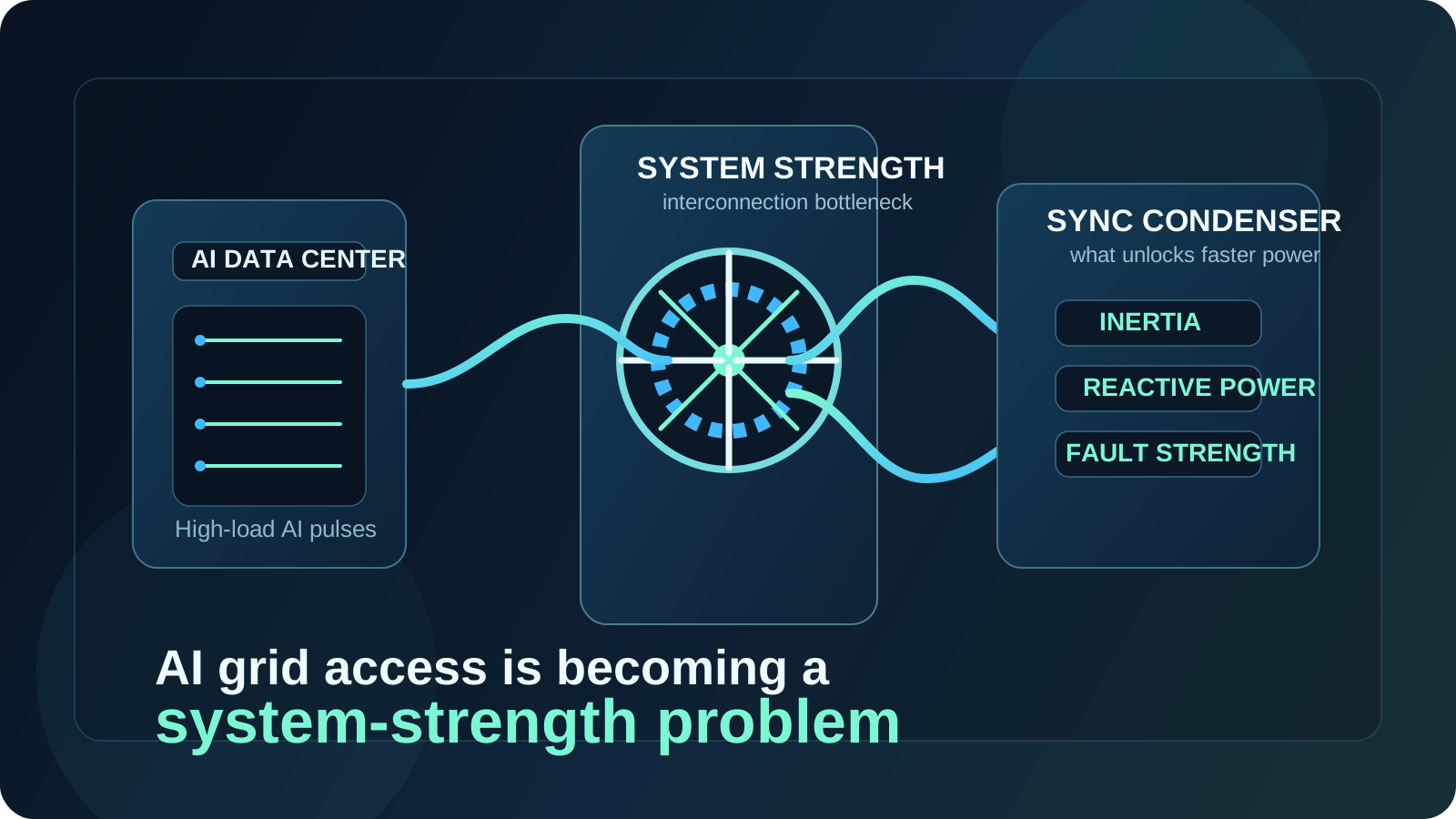
Why system strength is becoming part of AI interconnection
The useful shift is that some AI campuses now need more than raw megawatt availability. They need electrical support at the interconnection point that keeps the surrounding grid stable when large compute loads move quickly.
| Constraint layer | What ABB is targeting | Why it matters for AI data centers | Operator read-through |
|---|---|---|---|
| Inertia | Rotating support that helps steady system frequency | Large AI loads can change quickly and amplify instability on weaker systems. | Interconnection timing increasingly depends on how the grid behaves during sudden load movement, not just on contracted capacity. |
| Reactive power | Voltage support by supplying or absorbing reactive power | Voltage excursions can delay approvals or require extra mitigation near the point of interconnection. | Projects may need grid-support equipment as part of the energization package instead of as a later optimization. |
| Short-circuit strength | Fault support and stronger electrical behavior during disturbances | Weak fault performance can limit how much new load a node can safely absorb. | The bottleneck can sit in electrical strength and protection behavior even when headline megawatts look available. |
| Deployment speed | Pre-engineered modular package instead of one-off design work | If these constraints are repeatable, packaged solutions can shorten the path from plan to energization. | The market is starting to value off-the-shelf interconnection hardening, not only bespoke campus design. |
Source context: ABB’s official synchronous-condenser materials, ABB’s VoltaGrid releases, and ABB Motion’s June 2026 launch post.
ABB’s new synchronous-condenser package is worth publishing because the useful signal is not simply that another industrial supplier has found a way to market into AI infrastructure. The stronger signal is that some of the hardest data-center bottlenecks are moving closer to the grid edge. In more locations, the question is no longer only whether a project can secure enough generation or transformer capacity. It is whether the surrounding system is strong enough to absorb rapid AI load swings without voltage instability, weak fault performance, or long interconnection delays.
The official ABB technical framing is concrete. On its synchronous-condenser materials, ABB says the machines provide high and instantaneous inertia, support short-circuit performance, and maintain network voltage by supplying or absorbing reactive power. In ABB’s November 2025 and April 2026 VoltaGrid releases, the company made the same point in a more AI-specific context, positioning synchronous condensers and prefabricated eHouse units as grid-stabilization infrastructure for data-center power systems in the United States.
The next AI power bottleneck is not always more megawatts. In many places, it is whether the grid is electrically strong enough to absorb the load at the point of connection.
The June 10 launch matters because it productizes that logic into a faster-deployment package. Based on ABB Motion’s launch post and contemporaneous trade coverage, the company is now offering a pre-engineered modular package aimed directly at data-center operators facing dynamic AI workloads and weak-grid connection constraints. That matters because it shifts the conversation from one-off engineering fixes to a repeatable interconnection product.
The original Grid Report angle is that AI data-center speed to power is becoming a system-strength problem. Many AI campuses do not fail in planning because no megawatts exist anywhere on the system. They fail because the interconnection point lacks enough inertia, reactive support, or short-circuit strength to keep voltage and frequency behavior inside acceptable bounds when large compute loads ramp hard, trip, or change operating modes quickly. In that environment, a synchronous condenser is not just an auxiliary machine. It becomes part of the permission structure for getting energized sooner.
That makes this story different from the site’s recent co-located generation, grid-flexibility, and thermal-capacity coverage. The Meitner piece was about siting compute next to power. The DOE microgrid and diesel stories were about bringing or replacing supply. The VoltaGrid and utility-flexibility stories were about behind-the-meter and software coordination. ABB is a different layer. It is about hardening the electrical behavior of the connection itself so a project can clear utility and grid-operator concerns faster.
For operators, the practical implication is that interconnection strategy is getting more granular. A project team may need to think not only about contracted megawatts, backup generation, and substation timing, but also about dynamic voltage support, fault current, and how AI load shapes look to the surrounding network. That is an engineering and procurement shift. The equipment stack around the point of interconnection is starting to matter as much as the campus behind it.
For investors and infrastructure watchers, the read-through is that value in AI buildout will not sit only with chip vendors, developers, or utilities. It can also accrue to the companies that solve the last-mile power-quality constraints between announced capacity and actual energization. If data-center projects increasingly need packaged system-strength solutions to connect on time, then parts of the electrical-equipment market become more central to AI deployment economics than generic capex screens suggest.
The search case is strong because the article answers a live, specific question that generic AI-infrastructure rewrites will miss: why does ABB’s synchronous-condenser package matter, and what does it reveal about the real grid bottlenecks facing AI data centers? Readers searching for ABB synchronous condenser package, data center grid stability, AI interconnection delays, or reactive power and fault strength in data centers get a concrete operator thesis instead of a commodity product brief.
Sources
ABB Motion, LinkedIn launch post on the synchronous condenser package for data centers, viewed June 10, 2026: https://www.linkedin.com/posts/abb-motion_datacenters-abb-motionhighpower-activity-7470022129174896642-TN4Q
ABB, synchronous condensers product page accessed June 10, 2026: https://new.abb.com/motors-generators/synchronous-condensers
ABB, “ABB and VoltaGrid partner to deliver stable data center power to support AI growth,” published November 10, 2025: https://new.abb.com/news/detail/130817/abb-and-voltagrid-partner-to-deliver-stable-data-center-power-to-support-ai-growth
ABB, “ABB and VoltaGrid extend collaboration on data center power infrastructure,” published April 9, 2026: https://new.abb.com/news/detail/134418/abb-and-voltagrid-extend-collaboration-on-data-center-power-infrastructure
By Nawaz Lalani
The Grid Report is written by Nawaz Lalani and focuses on source-backed coverage of AI infrastructure, grid power demand, automation systems, and market signals.
Follow the signal, not just the headline.
Get the daily Grid brief for source-backed coverage on AI power demand, infrastructure timing, automation, and market signals.