- Amazon’s June 8 Corning announcement is worth publishing because the useful signal is not simply that one more industrial supplier landed a hyperscaler contract.
- The official facts are specific enough to matter.
- That matters because the AI buildout is no longer only pre-booking GPUs, power-ready sites, and cooling capacity.
- Section
- Infrastructure
- Read time
- 5 min read
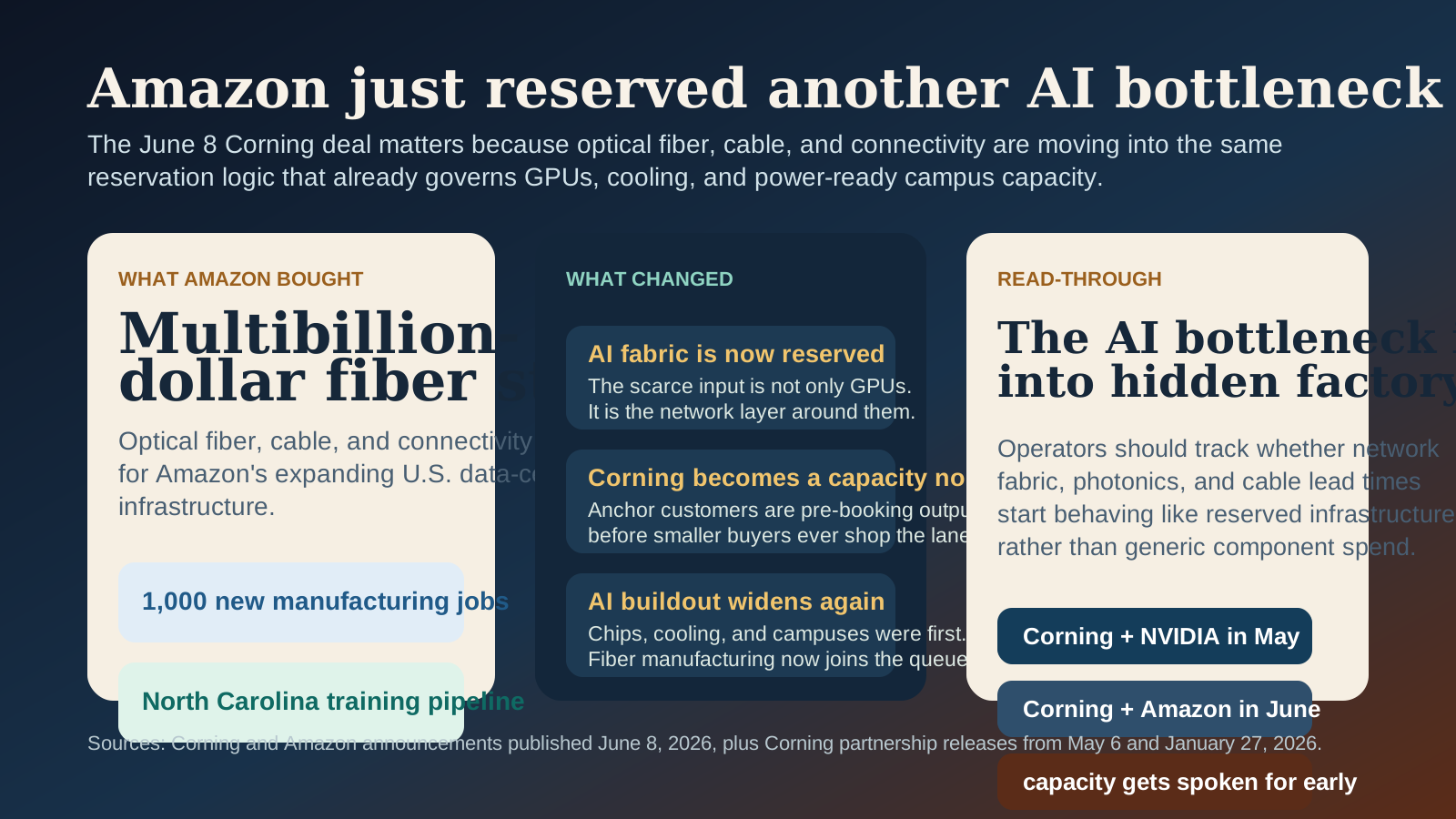
Amazon’s June 8 Corning announcement is worth publishing because the useful signal is not simply that one more industrial supplier landed a hyperscaler contract. The stronger signal is that AI infrastructure is widening the bottleneck map again. This time the pressure is moving into optical fiber, cable, and connectivity manufacturing, which means the network fabric inside and between AI data halls is starting to be reserved upstream instead of treated like an ordinary procurement detail.
The official facts are specific enough to matter. Corning and Amazon said on June 8 that they signed a multibillion-dollar agreement under which Corning will supply the optical fiber, cable, and connectivity solutions powering Amazon’s expanding U.S. data-center infrastructure. The companies also said the agreement will create 1,000 new jobs at Corning’s North Carolina facilities, support additional construction jobs tied to facility expansion, and extend a fiber-optic technician training program with Catawba Valley Community College.
The useful Amazon-Corning signal is that AI infrastructure is no longer only reserving chips and powered campuses. It is reserving the optical fabric behind them too.
That matters because the AI buildout is no longer only pre-booking GPUs, power-ready sites, and cooling capacity. It is also starting to pre-book the physical network layer that lets those systems scale. Modern AI campuses do not just need compute. They need dense optical connectivity to move data across racks, clusters, and buildings without turning network latency and fabric throughput into the next hidden choke point. Once a hyperscaler is signing multibillion-dollar supply deals for that layer, it is telling the market that the fabric around the chips is strategic infrastructure too.
The June 8 release also looks stronger when placed in sequence. On May 6, Corning and NVIDIA announced a multiyear partnership to expand U.S. manufacturing of advanced optical connectivity solutions for AI infrastructure. In January, Corning said Meta had signed a multiyear agreement worth up to $6 billion to accelerate U.S. data-center buildout. The Amazon deal adds another anchor customer to the same pattern. Corning is becoming less like a generic component vendor and more like a reservation-backed manufacturing node inside the AI capex stack.
This clears the duplicate block because the thesis is materially different from the site’s recent cooling, packaging, and campus-finance stories. Those pieces were about thermal bottlenecks, advanced packaging throughput, or long-duration infrastructure paper. This one is about the network layer quietly moving into the same scarcity logic. The useful question is no longer only whether enough data halls get built. It is whether the optical fabric feeding them gets spoken for early by the largest buyers.
For operators, the practical implication is that AI buildout risk may increasingly show up in parts of the stack that used to look routine. If a few hyperscalers pre-commit large volumes of optical connectivity, then lead times, pricing, and allocation discipline can tighten for everyone else trying to scale clusters quickly. That can matter for enterprise operators, cloud challengers, and campus developers even if they already solved power and cooling.
For investors, the stronger read-through is that AI infrastructure demand is migrating into the industrial middle layers of the supply chain. A supplier attached to multiyear anchor-customer agreements may deserve to be read less as a cyclical component name and more as a leveraged participant in the physical AI buildout. The strategic value sits not only in selling fiber, but in controlling capacity that hyperscalers increasingly want to reserve before the next shortage is obvious to the rest of the market.
The Grid Report view is that this clears the search bar because it answers a specific and timely question better than a generic Corning or Amazon summary: what changed in the June 8 deal? The useful answer is that AI data-center fiber is starting to behave like a reserved industrial input, which means the bottleneck has widened again from chips and power into the hidden factory capacity behind network fabric.
Sources
Corning, “Amazon Announces Agreement with Corning to Boost U.S. Fiber Optics Manufacturing, Creating 1,000 Advanced Manufacturing Jobs in North Carolina,” published June 8, 2026: https://www.corning.com/worldwide/en/about-us/news-events/news-releases/2026/06/amazon-announces-agreement-with-corning-to-boost-us-fiber-optics-manufacturing-creating-1000-advanced-manufacturing-jobs-in-north-carolina.html
Amazon, “Amazon announces agreement with Corning to boost US fiber optics manufacturing, creating 1,000 advanced manufacturing jobs in North Carolina,” accessed June 8, 2026: https://www.aboutamazon.com/news/company-news/amazon-corning-fiber-optics-1000-jobs-north-carolina
Corning, “NVIDIA and Corning Announce Long-Term Partnership to Strengthen U.S. Manufacturing for AI Infrastructure,” published May 6, 2026: https://investor.corning.com/news-and-events/news/news-details/2026/NVIDIA-and-Corning-Announce-Long-Term-Partnership-To-Strengthen-U-S--Manufacturing-for-AI-Infrastructure/default.aspx
Corning, “Corning and Meta Announce Multiyear, up to $6 Billion Agreement to Accelerate US Data Center Buildout,” published January 27, 2026: https://investor.corning.com/news-and-events/news/news-details/2026/Corning-and-Meta-Announce-Multiyear-up-to-6-Billion-Agreement-to-Accelerate-US-Data-Center-Buildout/default.aspx
By Nawaz Lalani
The Grid Report is written by Nawaz Lalani and focuses on source-backed coverage of AI infrastructure, grid power demand, automation systems, and market signals.
Follow the signal, not just the headline.
Get the daily Grid brief for source-backed coverage on AI power demand, infrastructure timing, automation, and market signals.