- EIA’s July 20 data clears the publish bar because it shows something operational, not just aspirational.
- The stronger Grid Report angle is that downstate reliability is increasingly a transmission-utilization problem.
- The official project facts support that read.
- Section
- Energy
- Read time
- 4 min read
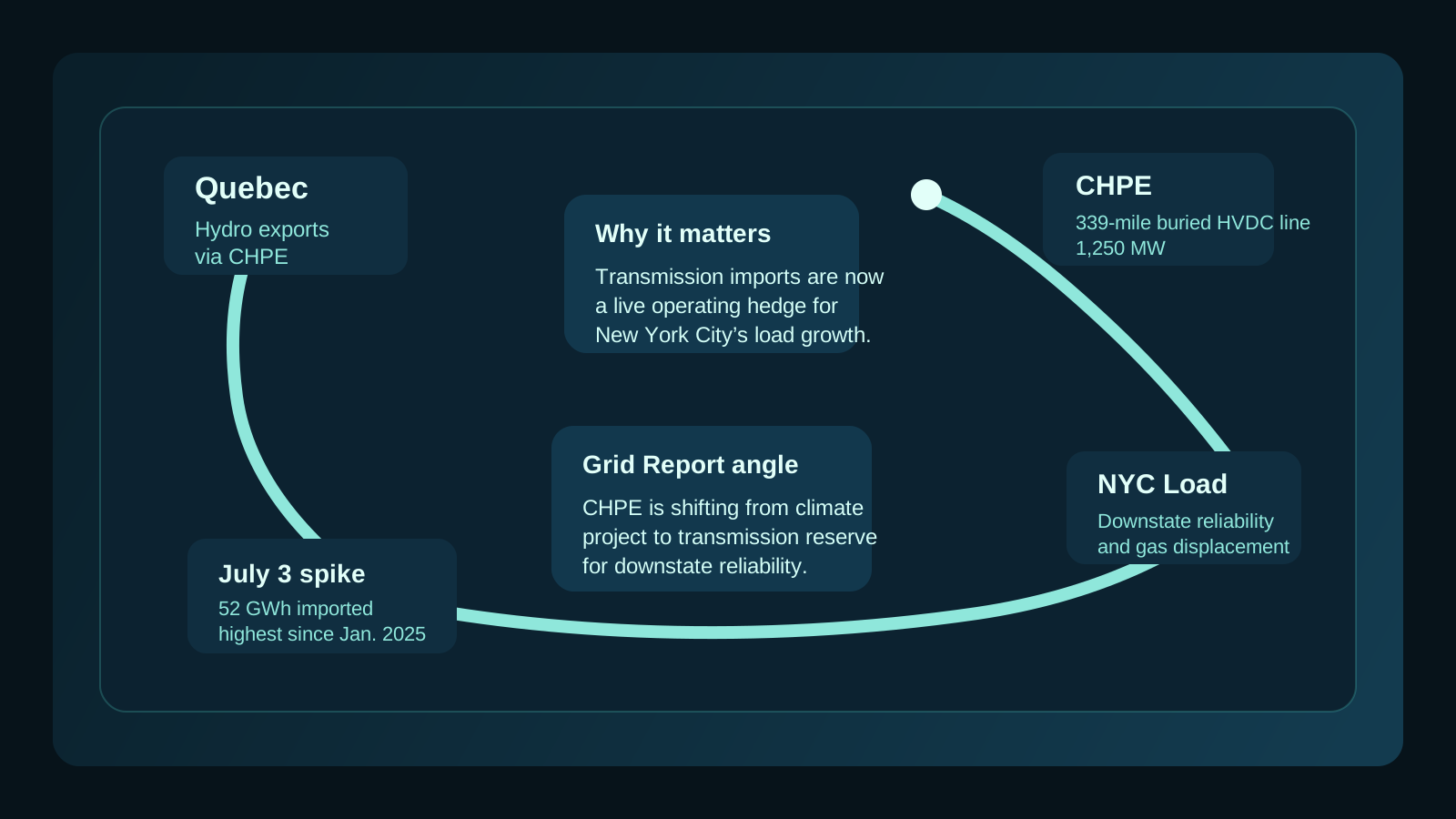
EIA’s July 20 data clears the publish bar because it shows something operational, not just aspirational. On July 3, New York imported 52 gigawatt-hours of electricity from Canada, the most traded between the two areas since January 2025. EIA says some of that electricity flowed on the Champlain Hudson Power Express, the new high-voltage transmission line that entered commercial operation in May. That matters because it turns CHPE from a long-promised decarbonization project into a functioning part of New York City’s real supply stack.
The stronger Grid Report angle is that downstate reliability is increasingly a transmission-utilization problem. New York already knew it needed more clean supply into the city after Indian Point closed and as older gas assets face tighter operating pressure. What the July import spike shows is that a new cross-border line is not just helping the emissions ledger. It is creating a practical hedge against the city’s exposure to constrained local generation, expensive downstate power, and future load growth that arrives before enough new in-state capacity does.
CHPE is no longer only a climate project. It is starting to behave like reserve transmission for a dense, expensive, and reliability-sensitive load pocket.
The official project facts support that read. CHPE says the 339-mile line is fully operational, that Hydro-Quebec’s state contract began on June 1, and that the project can deliver 1,250 megawatts directly into New York City. Governor Kathy Hochul’s June 16 announcement said the line is expected to deliver 10.4 terawatt-hours per year, meet up to 20% of New York City’s energy needs, and reduce reliance on gas-fired generation downstate. Those are not abstract planning assumptions anymore. EIA’s July 20 trade note shows the line has already begun to matter in actual interchange flows.
That is why this belongs in energy-grid rather than generic climate coverage. The key issue is not simply that New York built a cleaner wire. The key issue is that transmission is starting to act like reserve infrastructure for a dense, high-cost load pocket. Once a city can pull meaningful incremental power through a dedicated import path, the strategic question changes from “did the project get approved?” to “how much optionality does it create when heat, outages, retirements, and new large loads tighten the system?”
The timing matters for AI and infrastructure watchers too. New York is simultaneously trying to manage data-center growth, protect ratepayers, and keep a shrinking downstate reliability margin from getting worse. A new import corridor does not solve those problems on its own. But it does change the planning baseline. It gives state officials, utilities, and large-load developers more evidence that transmission can buy time and flexibility in places where local generation additions are politically hard, slow, or expensive.
This also clears the duplicate screen. The site already covered New York’s July 14 data-center moratorium as a grid-and-ratepayer test and FERC’s large-load actions as a rules story. This thesis is materially different. The signal here is not “New York is skeptical of hyperscale growth.” It is that one of the country’s biggest transmission builds is already showing how import infrastructure can alter the operating economics of a stressed urban load zone.
There are still limits. EIA does not claim all of the July 3 imports came through CHPE, and one high-trade day does not prove the line will solve every seasonal reliability or affordability problem downstate. The project also depends on sustained Hydro-Quebec deliveries and the surrounding New York network being able to use that power effectively. But those caveats do not weaken the core signal. They sharpen it: the next competition for load-heavy regions may hinge less on who promises clean energy and more on who has already built deliverable import capacity into the right node.
That is enough to publish. Searchers looking up CHPE or New York’s import spike do not need another ribbon-cutting recap. The more useful answer is that the line is beginning to function as a real grid product for New York City: a reliability, congestion, and cost hedge that changes what planners can do next.
Sources
U.S. Energy Information Administration, “New York imports more electricity from Canada after high-voltage transmission line opens,” published July 20, 2026: https://www.eia.gov/todayinenergy/detail.php?id=67867
Governor Kathy Hochul, “Governor Hochul Celebrates Completion of Champlain Hudson Power Express Project,” published June 16, 2026: https://www.governor.ny.gov/news/governor-hochul-celebrates-completion-champlain-hudson-power-express-project
Champlain Hudson Power Express, project home page, accessed July 20, 2026: https://chpexpress.com/
By Nawaz Lalani
The Grid Report is written by Nawaz Lalani and focuses on source-backed coverage of AI infrastructure, grid power demand, automation systems, and market signals.
Follow the signal, not just the headline.
Get the daily Grid brief for source-backed coverage on AI power demand, infrastructure timing, automation, and market signals.