- New York’s July 14 moratorium clears the publish bar because the useful signal is not that one state is skeptical of data centers.
- Governor Kathy Hochul announced on July 14 that New York is temporarily pausing State environmental permits for up to one year while the state develops a nation-leading regulatory framework for new hyperscale data centers.
- The executive order makes the power signal even clearer.
- Section
- Energy
- Read time
- 4 min read
- Data included
- New York is converting a moratorium into a large-load cost-allocation framework
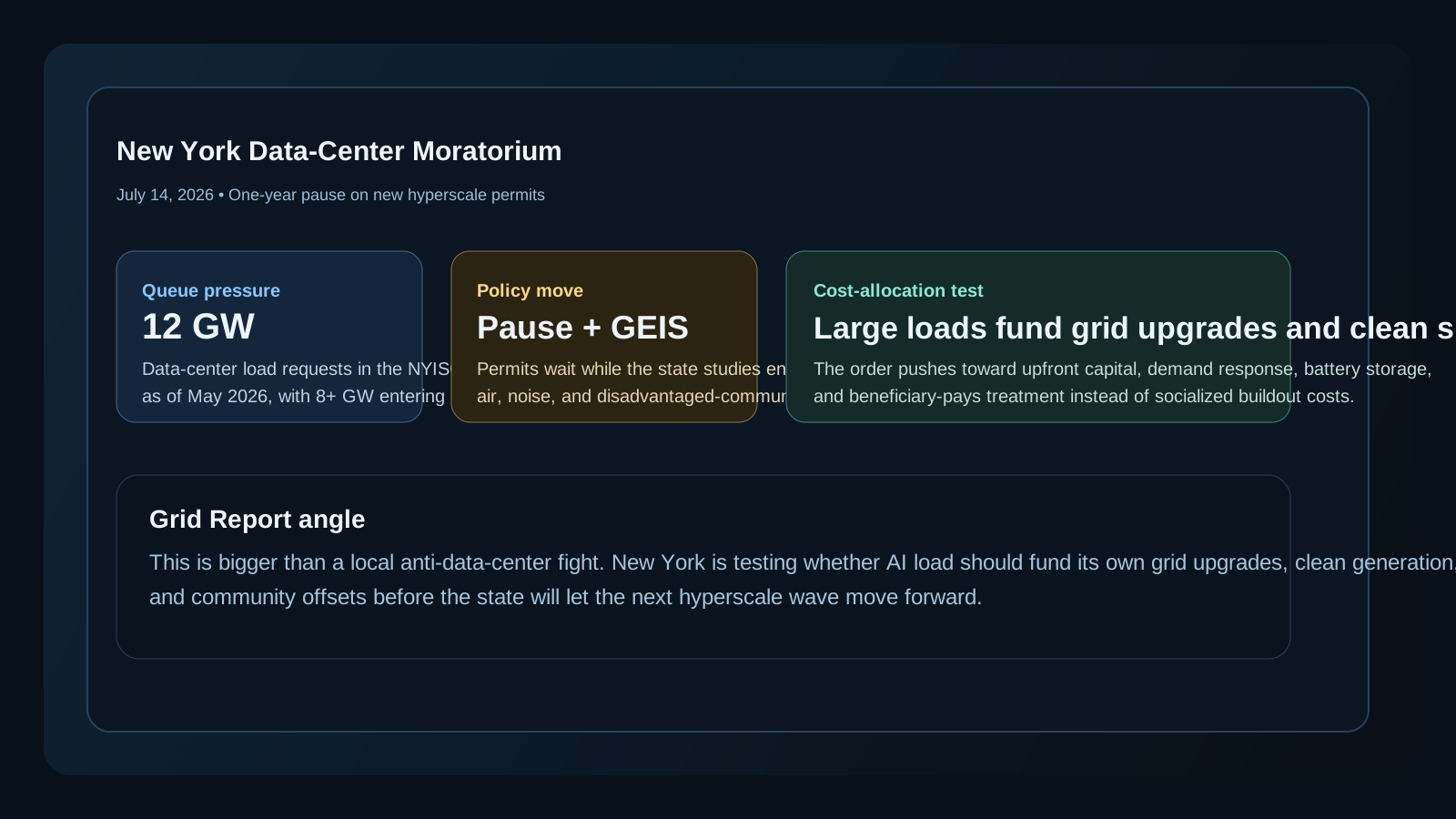
New York is converting a moratorium into a large-load cost-allocation framework
The state is pairing the permit pause with explicit work on who pays, how impacts are studied, and what host communities can demand.
| Policy lever | July 14, 2026 move | Why it matters |
|---|---|---|
| Permit pause | Up to one year for new state environmental permits | The state is slowing buildout long enough to rewrite terms under active demand growth. |
| Queue signal | Nearly 12 GW of data-center load requests in NYISO as of May 2026 | Large-load pressure is high enough that cost allocation is now a state-level policy issue. |
| Grid fund concept | Upfront capital, clean supply, battery storage, and insurance-pool options under review | Hyperscale load may be pushed toward funding its own integration instead of socializing risk. |
| Community framework | State guidance for local benefit negotiations within 60 days | Host communities are being given a formal bargaining template, not left with ad hoc talks. |
Sources: New York Governor press release and Executive Order No. 62, both issued July 14, 2026.
New York’s July 14 moratorium clears the publish bar because the useful signal is not that one state is skeptical of data centers. The sharper signal is that New York is trying to move AI-scale load into a different economic contract: if hyperscale campuses want to build, they may need to fund more of their own grid upgrades, clean supply, and community offsets before the permits resume.
Governor Kathy Hochul announced on July 14 that New York is temporarily pausing State environmental permits for up to one year while the state develops a nation-leading regulatory framework for new hyperscale data centers. The same announcement says the pause is meant to protect ratepayers, the environment, the energy grid, and host communities, and it pairs the moratorium with a Community Investment Framework, a potential New York Grid Acceleration Fund, and a push to repeal sales-tax exemptions for massive data centers across the state.
New York is not only pausing data centers. It is testing whether hyperscale AI load should pay upfront for the grid, the clean supply, and the community bargain it requires.
The executive order makes the power signal even clearer. It says that as of May 2026 nearly 12 gigawatts of data-center load requests were in the New York Independent System Operator interconnection queue, with more than eight gigawatts entering in 2025 alone. It also directs state agencies to study energy demand, water use, water quality, air quality, noise, and disproportionate impacts on disadvantaged communities before new state permits move forward.
This belongs in energy-grid because the real product being debated is not just land use. It is who pays for large-load integration. The order directs DPS to consider a Grid Acceleration Fund that could require data centers to make upfront capital contributions for grid improvements, participate in demand response, support new clean energy supply and battery storage, and help protect ratepayers from stranded assets if speculative projects do not materialize.
The original angle is that New York is trying to operationalize beneficiary-pays treatment for AI load before the next surge locks in socialized costs. That matters far beyond New York. If one major state can pause permits and openly tie future approvals to grid funding, dedicated generation, and community-benefit negotiations, the financing model for AI campuses in other states gets harder to treat as a settled assumption.
The story also clears the duplicate screen. The site already covered the federal AI Data Center Moratorium Act and several large-load tariff and cost-allocation fights in Virginia, Oklahoma, New Jersey, and FERC proceedings. This is materially different. It is a first-of-its-kind statewide pause attached to a formal grid-cost and water-impact framework, not another incremental tariff docket.
There are limits. New York’s action does not automatically become national policy, and the order still leaves room for projects whose state permits were already deemed complete. It is also an executive action, which means the political durability will depend on what the state does during the next year. But those caveats do not weaken the immediate significance. They define the test: can a state slow AI buildout long enough to rewrite the cost-allocation and community-benefit terms underneath it?
The search value is strong because readers need more than the headline that New York paused data centers. The more useful answer is that the state is using the moratorium to ask whether hyperscale AI load should pay upfront for grid modernization, clean supply, water scrutiny, and local benefits before the buildout resumes.
Sources
Governor Kathy Hochul, “First Statewide Moratorium on New Hyperscale Data Centers Launched by Governor Kathy Hochul,” published July 14, 2026: https://www.governor.ny.gov/news/first-statewide-moratorium-new-hyperscale-data-centers-launched-governor-kathy-hochul
Governor Kathy Hochul, Executive Order No. 62, “Establishing a Temporary Moratorium on Data Centers in New York While the State Develops Higher Standards for Data Center Development and Benefits Blueprint to Support Localities,” issued July 14, 2026: https://www.governor.ny.gov/executive-order/no-62-establishing-temporary-moratorium-data-centers-new-york-while-state-develops
By Nawaz Lalani
The Grid Report is written by Nawaz Lalani and focuses on source-backed coverage of AI infrastructure, grid power demand, automation systems, and market signals.
Follow the signal, not just the headline.
Get the daily Grid brief for source-backed coverage on AI power demand, infrastructure timing, automation, and market signals.