- MISO’s zero-injection generator interconnection filing matters because it turns “bring your own power” from a development slogan into a specific—and intentionally limited—grid product.
- The useful distinction is between connecting equipment and owning a deliverable grid asset.
- That boundary can shorten one part of the development clock.
- Section
- Energy
- Read time
- 6 min read
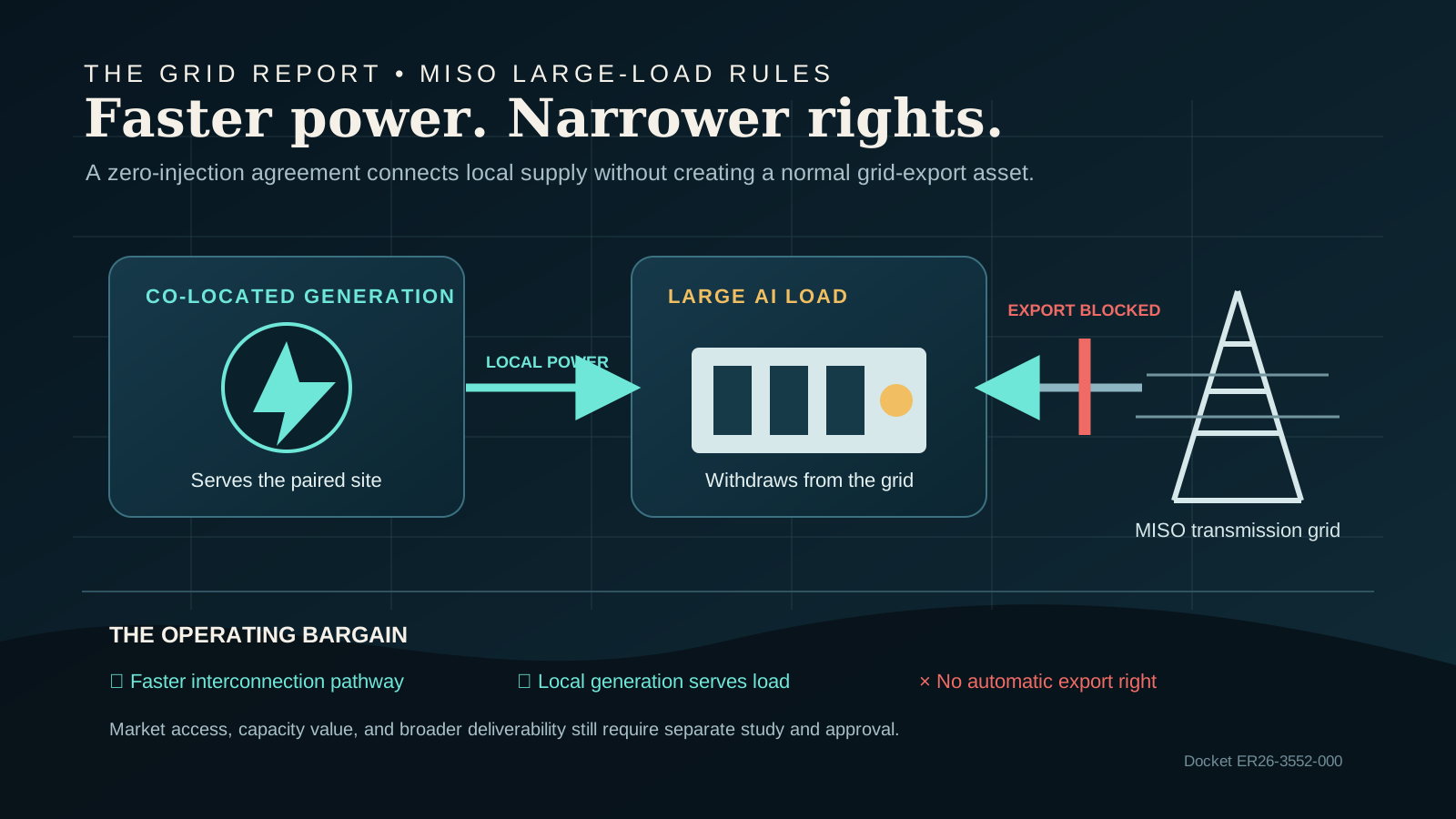
MISO’s zero-injection generator interconnection filing matters because it turns “bring your own power” from a development slogan into a specific—and intentionally limited—grid product. Filed at the Federal Energy Regulatory Commission in docket ER26-3552-000, the proposed agreement would give generation paired with a large load a formal route to connect without obtaining the same injection rights as a conventional power plant. MISO requested an October 18, 2026 effective date.
The useful distinction is between connecting equipment and owning a deliverable grid asset. Under the zero-injection concept, a generator can serve an electrically proximate load, while controls at the point of interconnection prevent power from flowing onto the transmission system. The load can still withdraw electricity from the grid. The generator, however, does not receive an automatic right to export energy whenever the campus uses less than expected.
MISO is separating speed from optionality: developers may reach power faster by accepting a smaller bundle of grid rights.
That boundary can shorten one part of the development clock. MISO says large loads such as data centers and advanced manufacturing facilities often seek service within 18 to 36 months, while transmission and generation projects take much longer. Its broader large-load framework targets approval within 120 days when studies and agreements are complete, using tools that include zero-injection agreements, expedited generation studies, and faster load reviews.
But faster interconnection is not the same thing as full commercial optionality. If a co-located generator cannot inject into the transmission system, its economics depend much more heavily on the paired customer’s consumption profile and contract. A gas plant, battery, or renewable project built primarily for one campus cannot simply redirect unused output into the wholesale market under the zero-injection agreement. Separate interconnection study work would still be needed to secure broader deliverability and market rights.
That makes the customer contract the center of the capital stack. Lenders and infrastructure investors should test minimum-load commitments, curtailment rules, outage coordination, termination payments, and what happens if the data-center build is delayed or downsized. A generator with one captive buyer and no export right can offer speed, but it can also carry concentrated offtake and stranded-asset risk. The faster pathway is valuable precisely because the asset accepts a narrower operating envelope.
Utilities and grid operators get a different benefit: the arrangement can add local supply without forcing the transmission system to accommodate uncontrolled exports. MISO’s published framework also calls for telemetry, curtailment capability, ride-through, stability controls, and operational coordination as large loads scale. Zero injection therefore should not be read as “off grid.” The campus remains a grid participant whose withdrawal, generator trips, and abrupt load changes must be visible and manageable.
The proposal also exposes a planning trap. A zero-injection unit may reduce the paired campus’s net draw during normal conditions, but it should not automatically be counted as regional capacity available during scarcity. Stakeholders have argued that load and generation must be modeled separately rather than netted, and that projects seeking deliverability should continue through the standard generator process. Without that separation, a private speed-to-power arrangement could be mistaken for supply the wider system can actually call.
For data-center developers, the practical screen is now clearer. A zero-injection agreement is most attractive when the campus has a predictable load ramp, the local generator can follow that load, the economics work without merchant exports, and the project values earlier energization more than future market flexibility. It is less attractive when the generator’s financing case depends on capacity accreditation, surplus-energy sales, or the option to outlive the original tenant.
The filing is not yet a final FERC approval, and the proposed October effective date should not be treated as guaranteed. Project-level study results, transmission-owner requirements, retail utility agreements, state regulation, permits, fuel supply, and equipment delivery can still control the schedule. Zero injection removes neither the load study nor the need to prove that the campus and generator will behave safely at the point of interconnection.
The original operator lesson is that MISO is separating speed from optionality. Developers may be able to reach power faster by accepting a smaller bundle of rights. Investors should value that bundle accordingly: it is a site-specific service asset first, and only becomes a broadly useful grid asset after additional study, contracts, and approvals create real injection and market access.
Sources
Midcontinent Independent System Operator, “Large Load Additions: Accelerating Reliable Integration,” accessed September 9, 2026: https://extranet.misoenergy.org/planning/large-loads---container-page/large-load-additions/
Federal Energy Regulatory Commission, Combined Notice of Filings No. 1, docket ER26-3552-000, published August 24, 2026: https://www.federalregister.gov/documents/2026/08/24/2026-17246/combined-notice-of-filings-1
MISO, “Large Load Workshop: Considerations and Outcomes of Large Load Additions,” stakeholder feedback posted February 2026: https://www.misoenergy.org/engage/stakeholder-feedback/2026/large-load-workshop-considerations-and-outcomes-of-large-load-additions-20260130/
By Nawaz Lalani
The Grid Report is written by Nawaz Lalani and focuses on source-backed coverage of AI infrastructure, grid power demand, automation systems, and market signals.
Follow the signal, not just the headline.
Get the daily Grid brief for source-backed coverage on AI power demand, infrastructure timing, automation, and market signals.