- New England just produced a natural-gas price signal that would have looked improbable during last winter’s cold snaps.
- The immediate explanation is a rare alignment of supply and demand.
- The power mix amplified the move.
- Section
- Energy
- Read time
- 5 min read
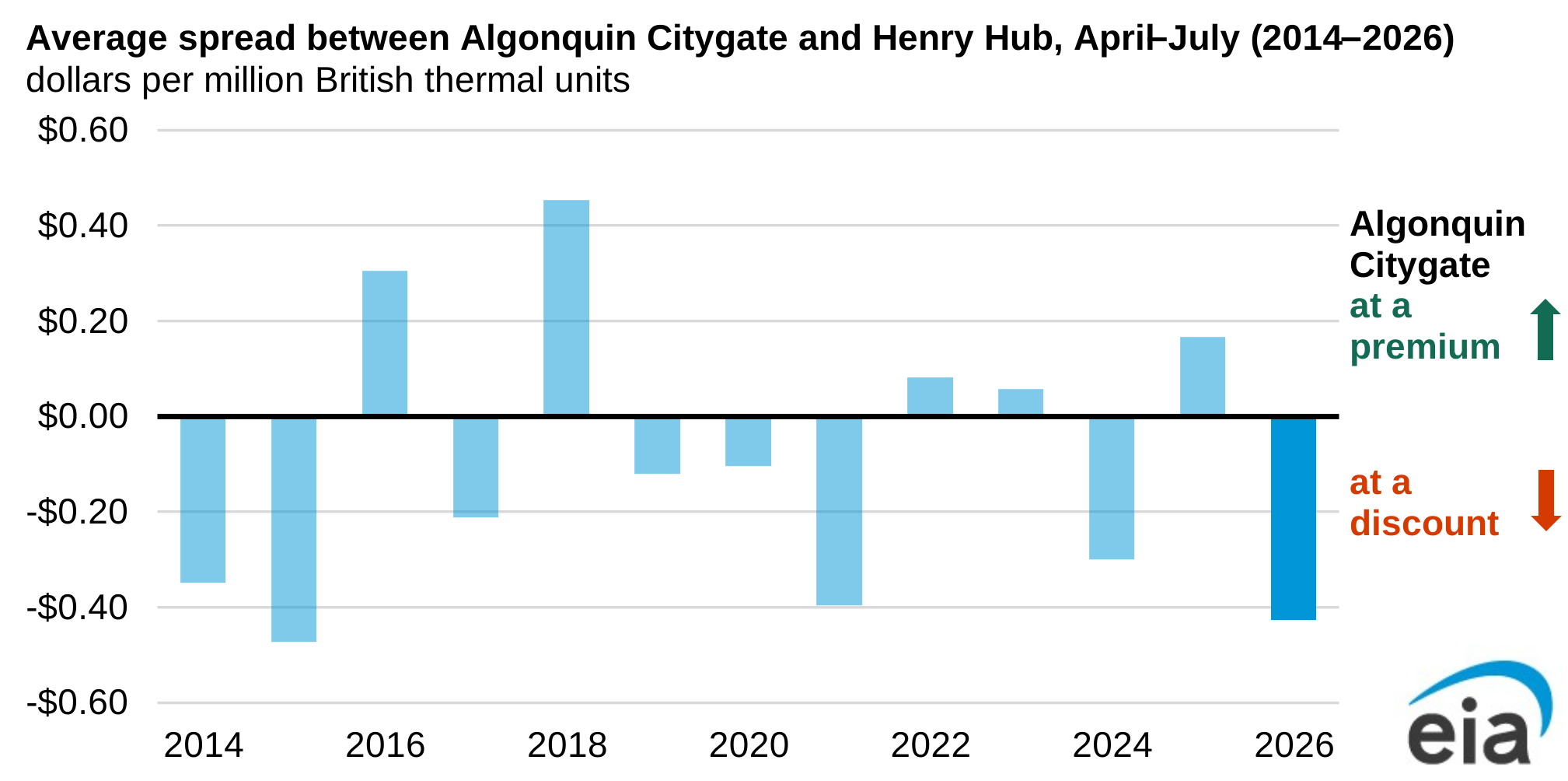
New England just produced a natural-gas price signal that would have looked improbable during last winter’s cold snaps. The U.S. Energy Information Administration reported on September 9 that gas at Algonquin Citygate averaged 43 cents per million British thermal units below Henry Hub from April through July 2026. In EIA data extending back to 1999, that was the region’s second-largest discount for the period.
The immediate explanation is a rare alignment of supply and demand. Net gas flows from Canada into New England averaged a record 0.4 billion cubic feet per day from April through July, more than 2.5 times the same period in 2025. At the same time, regional gas consumption fell 5%. Low-cost Appalachian supply was available through existing connections, while the average Appalachian hub price sat 77 cents below Henry Hub.
A cheap shoulder season and an expensive winter can both be true in the same infrastructure system.
The power mix amplified the move. EIA said New England gas-fired electricity generation fell 1.1 billion kilowatthours, or 6%, from the same four months in 2025. Wind generation increased 0.7 billion kilowatthours, or 59%, and utility-scale solar added 0.2 billion kilowatthours, or 29%. More northern supply arrived just as renewable output reduced the amount of gas power plants needed to burn.
That makes the basis discount an operational signal, not evidence that New England has permanently solved its fuel constraint. The region still uses gas for both heating and electricity, has limited underground storage, and can face pipeline congestion when cold weather raises both demands at once. In January and February 2025, Algonquin Citygate averaged $16.37 and $14.00 per MMBtu, respectively, after cold weather exposed those constraints. A cheap shoulder season and an expensive winter can both be true in the same infrastructure system.
For utilities and generators, the lesson is to separate annual fuel abundance from peak deliverability. Additional wind and solar can suppress gas burn and wholesale fuel costs during mild months, while firm gas transportation, stored fuel, LNG access, demand response, and other dispatchable capacity retain option value during the small number of stressed winter hours. Planning against an annual average would hide the risk that matters most.
For large electricity users evaluating New England sites, including data-center operators, the same distinction should shape power-price assumptions. A favorable summer gas basis can improve near-term energy costs, but it does not by itself create a firm winter power product. Buyers should ask how their tariff, hedges, backup systems, and curtailment terms behave when heating demand and power demand collide—not simply what the regional gas benchmark averaged during spring and summer.
Investors should read the new EIA data as evidence that renewable additions and cross-border gas flows can materially change regional dispatch economics without erasing infrastructure scarcity. The durable opportunity is not a one-way bet on cheap gas. It is the value of assets and contracts that can bridge New England’s seasonal split: low-cost energy when supply is loose, and credible deliverability when the system is tight.
Sources: U.S. Energy Information Administration, “New England natural gas prices have been trading near record discounts to Henry Hub,” September 9, 2026: https://www.eia.gov/todayinenergy/detail.php?id=68124; U.S. Energy Information Administration, “In 2025, U.S. natural gas spot prices increased from 2024’s record low,” January 9, 2026: https://www.eia.gov/todayinenergy/detail.php?id=66984
By Nawaz Lalani
The Grid Report is written by Nawaz Lalani and focuses on source-backed coverage of AI infrastructure, grid power demand, automation systems, and market signals.
Follow the signal, not just the headline.
Get the daily Grid brief for source-backed coverage on AI power demand, infrastructure timing, automation, and market signals.