- AMD and Anthropic’s July 22 partnership clears the publish bar because it says something more useful than “another large AI deployment.” The stronger signal is structural.
- That is the original angle.
- This belongs in infrastructure rather than a generic AI or stock-market lane because the useful question is how frontier capacity is actually being secured.
- Section
- Infrastructure
- Read time
- 4 min read
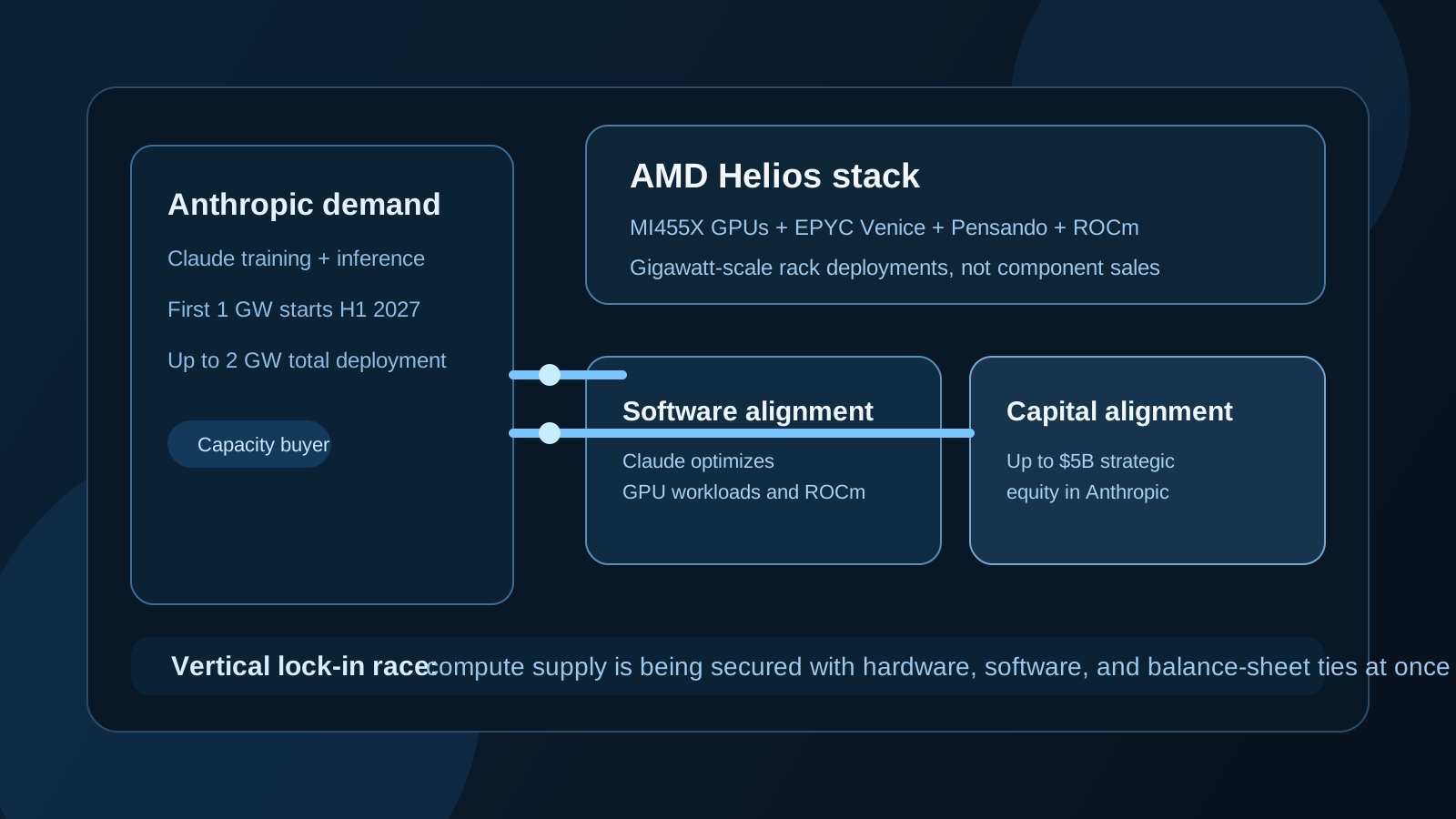
AMD and Anthropic’s July 22 partnership clears the publish bar because it says something more useful than “another large AI deployment.” The stronger signal is structural. Anthropic is not only buying future capacity from AMD. It is locking itself into a deeper relationship that spans gigawatt-scale hardware supply, joint software optimization, and a planned strategic equity investment. That turns the story from procurement into platform alignment.
That is the original angle. AMD said Anthropic will deploy up to 2 gigawatts of AMD Instinct MI450 Series GPUs in AMD Helios rack-scale systems, with the first gigawatt starting in the first half of 2027. The deployment includes MI455X GPUs, EPYC Venice CPUs, Pensando networking, and ROCm software. On top of that, the companies said Claude will be used to optimize workloads for AMD Instinct GPUs and accelerate ROCm development, while AMD committed to make a strategic equity investment of up to $5 billion in Anthropic. Read correctly, this is not a normal customer-vendor relationship. It is a vertically aligned compute bargain.
The new AI capacity bargain is not only “buy me GPUs.” It is hardware, software, and balance-sheet alignment in one contract.
This belongs in infrastructure rather than a generic AI or stock-market lane because the useful question is how frontier capacity is actually being secured. The AI market has spent the last year talking about chip shortages, campus leases, and power access as if those were separate bottlenecks. AMD and Anthropic are showing a different model: solve more than one bottleneck at once by tying hardware roadmaps, software performance work, and balance-sheet commitment into the same deal.
The timing makes the thesis stronger. Anthropic was already a named tenant in TeraWulf’s Kentucky campus story earlier this month, which turned frontier-model demand into a structured-credit signal. This deal adds a different layer. Anthropic is not only pre-committing to capacity downstream at the campus level. It is reaching upstream into the silicon and software stack so a key supplier has both commercial incentive and strategic exposure to Claude’s growth. That is a much tighter form of capacity insurance than a plain lease.
AMD’s own stack language matters here. The release does not frame the win as discrete GPU sales. It frames Helios as a rack-scale system combining compute, CPUs, networking, and software for training and inference at extreme scale. That makes the competitive unit bigger than the chip. If AI builders buy the whole rack-scale system and then co-develop performance improvements around a named frontier customer, the infrastructure battle shifts from benchmark comparisons toward ecosystem lock-in.
This also clears the duplicate screen against the site’s last 30 days. Microsoft’s Azure-AMD expansion was about workload specialization inside hyperscale fleets. TeraWulf’s Anthropic lease was about tenant credit and financing. NVIDIA’s capital-partner model was about usage-linked infrastructure finance. This thesis is materially different. The sharper question here is what happens when a frontier lab, a silicon vendor, and a software stack start binding themselves together before the next capacity wave is even built.
The operator and investor relevance is straightforward. Buyers with enough demand may increasingly want diversified hardware exposure without treating each hardware platform as a commodity. Suppliers, meanwhile, will want large anchor customers who can help improve the software layer and justify aggressive capacity buildout. That means future AI infrastructure moats may depend less on who merely has chips available and more on who has the deepest cross-stack relationships.
There are still limits. AMD is presenting the story in the strongest possible light, the full economics of the planned equity investment are not public, and a deployment target measured in gigawatts still has to survive manufacturing, datacenter, and power-delivery reality. But those caveats do not weaken the main read-through. They sharpen it: the next round of AI infrastructure competition is being fought through coordinated hardware, software, and capital commitments rather than loose supplier choice.
That is enough to publish. Searchers looking up the AMD-Anthropic announcement do not need another rewrite saying a lab will buy more GPUs. The more useful answer is that frontier AI infrastructure is becoming a vertical lock-in race, where capacity, software performance, and strategic finance are negotiated together.
Sources
AMD, “AMD and Anthropic Announce Strategic Partnership to Deploy Up to 2 Gigawatts of AMD Instinct MI450 Series GPUs,” published July 22, 2026: https://ir.amd.com/news-events/press-releases/detail/1292/amd-and-anthropic-announce-strategic-partnership-to-deploy-up-to-2-gigawatts-of-amd-instinct-mi450-series-gpus
Quartz, “AMD and Anthropic sign chip deal worth up to $5 billion,” published July 22, 2026: https://qz.com/amd-anthropic-chip-deal-072226
By Nawaz Lalani
The Grid Report is written by Nawaz Lalani and focuses on source-backed coverage of AI infrastructure, grid power demand, automation systems, and market signals.
Follow the signal, not just the headline.
Get the daily Grid brief for source-backed coverage on AI power demand, infrastructure timing, automation, and market signals.