- MasTec’s Superior acquisition matters for a more specific reason than the usual M&A headline.
- The useful detail is where MasTec says the scope expands.
- That matters because the AI build bottleneck is no longer one thing.
- Section
- Infrastructure
- Read time
- 5 min read
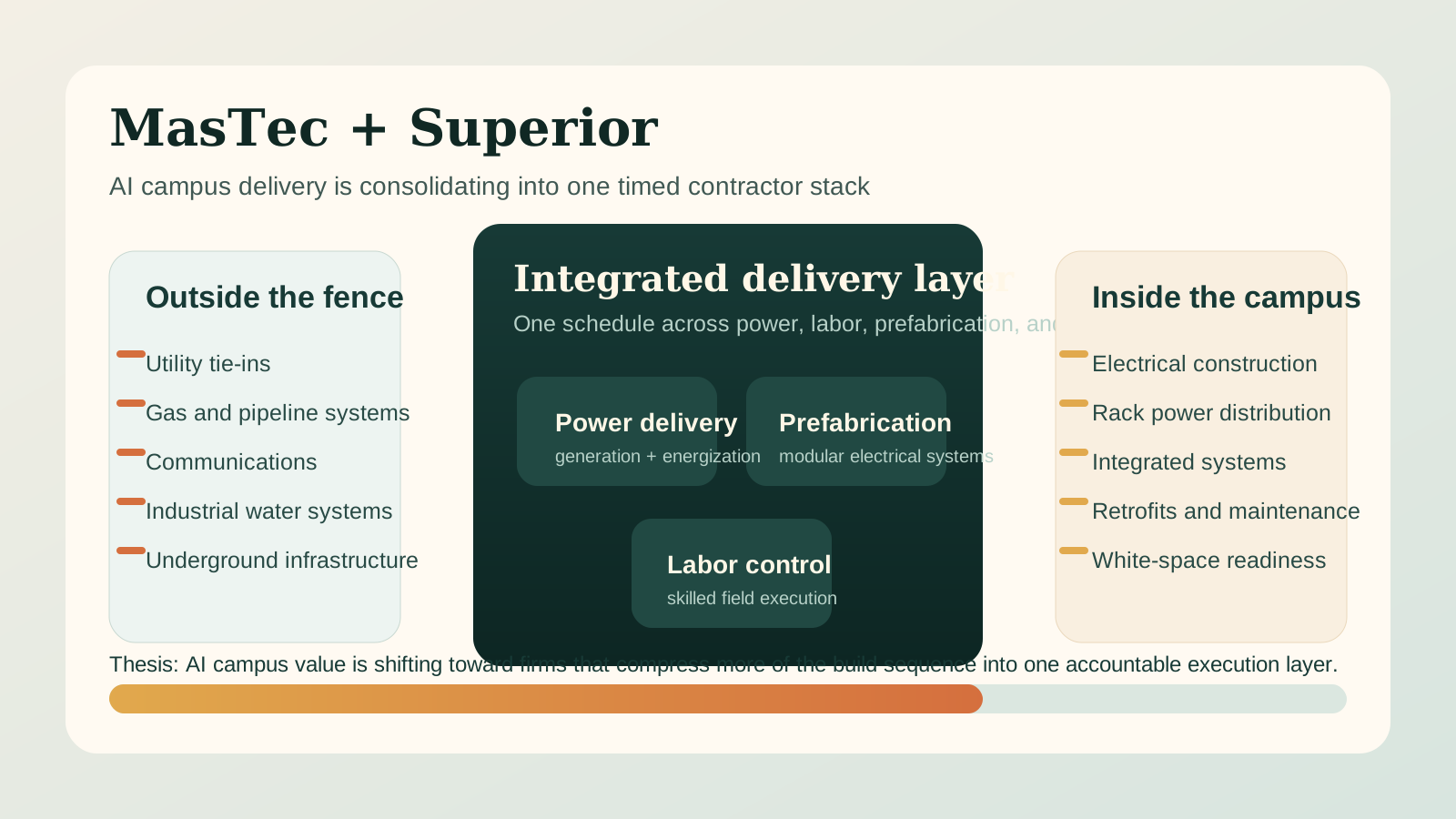
MasTec’s Superior acquisition matters for a more specific reason than the usual M&A headline. In its July 8 release and July 7 investor deck, MasTec says the deal strengthens its infrastructure capabilities across data center and mission-critical markets and establishes the combined company as a full-lifecycle infrastructure partner for data centers. That framing is the real story. AI campus demand is getting large and time-sensitive enough that owners increasingly want one delivery stack to own more of the path from energization to white-space readiness.
The useful detail is where MasTec says the scope expands. The investor presentation describes an integrated model spanning outside and inside the data center, with behind-the-meter capabilities that include power generation and delivery, communications, natural gas, pipelines, industrial water systems, and underground utility infrastructure. Superior adds the inside electrical and prefabrication side; MasTec brings the broader utility, energy, communications, and power-delivery footprint. Put together, that starts to look less like a contractor roll-up and more like a campus-delivery platform.
AI campuses now look more like timed industrial buildouts, which pushes more value toward contractors that can coordinate power, utilities, labor, and interior electrical scope as one product.
That matters because the AI build bottleneck is no longer one thing. It is not only chips, land, or grid interconnection. It is sequencing risk across many scopes that usually sit with different counterparties: utility tie-ins, gas supply, substations, modular electrical systems, water infrastructure, communications, labor mobilization, and then the interior electrical build once the shell is ready. Every handoff between those scopes adds delay risk. MasTec is explicitly pitching the acquisition as a way to remove some of those handoffs.
Superior’s own profile shows why MasTec wanted it now. The deck says roughly 70% of Superior’s revenue mix is tied to hyperscalers, with estimated 2026 revenue of about $1.6 billion to $1.7 billion and adjusted EBITDA of about $225 million to $250 million. It also highlights around 2,700 skilled electricians and technicians, a large prefabrication facility, and direct relationships with hyperscalers and developers. In a market where labor and execution capacity are becoming scarce inputs, those are not side details. They are the product.
The sharper Grid Report angle is that AI infrastructure is becoming an execution market, not just a capital market. Investors have spent the last year focusing on gigawatts, land positions, utility deals, and campus announcements. But those commitments still have to move through contractors that can recruit labor, prefabricate systems, manage schedule risk, and coordinate outside-the-fence and inside-the-fence work without losing months in the interface between trades. MasTec is effectively saying that owning more of that execution layer is now strategic.
This also sits cleanly against the site’s recent coverage without repeating it. Alberta was about a jurisdiction packaging power and approvals. Brookfield and Bloom were about financing behind-the-meter capacity. This MasTec story is about the construction-control layer underneath those decisions. Once a campus has land, power options, and capital, somebody still has to compress the real build sequence into something hyperscalers can scale against.
The search-worthy question is not simply whether MasTec paid a fair multiple. It is whether data center developers are starting to prefer integrated delivery partners because AI campuses now behave more like energy-and-industrial megaprojects than standard commercial construction. MasTec’s own materials argue yes. If that is right, more value in the AI stack will migrate toward the firms that can coordinate power, labor, utilities, and interior systems as one timed product.
Sources
MasTec, “MasTec to Acquire The Superior Group, Enhancing MasTec’s Infrastructure Capabilities Across Data Center and Mission-Critical End Markets,” published July 8, 2026: https://investors.mastec.com/news-releases/news-release-details/mastec-acquire-superior-group-enhancing-mastecs-infrastructure
MasTec, “Strategic Acquisition of The Superior Group,” investor presentation dated July 7, 2026: https://investors.mastec.com/static-files/f131d363-b152-442b-ad06-ccbf646f1fd4
By Nawaz Lalani
The Grid Report is written by Nawaz Lalani and focuses on source-backed coverage of AI infrastructure, grid power demand, automation systems, and market signals.
Follow the signal, not just the headline.
Get the daily Grid brief for source-backed coverage on AI power demand, infrastructure timing, automation, and market signals.