- Micron’s Clay announcement clears the publish bar because the useful signal is not merely that a chip company raised its long-term spending target.
- Micron said on July 9 that it is increasing planned U.S.
- That construction milestone is the part that matters most.
- Section
- Infrastructure
- Read time
- 4 min read
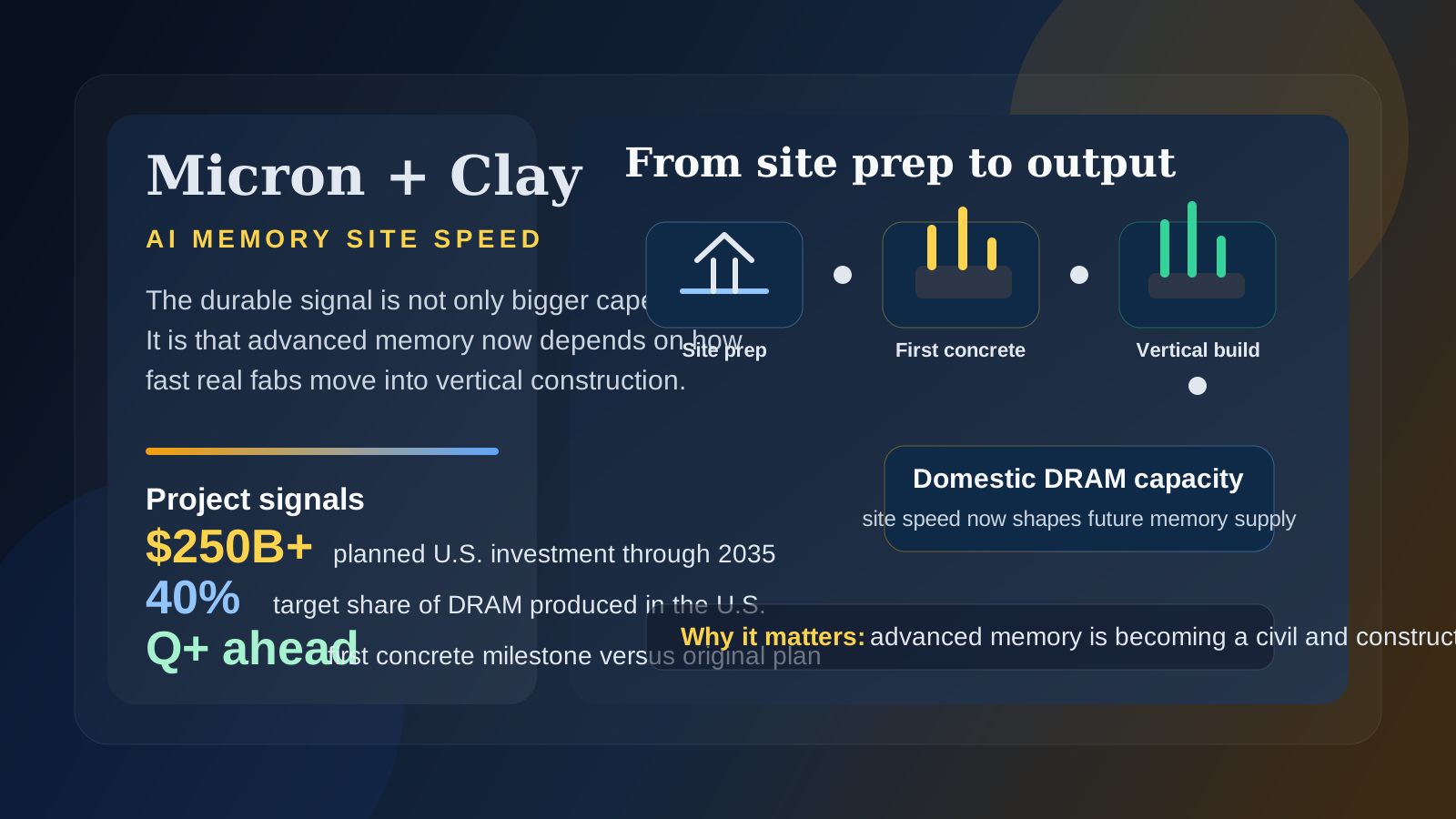
Micron’s Clay announcement clears the publish bar because the useful signal is not merely that a chip company raised its long-term spending target. The stronger signal is that AI-memory scale is starting to look like a construction-timing problem: how fast a project can move from announced ambition and site prep into real vertical buildout, with enough domestic capacity to matter.
Micron said on July 9 that it is increasing planned U.S. fab and technology investments to more than $250 billion through 2035, driven by surging demand for memory in the AI era. The company also said the Clay, New York project reached its first concrete-pour milestone more than one quarter ahead of the original plan, marking the transition from site preparation to vertical construction. Micron says the broader effort supports its long-term goal of producing 40% of its DRAM in the United States.
The key July 9 Micron signal is not the capex headline by itself. It is that advanced memory capacity is turning into a race from permits and site prep to real vertical construction.
That construction milestone is the part that matters most. Big semiconductor announcements are easy to publish. Real schedule movement is harder. Once a project shifts into concrete and vertical construction ahead of plan, the story becomes less about aspirational capex and more about whether a strategically important part of the AI hardware stack can actually be built on a timeline that changes future supply.
This is why the story belongs in infrastructure. The constraint is no longer just demand for HBM, DRAM, and advanced memory. The constraint is whether physical manufacturing capacity can be financed, permitted, supplied, and built fast enough. In other words, AI-memory scale is becoming a site-speed race, not just a wafer-volume race.
The distinction also matters against the site’s existing Micron coverage. The earlier July 9 wafer story was about upstream supply assurance through GlobalWafers and a 10-year materials agreement. This new Clay milestone adds a different layer: even if upstream materials are secured, the AI-memory buildout still depends on fab execution speed at the physical site where future output will come from.
Operators and investors should pay attention because advanced memory is now one of the hardest infrastructure dependencies in the AI stack. If demand stays strong, the value shifts toward companies that can line up capital, suppliers, labor, and local execution quickly enough to turn policy support into real production. Schedule credibility starts to matter almost as much as technology leadership.
There are still limits. This is company guidance, not proof of near-term wafer output, yield, or delivery dates. A concrete-pour milestone does not remove construction, tooling, and ramp risk. But it does mark a real transition in a project that Micron wants to position at the center of domestic AI-memory manufacturing.
That gives the story search value. People looking up Micron’s July 9 announcement do not just need the $250 billion headline. The more useful answer is that AI-memory supply is increasingly a site-execution story, where the speed from land and permits to vertical construction can shape future capacity more than another generic capex promise.
Sources
Micron, “Micron Accelerates U.S. Investments, Pours First Concrete at New York Fab,” published July 9, 2026: https://investors.micron.com/news-releases/news-release-details/micron-accelerates-us-investments-pours-first-concrete-new-york
Micron, “Micron Announces Up to $3 Billion Strategic Investment to Strengthen U.S. Semiconductor Ecosystem,” published July 9, 2026: https://investors.micron.com/news-releases/news-release-details/micron-announces-3-billion-strategic-investment-strengthen-us
By Nawaz Lalani
The Grid Report is written by Nawaz Lalani and focuses on source-backed coverage of AI infrastructure, grid power demand, automation systems, and market signals.
Follow the signal, not just the headline.
Get the daily Grid brief for source-backed coverage on AI power demand, infrastructure timing, automation, and market signals.