- EQT’s Copia deal clears the publish bar because the useful signal is not just that another investor wants AI infrastructure exposure.
- EQT said on July 9 that it agreed to acquire Copia Power from Carlyle.
- That matters because the deal is not centered on a single data-center lease, one utility contract, or one merchant power asset.
- Section
- Infrastructure
- Read time
- 5 min read
EQT’s Copia deal clears the publish bar because the useful signal is not just that another investor wants AI infrastructure exposure. The stronger signal is that the asset being bought is an operating model: combine generation, transmission access, and hyperscale load development inside one campus platform so the power bottleneck can be attacked in one coordinated stack.
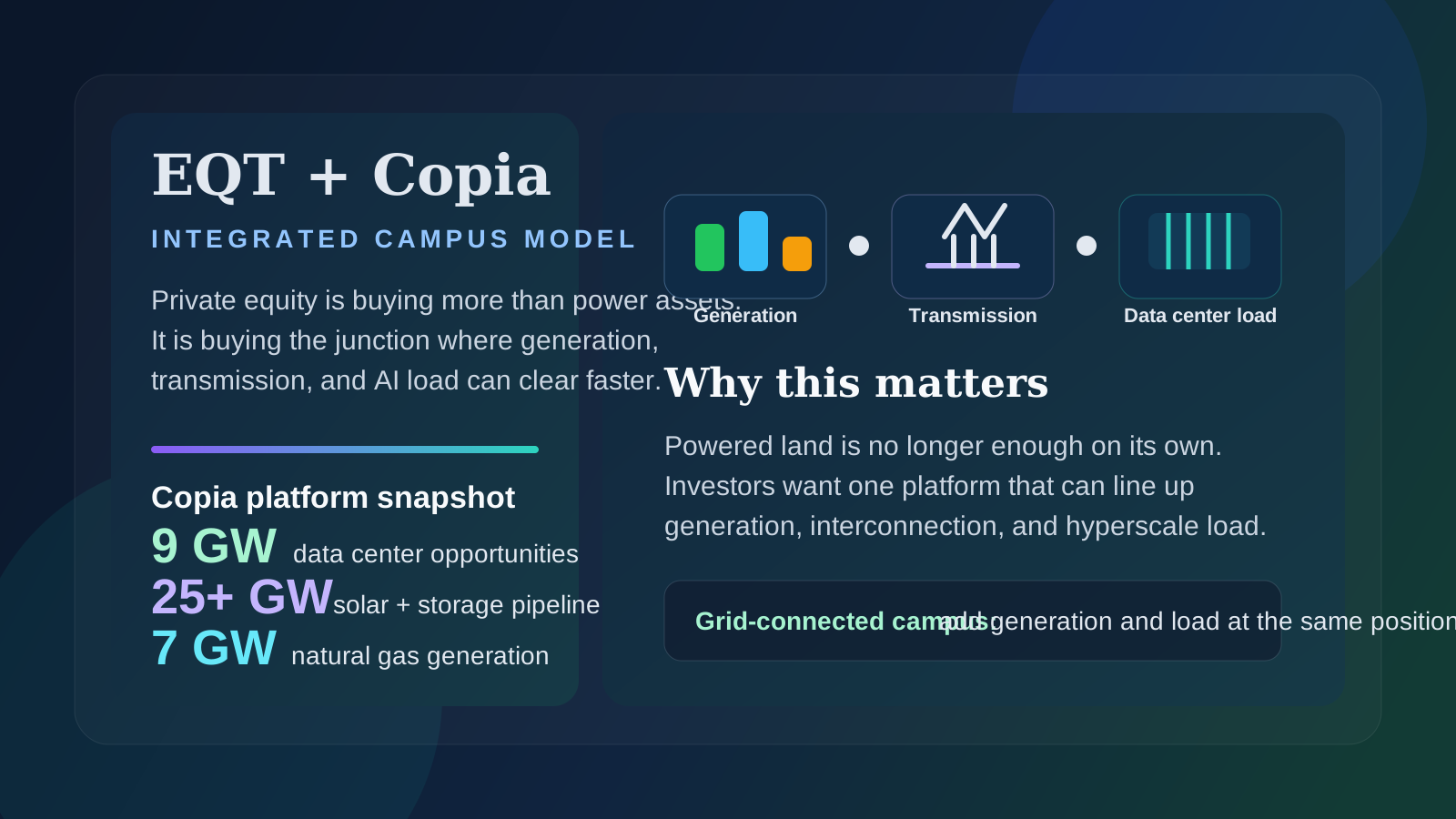
EQT said on July 9 that it agreed to acquire Copia Power from Carlyle. The firm described Copia as an integrated power and AI infrastructure platform that develops large-scale energy and digital infrastructure campuses across the United States. EQT said Copia has more than 2.6 gigawatts of generation and storage assets in operation or under construction and is actively developing more than 9 gigawatts of grid-connected data centers backed by more than 25 gigawatts of solar and storage and 7 gigawatts of natural-gas generation assets.
Capital now wants one platform that can line up generation, transmission, and hyperscale load at the same interconnection position.
That matters because the deal is not centered on a single data-center lease, one utility contract, or one merchant power asset. It is centered on the idea that AI buildout increasingly depends on controlling the whole handoff between electrons and compute. EQT’s own writeup says Copia brings generation, high-voltage transmission, and data-center load together at the same interconnection position. That is the real thesis hiding inside the press release.
Carlyle’s parallel announcement sharpens the point. The firm said it created Copia in 2021 around the conviction that power would become a bottleneck to the digitization and electrification of the U.S. economy. It also said Copia advanced the concept of the grid-connected campus, where gigawatt-scale generation and data-center load are co-located at strategic high-voltage grid locations. That is more than a land bank. It is a deliberate attempt to compress the sequencing problem that usually slows AI campuses down.
This is why the article belongs in infrastructure rather than only markets. The practical bottleneck for AI developers is no longer just finding a counterparty willing to finance a campus. It is whether generation, transmission rights, queue position, and large-load development can be assembled into something that utilities and hyperscalers can actually move on. EQT explicitly says Copia works with utilities to unlock new power capacity, accelerate infrastructure development, and support long-term grid reliability and ratepayer affordability. In other words, the platform is trying to speak utility language and hyperscaler language at the same time.
The deal also marks an evolution from several recent Grid Report themes instead of repeating them. MARA’s Texas story was about public-market optionality around powered land. Brookfield and Bloom were about financing rapid behind-the-meter capacity. National Grid and Joulent were about a private grid-services layer. Copia adds a different layer: the owner wants one integrated campus platform that can combine generation, transmission, and data-center load before a hyperscaler ever takes possession.
That distinction gives the piece search value. Readers looking for the EQT Copia Power deal do not only need to know that private equity bought an AI infrastructure company. They need the sharper answer: EQT is buying a grid-connected campus model built to shorten the path from interconnection and generation development to firm data-center power.
There is also a capital-markets implication, even though the article is not primarily a stock story. EQT said the acquisition expands its existing U.S. AI infrastructure portfolio across data centers, energy, and fiber through EdgeConneX, Zayo, Cypress Creek Energy, and Scale. That means the next phase of AI infrastructure investing may reward owners that can cross-wire power, digital facilities, and connectivity rather than treat them as separate buckets. The scarce asset is increasingly the coordinated platform, not one isolated project.
This is why the story clears the duplicate screen. It does not retell a generic data-center financing story or a vague AI-power shortage argument. The narrower thesis is new and specific: private infrastructure capital is converging on the grid-connected campus as the product, because AI demand now requires generation, transmission, and load to be developed as one package.
Sources
EQT, “EQT to acquire Copia Power, a leading integrated power and AI infrastructure platform,” published July 9, 2026: https://eqtgroup.com/news/eqt-to-acquire-copia-power-a-leading-integrated-power-and-ai-infrastructure-platform-2026-07-09
Copia Power, “Carlyle Agrees to Sell Copia Power, a Leading Power and AI Infrastructure Platform Built from the Ground Up, to EQT,” published July 10, 2026: https://www.copiapower.com/news/carlyle-agrees-to-sell-copia-power-a-leading-power-and-ai-infrastructure-platform-built-from-the-ground-up-to-eqt
By Nawaz Lalani
The Grid Report is written by Nawaz Lalani and focuses on source-backed coverage of AI infrastructure, grid power demand, automation systems, and market signals.
Follow the signal, not just the headline.
Get the daily Grid brief for source-backed coverage on AI power demand, infrastructure timing, automation, and market signals.