- PJM’s June 9 operating update is worth publishing because the useful signal is not just that the operator handled one hot stretch in May.
- The official facts are concrete.
- That matters because shoulder seasons are supposed to be the window when generators and transmission owners do the work that gets the system ready for summer and winter.
- Section
- Energy
- Read time
- 5 min read
- Data included
- PJM timing snapshot
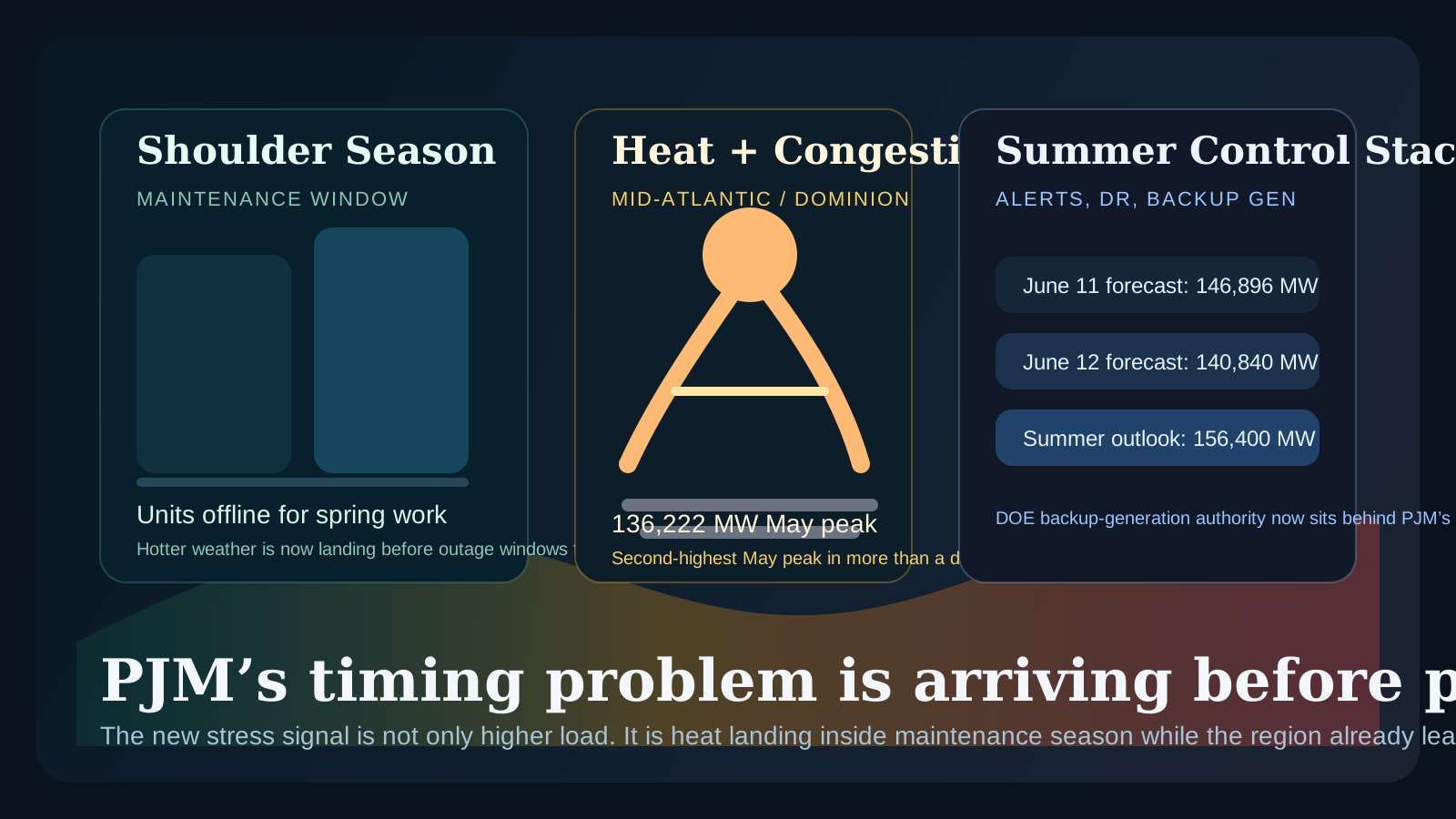
PJM timing snapshot
The operational signal is that stress is showing up before peak summer. The numbers below matter less as isolated load points than as evidence that timing flexibility is getting thinner.
PJM load and timing markers
| Signal | Reported level | Timing | Why it matters |
|---|---|---|---|
| May heat event actual peak | 136,222 MW | May 19, 2026 | High load arrived while maintenance outages and Mid-Atlantic/Dominion congestion were still part of the operating picture. |
| Next hot-weather alert peak | 146,896 MW | Forecast for June 11, 2026 | Shows summer-like demand pressure returning immediately after PJM’s shoulder-season warning. |
| Following-day peak | 140,840 MW | Forecast for June 12, 2026 | Confirms the stress window is multi-day, not a one-hour anomaly. |
| Summer outlook baseline | 156,400 MW expected peak | PJM outlook published May 7, 2026 | The bigger issue is not only the top-line peak, but how much maintenance and reserve flexibility remains when heat arrives early. |
Source context: PJM operating updates published June 9, 2026, plus PJM’s May 7, 2026 summer outlook.
PJM’s June 9 operating update is worth publishing because the useful signal is not just that the operator handled one hot stretch in May. The stronger signal is that reliability stress is now arriving inside shoulder season, when spring maintenance outages are still notable and the system is not yet in full summer configuration. That turns timing into part of the AI power story.
The official facts are concrete. PJM said it reliably served load during the May 18 through May 20 heat event despite maintenance outages, above-average temperatures, and transmission congestion in the Mid-Atlantic and Dominion zones. The operator logged an instantaneous peak of 136,222 megawatts on May 19, which it described as the second-highest May peak in more than a decade. PJM also said that if the same heat had landed earlier in the shoulder season, the consequences would have been more severe because more equipment would likely still have been out of service.
The useful PJM signal is not only higher load. It is that heat is now colliding with maintenance season and congestion before summer peak conditions fully arrive.
That matters because shoulder seasons are supposed to be the window when generators and transmission owners do the work that gets the system ready for summer and winter. PJM is now saying, in effect, that the maintenance calendar and the weather calendar are no longer lining up as neatly as they used to. When operators have to recall outages, postpone new work, and manage congestion before summer peak conditions fully arrive, the real bottleneck is not only total megawatts. It is how much operating flexibility remains at the exact moment demand jumps.
The new June 11 and June 12 Hot Weather Alert sharpens that read. PJM said on June 9 that it expected approximately 146,896 megawatts of peak load on Thursday, June 11, and 140,840 megawatts on Friday, June 12, across the Mid-Atlantic and Southern regions. On paper, those levels still sit below PJM’s May 7 summer outlook of roughly 156,400 megawatts. But the useful comparison is not just against the seasonal peak forecast. It is against the fact pattern PJM just described: earlier heat, congestion in key zones, and a need to actively manage outage timing.
The original Grid Report angle is that this is an AI timing story as much as a weather story. PJM’s own summer outlook says continued load growth driven by data centers is tightening reserve margins. The June 9 operations recap adds the missing operational detail. AI-related load growth does not only matter on the hottest theoretical day of August. It also matters when off-peak maintenance seasons get shorter, transmission interfaces run tighter, and operators need more options before full summer conditions even hit.
That is why the DOE backup-generation order from May 18 matters here even though PJM did not need to use it. DOE Order No. 202-26-23 authorized PJM to direct backup generation resources at data centers and other major facilities as a last-resort tool during the May emergency window. PJM says that authority was not called on, but its existence is still a useful market signal. It means large-load flexibility is no longer just a future planning concept. It is already part of the operating stack sitting behind alerts, voltage tools, demand response, and outage recalls.
This clears the duplicate bar against the site’s earlier PJM and DOE coverage because the thesis is different. The recent Mid-Atlantic pieces focused on emergency orders, governance, or long-range load growth. This story is about the shrinking distance between routine maintenance season and emergency-style operations. For developers, utilities, and investors tracking AI power readiness, that is the more actionable question: not only whether capacity exists in aggregate, but whether the grid has enough timing slack when heat lands at the wrong moment.
Sources
PJM, “PJM Maintained Reliability During Unusual Spring Heat,” published June 9, 2026: https://insidelines.pjm.com/pjm-maintained-reliability-during-unusual-spring-heat/
PJM, “Hot Weather Alert Issued for June 11–12 for PJM’s Mid-Atlantic and Southern Regions,” published June 9, 2026: https://insidelines.pjm.com/hot-weather-alert-issued-for-june-11-12-for-pjms-mid-atlantic-and-southern-regions/
PJM, “Summer Outlook 2026: PJM Prepared To Meet Growing Summer Demand With Adequate Resources,” published May 7, 2026: https://insidelines.pjm.com/summer-outlook-2026-pjm-prepared-to-meet-growing-summer-demand-with-adequate-resources/
U.S. Department of Energy, “Federal Power Act Section 202(c): PJM Interconnection, LLC (PJM) Order No. 202-26-23,” published May 18, 2026: https://www.energy.gov/ceser/federal-power-act-section-202c-pjm-interconnection-llc-pjm-order-no-202-26-23
By Nawaz Lalani
The Grid Report is written by Nawaz Lalani and focuses on source-backed coverage of AI infrastructure, grid power demand, automation systems, and market signals.
Follow the signal, not just the headline.
Get the daily Grid brief for source-backed coverage on AI power demand, infrastructure timing, automation, and market signals.