- NVIDIA’s June 23 telecom announcement clears the publish bar because it treats network AI as an operations system, not a demo layer.
- That distinction matters because telecom is one of the clearest examples of where agent hype breaks down if the operating stack is weak.
- The data layer is the first constraint.
- Section
- AI Automation
- Read time
- 4 min read
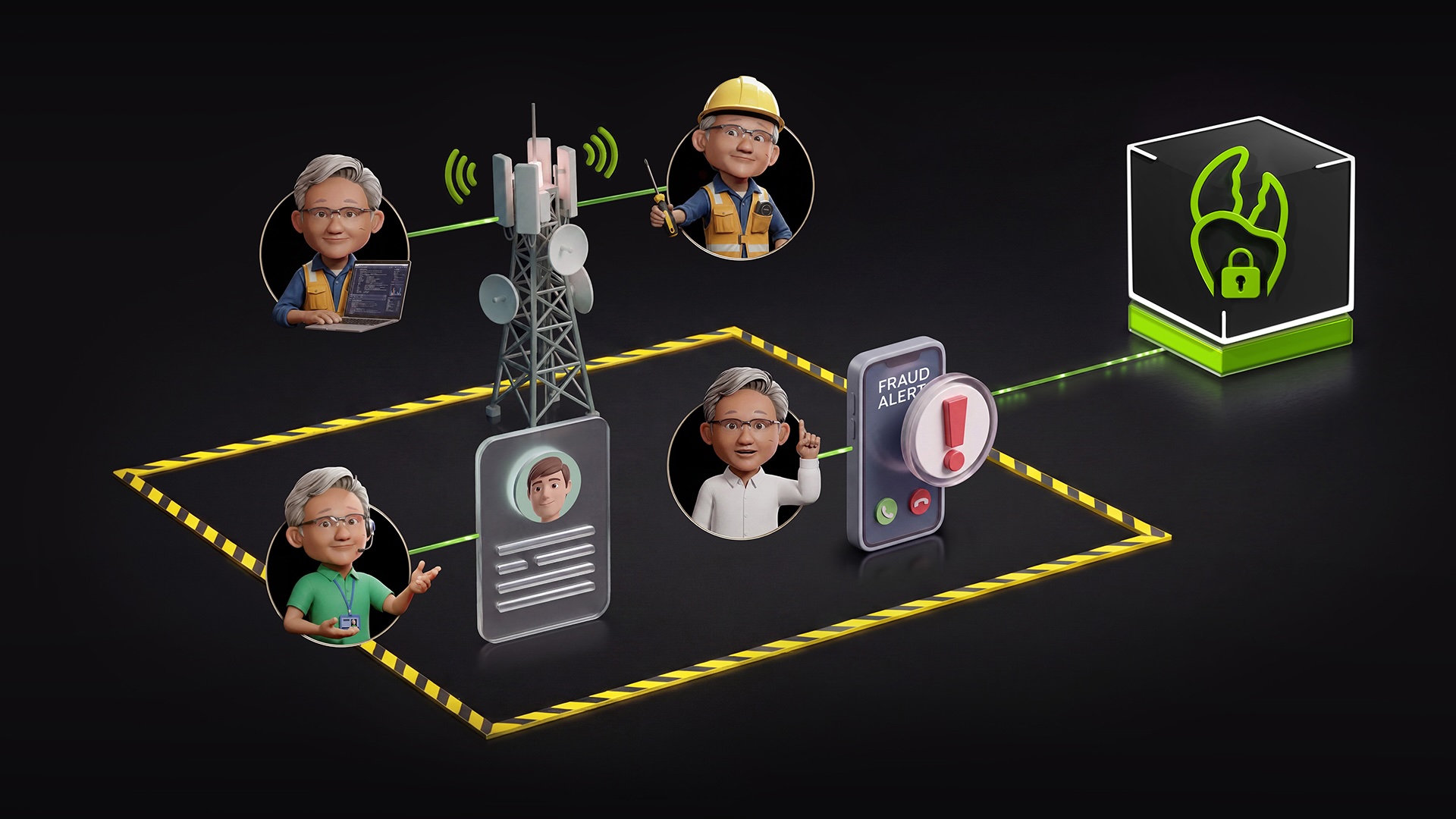
NVIDIA’s June 23 telecom announcement clears the publish bar because it treats network AI as an operations system, not a demo layer. The release around TM Forum’s DTW Ignite 2026 is not really about a chatbot helping a carrier employee. It is about how telecom operators might let long-running agents watch for faults, coordinate changes, and propose or trigger actions under service-level, security, and regulatory constraints.
That distinction matters because telecom is one of the clearest examples of where agent hype breaks down if the operating stack is weak. Networks are too stateful, too sensitive, and too interconnected for ordinary “agentic AI” language to be useful on its own. The stronger signal in NVIDIA’s framing is that telecom autonomy needs three harder ingredients at once: privacy-safe training data, governed runtimes, and simulated environments that can validate actions before they hit live infrastructure.
Telecom autonomy becomes believable only when agents can learn safely, act under policy, and rehearse inside digital twins before touching live networks.
The data layer is the first constraint. NVIDIA says operators still struggle to use the most valuable network and customer data directly because of privacy and handling restrictions. That is why the synthetic-data angle matters more than it first appears. In NVIDIA’s examples, SoftBank is using NeMo Safe Synthesizer and NeMo Anonymizer to create telecom-like datasets that can fine-tune domain models and support specialized agents without exposing raw production records. That turns data access from a blocker into an architecture problem.
The runtime layer is the second constraint. NVIDIA’s NemoClaw blueprints and OpenShell secure runtime are being positioned as the guardrails that let long-running agents work inside policy boundaries instead of acting like open-ended copilots. That is the part many generic enterprise AI stories miss. In telecom, an agent is only useful if it can stay auditable, scoped, and interruptible while touching ticketing, network, and business systems that already carry strict change-control expectations.
The simulation layer is what makes the story stronger than a normal governance pitch. NVIDIA points to operator and vendor work on radio and network digital twins so agents can test recommendations before acting. VIAVI says it is accelerating its AI RAN Scenario Generator on NVIDIA Blackwell GPUs to increase large-scale simulation throughput, while KDDI, KDDI Research, NVIDIA, Keysight, and Samsung Research America say they are building a high-fidelity RAN digital twin for the 6G era. The better read-through is that autonomous telecom operations may scale only when agents can rehearse in environments close enough to production to make trust credible.
This belongs in the systems lane because the real product is orchestration under constraints. Operators should read it as a sign that network autonomy will be won less by the flashiest model demo than by the teams that combine domain data, governed execution, and simulation-backed validation. Investors should read it as evidence that the monetizable layer in telecom AI is not only the model, but the control stack around how agents are trained, authorized, and tested.
There are obvious caveats. The ecosystem is still vendor-led, and the distance between conference architecture and carrier-wide production deployment is always real. But the announcement still clears the bar because it names the real bottleneck. Telecom agents become credible only when the industry solves how they learn safely, act under policy, and validate behavior before touching live networks.
That makes the story search-worthy. The useful question is not whether telcos want AI agents. It is what architecture makes autonomous network operations trustworthy enough to move from slideware into real operating practice.
Sources
NVIDIA, “NVIDIA Brings Trusted, 24/7 AI Agents to Telecom Operations,” published June 23, 2026: https://blogs.nvidia.com/blog/telecom-ai-agents-dtw-ignite-2026/
VIAVI Perspectives, “Building the GPU-Accelerated RAN Digital Twins That Will Run Tomorrow’s Networks,” published June 22, 2026: https://blog.viavisolutions.com/2026/06/22/building-the-gpu-accelerated-ran-digital-twins-that-will-run-tomorrows-networks/
KDDI, “KDDI, KDDI Research and Global Partners Launch RAN Digital Twin Collaboration for the 6G Era,” published June 23, 2026: https://newsroom.kddi.com/english/news/detail/kddi_nr-1068_4588.html
By Nawaz Lalani
The Grid Report is written by Nawaz Lalani and focuses on source-backed coverage of AI infrastructure, grid power demand, automation systems, and market signals.
Follow the signal, not just the headline.
Get the daily Grid brief for source-backed coverage on AI power demand, infrastructure timing, automation, and market signals.