- Google’s June 2 Voltus agreement is worth publishing because the useful signal is not another corporate sustainability commitment.
- The primary-source facts are specific enough to clear the bar.
- That is the original Grid Report angle.
- Section
- Energy
- Read time
- 5 min read
- Data included
- Why the Google-Voltus structure matters
Why the Google-Voltus structure matters
The point is not that 100 megawatts solves AI power demand by itself. The point is that a large-load buyer is helping finance a repeatable flexibility product inside a grid region already under load pressure.
The disclosed signals that make the deal publishable
| Signal | Primary-source fact | Why it matters |
|---|---|---|
| Procurement model | Google is funding a Bring Your Own Capacity structure with Voltus in PJM | This turns flexibility into something a large-load customer can buy, not just praise in principle. |
| Resource mix | The pool includes batteries, smart thermostats, and other distributed resources | Existing distributed assets can become part of the support layer behind data-center growth. |
| Local incentives | Voltus says participating homes and businesses get paid when they help the grid | The model channels part of the data-center power story into local economic benefits instead of only upstream capex. |
| Replication test | Both companies frame the deal as a scalable blueprint for other large energy users | If it works, large-load interconnection strategy may increasingly include contracted flexibility alongside physical buildout. |
Source: Google and Voltus primary-source posts published June 2, 2026.
Google’s June 2 Voltus agreement is worth publishing because the useful signal is not another corporate sustainability commitment. The stronger signal is that a major data-center buyer is treating distributed flexibility as a capacity product that can help support new AI-related load growth in PJM.
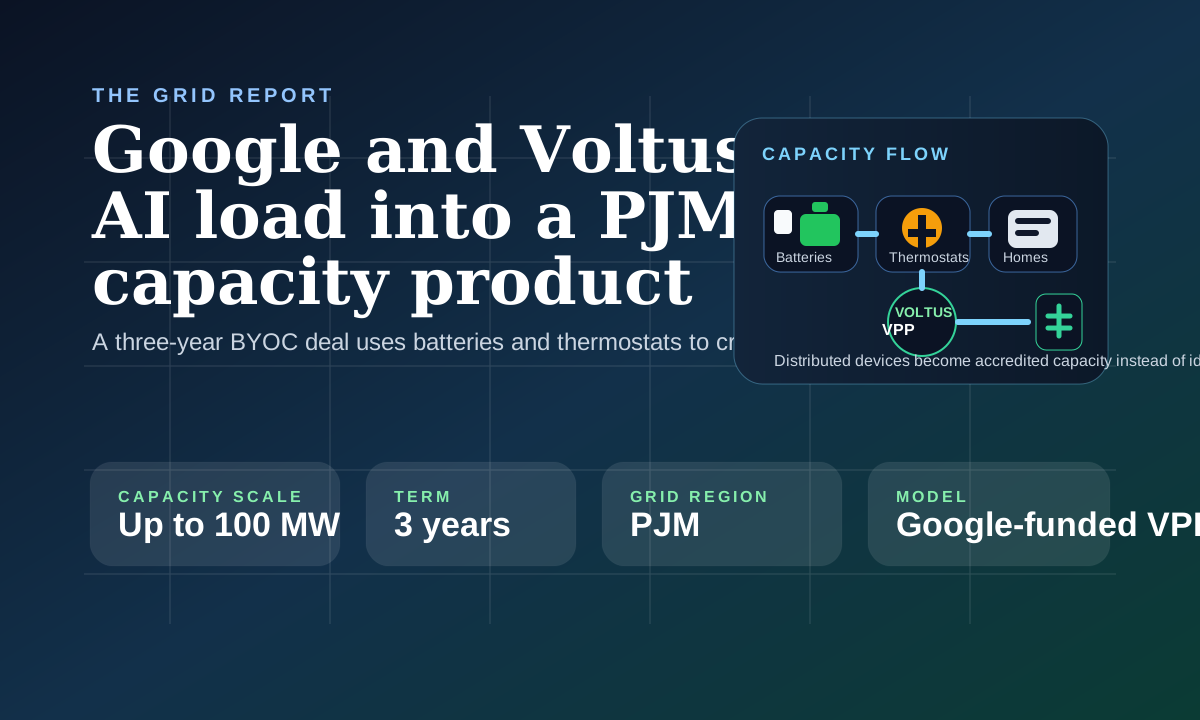
The primary-source facts are specific enough to clear the bar. Google and Voltus said they signed a three-year Bring Your Own Capacity agreement that aims to unlock up to 100 megawatts of new electricity capacity from distributed energy resources in PJM. Voltus said the model will aggregate resources such as batteries and smart thermostats into a Google-funded virtual power plant and pay participating homes and businesses when those assets reduce demand or respond when the grid needs help.
The important Google-Voltus signal is that AI load growth is starting to look like a capacity procurement problem, not just a forecast for more power plants.
That is the original Grid Report angle. The real product being purchased here is not only cleaner optics around power growth. It is optionality inside a strained grid region. Instead of treating data-center expansion as a one-way request for more generation, transmission, and substations, Google is helping finance a pool of flexible capacity that can show up during tighter operating windows.
This matters because PJM is one of the clearest places where AI-era load growth is colliding with real operating pressure. The site has already covered PJM’s summer reliability stress, DOE emergency orders, and the broader fight over who pays for large-load infrastructure. Against that backdrop, the Voltus structure looks less like a side program and more like an early template for how hyperscale buyers may need to participate if they want faster, more defensible grid access.
The mechanism also matters. A virtual power plant is valuable here not because the phrase is fashionable, but because it converts small distributed resources into accredited system capacity. If Google can help assemble flexible demand and distributed storage into something PJM can rely on, the company is effectively turning local households and businesses into part of the grid-side support layer behind data-center growth.
This clears the duplicate block against the site’s earlier flexible-AI-factory coverage because that story was about campus design logic and grid-responsive architecture. The Google-Voltus agreement is closer to procurement. It says at least one large buyer is willing to pay for external flexibility in the region that serves its load instead of waiting for every solution to arrive as new steel in the ground.
The scale still needs context. One hundred megawatts does not solve the full AI-power buildout, and the agreement will only matter if the distributed resources are accredited, dispatched, and repeated successfully enough to become a model others copy. But that is exactly why the story is publishable now: it shows one practical way large-load customers may start buying time, goodwill, and grid support before enough conventional infrastructure arrives.
For search, the article is strong because it answers a live question directly: what does the Google-Voltus PJM deal actually mean for AI data centers and the grid? The useful answer is that AI-related load growth is starting to look less like a passive demand forecast and more like a capacity procurement problem with multiple possible supply layers.
Sources
Google, “We’ve signed a first-of-its-kind agreement with Voltus to create a smart capacity solution for the grid,” published June 2, 2026: https://blog.google/company-news/outreach-and-initiatives/sustainability/voltus-agreement/
Voltus, “Voltus and Google to Deliver Grid Capacity and Local Economic Benefits Through Bring Your Own Capacity Agreement,” published June 2, 2026: https://www.voltus.co/press/voltus-google-bring-your-own-capacity-pjm
By Nawaz Lalani
The Grid Report is written by Nawaz Lalani and focuses on source-backed coverage of AI infrastructure, grid power demand, automation systems, and market signals.
Follow the signal, not just the headline.
Get the daily Grid brief for source-backed coverage on AI power demand, infrastructure timing, automation, and market signals.