- Electric vehicles usually do reduce emissions compared with gasoline cars, but the honest answer depends on what exactly is being measured.
- That broader lifecycle view still tends to favor EVs in many markets.
- That does not mean every EV is automatically low-carbon under all conditions.
- Section
- Energy
- Read time
- 7 min read

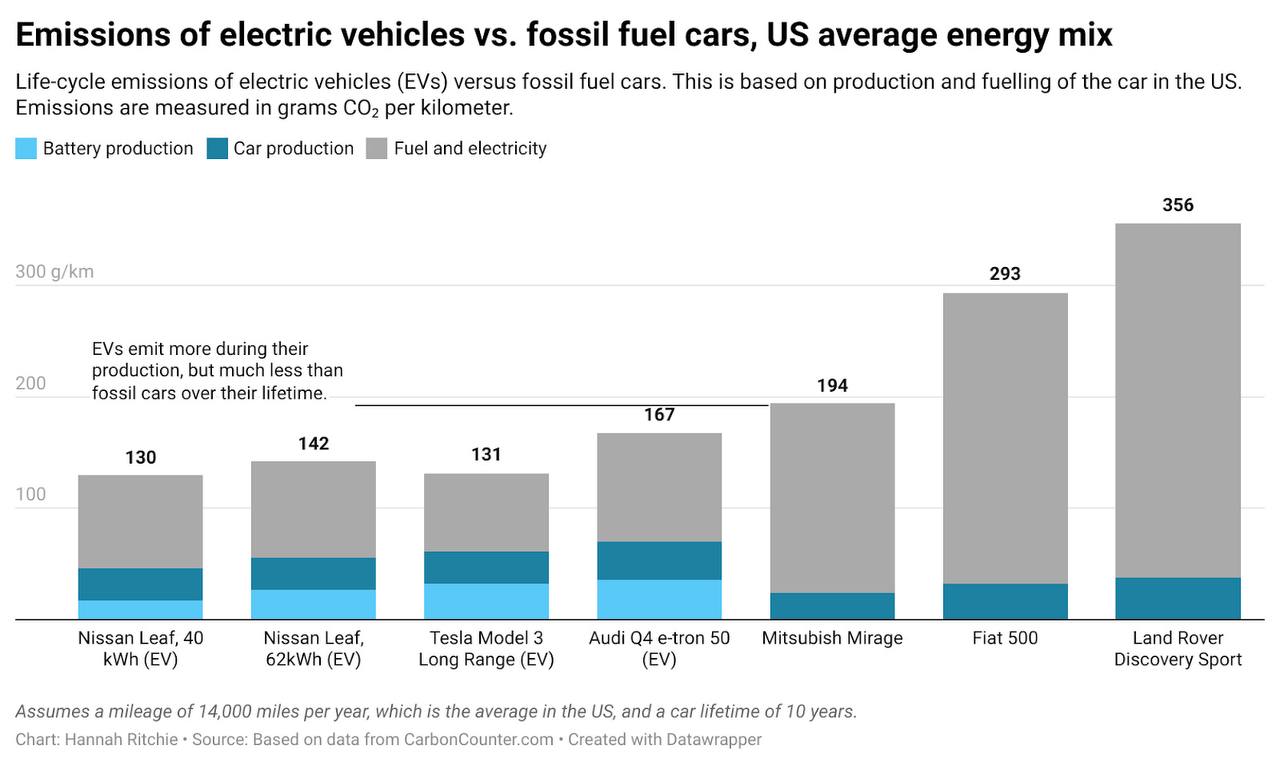
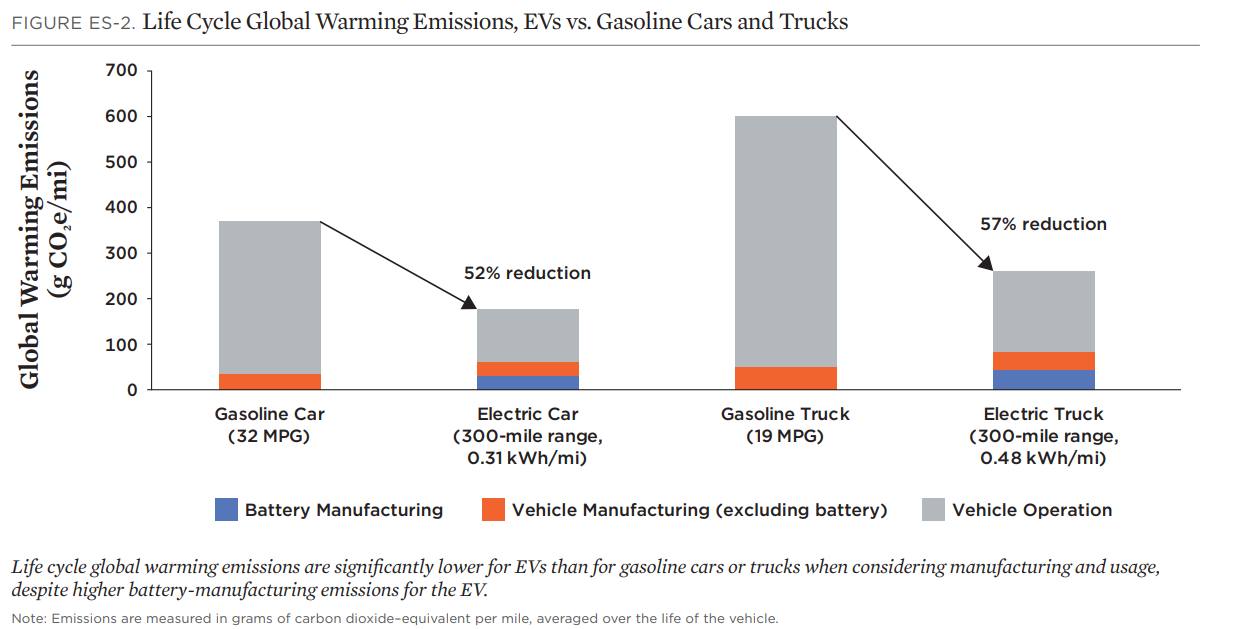
Electric vehicles usually do reduce emissions compared with gasoline cars, but the honest answer depends on what exactly is being measured. If the comparison is only tailpipe emissions, EVs win easily because they do not burn gasoline while driving. But the more serious comparison is lifecycle emissions: raw materials, battery production, manufacturing, electricity generation, driving, and end-of-life.
That broader lifecycle view still tends to favor EVs in many markets. The International Energy Agency has been explicit that EVs generally produce lower lifecycle greenhouse gas emissions than conventional internal combustion cars, even after accounting for battery manufacturing and the electricity used for charging. The exact gap changes based on the electricity mix, vehicle size, driving distance, and battery size, but the general direction is clear: EVs are usually cleaner over their operating life.
EVs usually beat gasoline cars on lifecycle emissions, but their long-term feasibility depends on the strength of the energy and industrial systems around them.
That does not mean every EV is automatically low-carbon under all conditions. If an electric car is large, battery-heavy, and charged on a very carbon-intensive grid, the emissions advantage narrows. If a smaller EV is charged on a cleaner grid over many miles, the advantage strengthens. So the right way to think about EVs is not as a zero-emissions magic object, but as a technology whose total carbon benefit depends on the system around it.
The second part of the question is whether EV ownership is feasible in a world shaped by war, geopolitical stress, and more fragile supply chains. That answer is more complicated. EV adoption depends on batteries, critical minerals, semiconductor supply chains, charging infrastructure, stable electricity access, and industrial policy. Conflict or trade disruption can pressure all of those. Lithium, nickel, graphite, rare earths, and refining capacity all sit inside global systems that can become more expensive, slower, or more politically constrained during unstable periods.
That means wartime or conflict-heavy conditions do not make EVs impossible, but they can make them harder to scale, more expensive, or more dependent on industrial policy and domestic capacity. In that sense, the EV question becomes less about consumer preference alone and more about national resilience: who controls supply chains, who builds batteries, who owns refining, and who can support charging and grid upgrades under stress.
For an individual buyer today, the practical answer is still fairly straightforward. If you have reliable charging access, reasonable electricity costs, and a use case that fits current range and charging patterns, an EV can still make sense both economically and environmentally. If you live in a place with weak charging access, volatile power reliability, or a use case heavily dependent on long-distance flexibility, the answer becomes less obvious.
So do EVs save carbon compared with gas cars? In most realistic lifecycle comparisons, yes. Is it still feasible to buy one in a world shaped by war and supply chain risk? Often yes, but with more caveats than the glossy marketing story suggests. The real dividing line is not whether EVs work in theory. It is whether the energy, industrial, and infrastructure systems around them are strong enough to support them under pressure.
By Simran Bhimani
Simran Bhimani authored this piece for The Grid Report. Editorial standards, corrections handling, and publication oversight are managed by Nawaz Lalani.
Follow the signal, not just the headline.
Get the daily Grid brief for source-backed coverage on AI power demand, infrastructure timing, automation, and market signals.