- Videberg Kraft’s June 15 supplier decision is worth publishing because the useful signal is not just that Sweden may get its first new nuclear power in more than 40 years.
- The operating facts are concrete enough to clear the bar.
- That is the sharper Grid Report angle.
- Section
- Energy
- Read time
- 4 min read
- Why this page exists
- The Grid Report publishes operator-grade coverage on AI, power, infrastructure, automation, and markets.
Why the Sweden selection matters beyond one project
The useful takeaway is not only new megawatts for Sweden. It is the shape of a potentially repeatable European delivery model.
| Signal | What the sources say | Why it matters | Grid Report read-through |
|---|---|---|---|
| Fleet repetition | Rolls-Royce linked the Sweden selection to existing U.K. and Czech progress. | A repeated reactor program can reuse learning across licensing, manufacturing, and supply chains. | Europe may finally be testing a real fleet model instead of isolated nuclear projects. |
| Project scale | Alfa Laval said the project corresponds to around 1,500 MW and targets first power in the mid-2030s. | This is utility-scale baseload, not a pilot unit. | The commercial ambition is large enough to matter for industrial power planning. |
| Financing structure | Vattenfall said Videberg Kraft already applied for state aid under Sweden’s risk-sharing framework and that Industrikraft is taking a 20% stake. | Public support and industrial demand are being structured before final build decisions. | The project is being de-risked as an infrastructure vehicle, not marketed as a science project. |
| Selection logic | Vattenfall and Alfa Laval stressed proven PWR technology, industrialized delivery, and lower delay risk. | Execution confidence is becoming the decisive product feature in new nuclear. | The winning SMR pitch is standardization, not novelty. |
Source context: Rolls-Royce and Alfa Laval statements published June 15, 2026, plus Vattenfall’s December 23, 2025 financing update.
Videberg Kraft’s June 15 supplier decision is worth publishing because the useful signal is not just that Sweden may get its first new nuclear power in more than 40 years. The stronger signal is that Europe is starting to build a repeatable SMR path around a standard vendor stack, a familiar reactor type, industrial co-sponsors, and an explicit public risk-sharing framework.
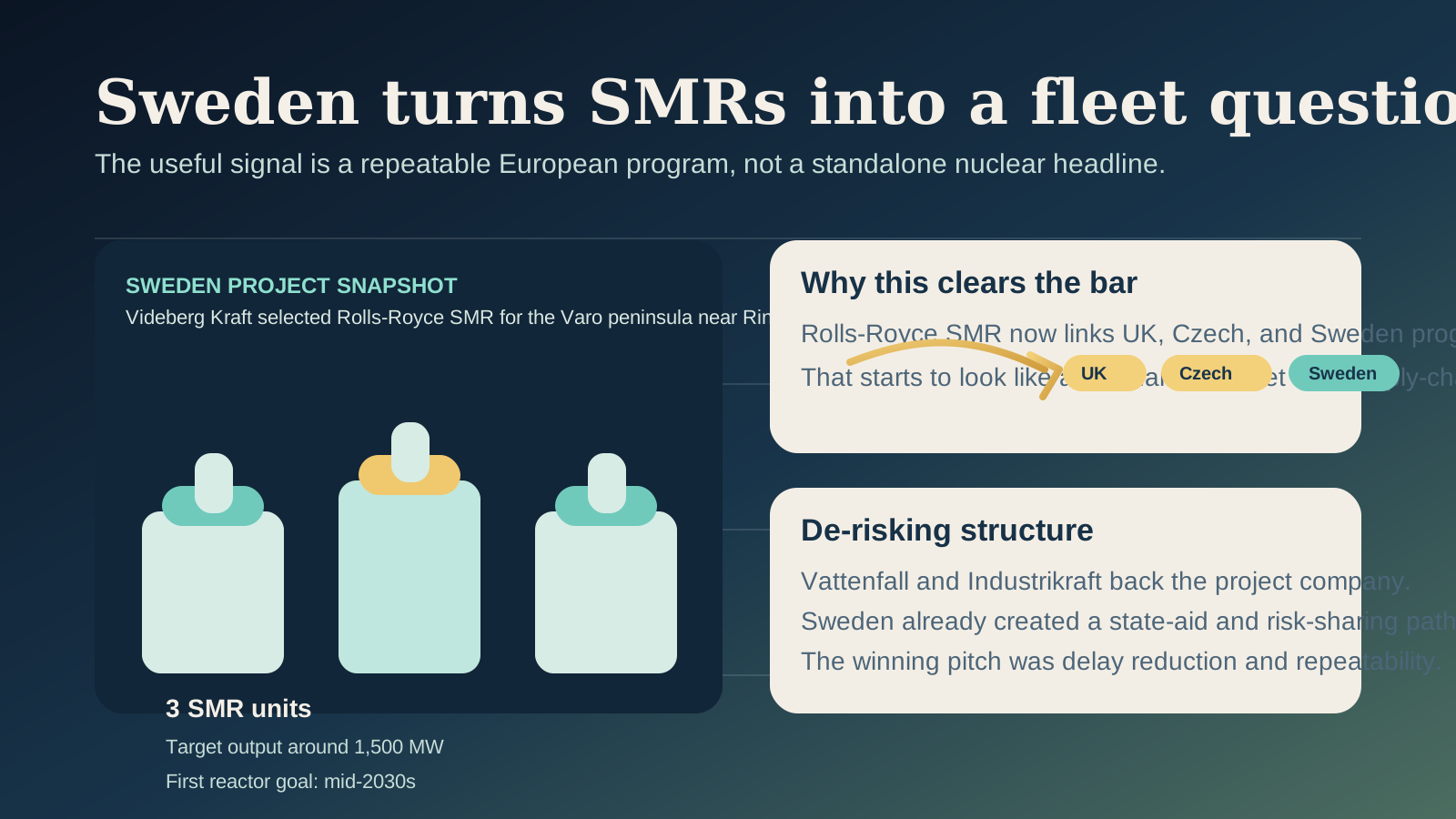
The operating facts are concrete enough to clear the bar. Rolls-Royce said Videberg Kraft selected Rolls-Royce SMR to deliver three small modular reactors on Sweden’s west coast. Alfa Laval, which is part of Industrikraft and represented on the project, said the Värö Peninsula project is intended to provide about 1,500 megawatts of new baseload capacity and that the company is now working toward commissioning the first reactor in the mid-2030s.
The useful June 15 signal is not just another nuclear headline. It is that Europe may finally be assembling a repeatable SMR fleet model.
That is the sharper Grid Report angle. The market still often treats SMRs as a technology debate or a collection of one-off national announcements. Sweden makes the more practical point. Rolls-Royce SMR already had the U.K. and Czech Republic in its disclosed program. Adding Sweden begins to make the company’s pitch look less like a single-project bet and more like a standardized European fleet story with reusable licensing, manufacturing, and supply-chain learning.
This clears the duplicate block against the site’s recent power coverage because the thesis is materially different. China’s nuclear buildout article was about industrial build speed inside one country. The Three Mile Island waiver story was about deliverability rights attached to a restart. Sweden is different. It is about whether Europe can create a repeatable new-nuclear product that industrial customers and governments are willing to underwrite across multiple markets.
The ownership and financing setup matters because it explains why this is stronger than a concept slide. Vattenfall said in December that Videberg Kraft had already applied for state aid under Sweden’s financing-and-risk-sharing framework for new nuclear and that Industrikraft was acquiring a 20% stake in the project company. That means the supplier decision lands inside a structure that already links public support, utility sponsorship, and direct industrial demand rather than hoping those pieces appear later.
The wording around delay risk is especially revealing. Alfa Laval said Rolls-Royce SMR offers an efficient and industrialized concept that reduces the risk of delays. Anna Borg of Vattenfall said the board judged Rolls-Royce SMR the supplier that gives Videberg Kraft the best prerequisites for a successful project and highlighted the fact that the reactor is a pressurized water reactor like the units already operating at Ringhals. In plain terms, the winning pitch was not futuristic novelty. It was standardization, contractual structure, and execution confidence.
For operators and policymakers, that read-through matters well beyond Sweden. In the AI-era power conversation, the hard problem is not only finding more firm electricity in theory. It is finding build models that can survive financing scrutiny, supply-chain bottlenecks, and schedule risk. A vendor that can stack multiple national wins behind one reactor family starts to look more credible to utilities, industrial buyers, and governments that need dependable power on politically usable timelines.
For investors, the implication is that the relevant nuclear question is shifting from who has the best SMR deck to who is assembling a real fleet pathway. Once a program links repeated supplier selection, industrial backing, and government risk sharing, the commercial story starts to move from technical optionality toward actual infrastructure execution.
The search case is strong because readers looking for the Sweden decision need more than a generic Rolls-Royce or SMR recap. The more useful answer is that Videberg’s selection matters because it makes European new nuclear look a little more standardized, financeable, and repeatable than it did before June 15.
Sources
Rolls-Royce, “Rolls-Royce SMR selected to deliver Sweden’s first new nuclear power for over 40 years,” published June 15, 2026: https://www.rolls-royce.com/media/press-releases/2026/15-06-2026-rr-smr-selected-to-deliver-swedens-first-new-nuclear-power-for-over-40-years.aspx
Alfa Laval, “Alfa Laval welcomes significant step in Sweden’s new nuclear program,” published June 15, 2026: https://www.alfalaval.com/media/news/2026/alfa-laval-welcomes-significant-step-in-sweden-s-new-nuclear-program/
Vattenfall, “Videberg Kraft applies for state aid for investment in new nuclear power,” published December 23, 2025: https://group.vattenfall.com/press-and-media/newsroom/2025/vattenfall-videberg-kraft-applies-for-state-aid-for-investment-in-new-nuclear-power/
Nawaz Lalani
Nawaz Lalani is the creator of The Grid Report and writes about AI infrastructure, grid power demand, automation systems, and the market signals shaping the physical AI economy. His focus is translating technical and industrial shifts into practical coverage for operators, investors, builders, and teams making real deployment decisions.
B.S. in Geology from UT Arlington. Covers AI infrastructure, energy systems, grid constraints, automation workflows, and market signals.
Stories are built from primary sources, utility and infrastructure signals, company disclosures, filings, and operator-grade context. The goal is to explain what changed, why it matters now, and what it means for builders, investors, utilities, and teams making real deployment decisions.
Follow the lane, not just the headline.
The strongest value in The Grid Report comes from following how AI, infrastructure, power, automation, and markets connect over time.