- DOE’s June 10 Ohio fact sheet is worth publishing because it makes a new AI power bargain unusually explicit.
- The operating facts are specific enough to clear the bar.
- That is the sharper Grid Report angle.
- Section
- Energy
- Read time
- 4 min read
- Why this page exists
- The Grid Report publishes operator-grade coverage on AI, power, infrastructure, automation, and markets.
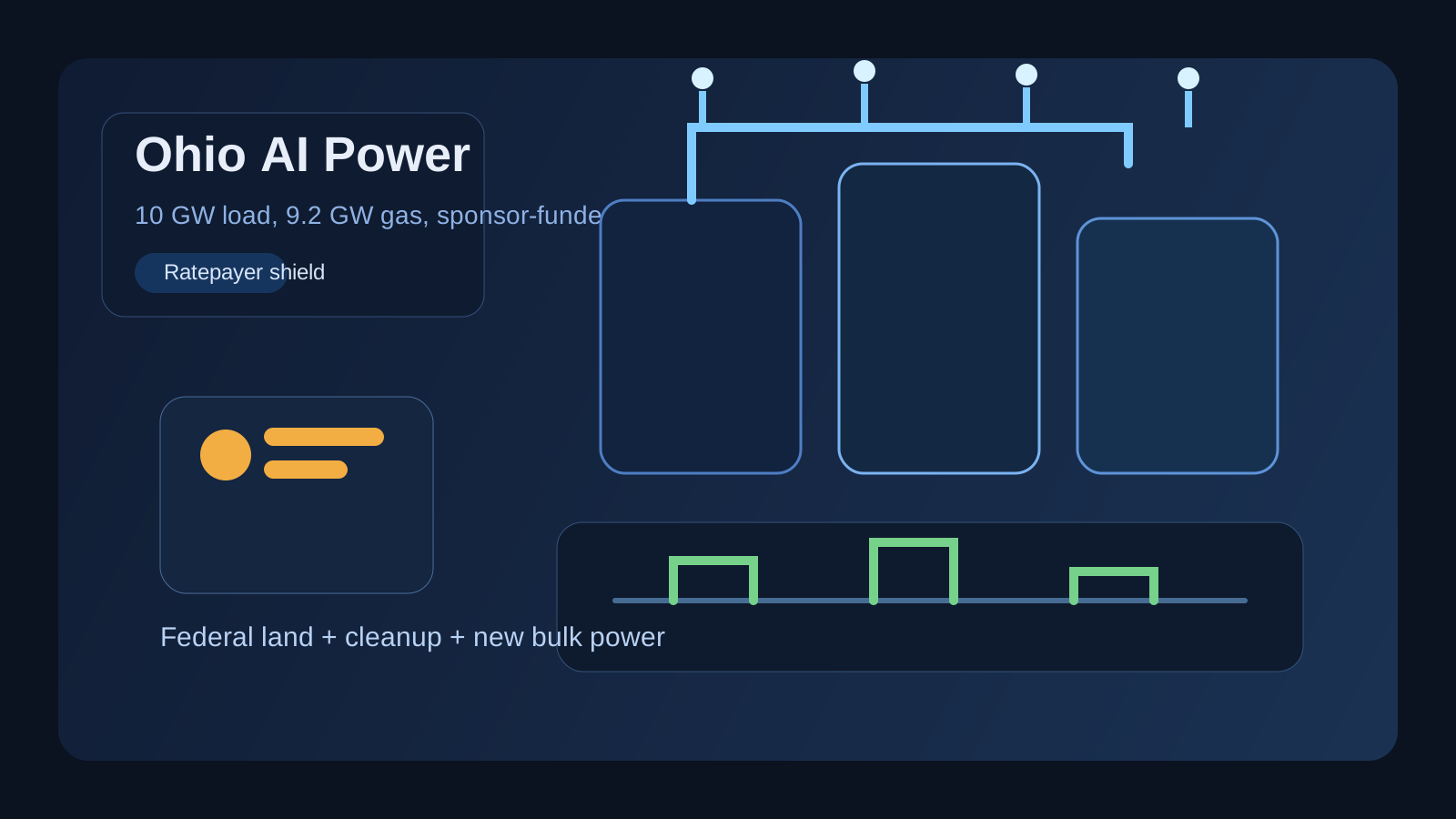
Why the Ohio package stands out
The project is notable because the proposed AI load arrives with a coordinated generation, transmission, land, and ratepayer-protection package.
| Component | What DOE said | Why it matters | Grid Report read-through |
|---|---|---|---|
| Dedicated generation | 10 GW of new generation, including at least 9.2 GW of natural gas, is planned to support 10 GW of data-center load. | The load is paired with its own firm supply instead of leaning only on the existing grid. | Large-load projects are moving toward self-provided power stacks. |
| Transmission funding | $4.2 billion of new transmission infrastructure includes 765 kV lines and four substations. | Transmission becomes part of the development plan, not an afterthought. | Speed-to-power increasingly depends on who can fund the wires. |
| Ratepayer shield | SB Energy committed to paying for the transmission buildout. | The public-cost argument gets easier when the developer absorbs the upgrade burden. | Consumer protection is becoming a precondition for political legitimacy. |
| Federal site bargain | DOE is leasing Portsmouth land and says the developer will support accelerated cleanup. | The campus doubles as a redevelopment and cleanup story. | AI projects may win faster support when tied to broader local value creation. |
Source context: DOE Ohio fact sheet published June 10, 2026 and DOE Portsmouth special report published April 7, 2026.
DOE’s June 10 Ohio fact sheet is worth publishing because it makes a new AI power bargain unusually explicit. The useful signal is not just that a giant campus wants giant supply. The stronger signal is that federal and state actors are blessing a structure in which the developer brings dedicated generation, funds major transmission, absorbs cleanup obligations, and promises surplus capacity back to the grid so consumers are not left subsidizing the buildout.
The operating facts are specific enough to clear the bar. DOE says SoftBank Group and SB Energy plan to build 10 gigawatts of new power generation, including at least 9.2 gigawatts of natural-gas generation, to support 10 gigawatts of data-center development in Ohio. DOE also says SB Energy and AEP Ohio have partnered on $4.2 billion of new transmission infrastructure, including new 765-kilovolt lines and four substations, and that SB Energy has committed to pay for that infrastructure rather than shifting those costs onto Ohio ratepayers.
The new bargain is simple: if AI developers fund the surrounding power system, the politics of large load get much easier.
That is the sharper Grid Report angle. For months the AI power debate has been framed as a conflict between hyperscaler urgency and grid constraints. Ohio’s fact sheet points to a more actionable middle path. If a large-load developer is willing to underwrite the physical system around the campus, the permitting and political argument changes from who must absorb the strain to what structure protects the public while accelerating capacity.
This clears the duplicate block against the site’s recent energy and policy coverage because the thesis is materially different. Abbott’s Texas directive was a bring-your-own-infrastructure story at the state level. The Nevada ratepayer-protection tariff was about utility cost allocation. DOE’s earlier microgrid push was about controllable load design. This Ohio package combines all three layers into one public template: dedicated supply, dedicated transmission, and explicit consumer shielding tied to a federal land deal.
The federal land detail matters because it makes the deal more than a utility filing. DOE says it is leasing land at the former Portsmouth Gaseous Diffusion Plant to an SB Energy-affiliated entity for the data-center campus, and that SB Energy has also committed to accelerated cleanup and remediation at the site. That turns AI infrastructure into a broader redevelopment bargain, not merely a private data-center expansion.
The gas mix will make this controversial, and that is part of why the story is publishable. DOE says at least 9.2 gigawatts of the new generation will be natural gas. In ordinary circumstances that would look like a politically difficult admission. Here the government is effectively arguing that the affordability and reliability terms of the package matter enough to justify backing a massive firm-power build for AI load.
For operators and utilities, the read-through is practical. Large-load projects that arrive with their own generation strategy, transmission funding, and cleanup or redevelopment concessions may move through the system with less backlash than projects that arrive asking the existing grid and rate base to stretch first and sort out costs later. For investors, the implication is that the winning AI campuses may increasingly be the ones that can finance a full power stack, not just the data hall.
The search case is strong because readers looking for the Ohio project need more than a giant-campus headline. The more useful answer is that DOE is now pointing to a developer-funded, consumer-shielded model for AI power access, and that model could shape how other states negotiate the next wave of large-load deals.
Sources
U.S. Department of Energy, “FACT SHEET: The Department of Energy is Ensuring Affordable Energy Access in Ohio While Powering the Future of AI,” published June 10, 2026: https://www.energy.gov/articles/fact-sheet-department-energy-ensuring-affordable-energy-access-ohio-while-powering-future
U.S. Department of Energy Office of Environmental Management, “Special Report Details World’s Largest AI Data Center at Portsmouth Site,” published April 7, 2026: https://www.energy.gov/em/articles/special-report-details-worlds-largest-ai-data-center-portsmouth-site
Nawaz Lalani
Nawaz Lalani is the creator of The Grid Report and writes about AI infrastructure, grid power demand, automation systems, and the market signals shaping the physical AI economy. His focus is translating technical and industrial shifts into practical coverage for operators, investors, builders, and teams making real deployment decisions.
B.S. in Geology from UT Arlington. Covers AI infrastructure, energy systems, grid constraints, automation workflows, and market signals.
Stories are built from primary sources, utility and infrastructure signals, company disclosures, filings, and operator-grade context. The goal is to explain what changed, why it matters now, and what it means for builders, investors, utilities, and teams making real deployment decisions.
Follow the lane, not just the headline.
The strongest value in The Grid Report comes from following how AI, infrastructure, power, automation, and markets connect over time.