Read lead story: EIA’s Data Center Server Forecast Says AI Could Reach One-Third of Commercial Power DemandEIA chart showing U.S. data server energy use by commercial building type from 2020 to 2050
Lead story
Energy GridMay 22, 20266 min read

EIA’s Data Center Server Forecast Says AI Could Reach One-Third of Commercial Power Demand

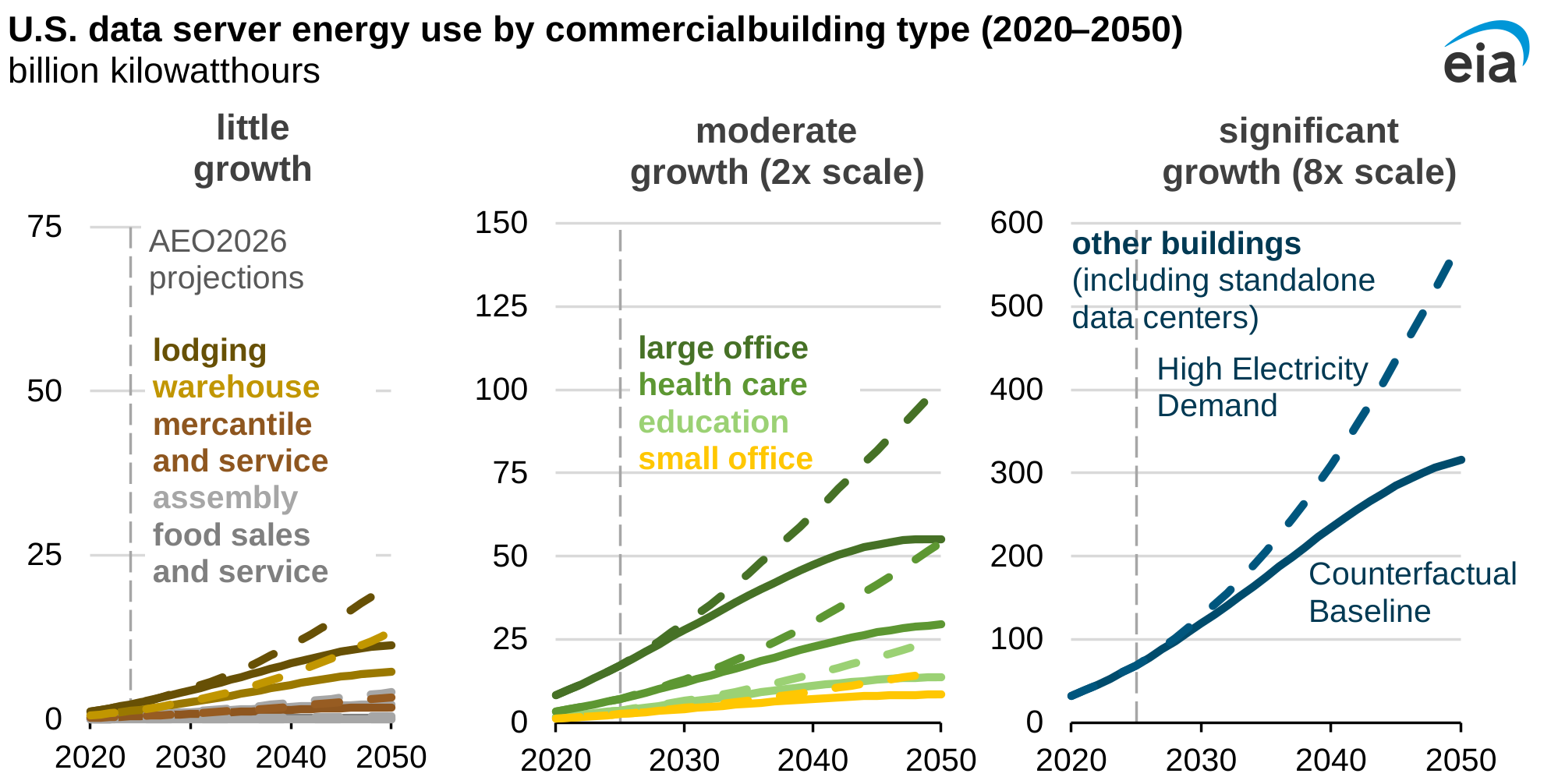
EIA’s May 19 breakdown is publishable because it does more than repeat that data centers use a lot of electricity. It changes the planning frame by separating server demand from broader commercial computing, showing how flat, always-on AI load can reshape commercial-sector intensity, cooling needs, and long-range grid assumptions.

Coverage areas

Five lanes. One physical AI economy.

Today

Today’s Grid Brief

See archive
Read article: CME’s Compute Futures Launch Turns GPU Capacity Into a Real Commodity MarketMarketsFinancial market charts and trading screens representing benchmark pricing for AI compute capacity
Markets5 min read

CME’s Compute Futures Launch Turns GPU Capacity Into a Real Commodity Market

CME Group’s May 12 announcement is publishable because it pushes compute out of the private-negotiation era and toward benchmarked market structure. The stronger signal is not the product launch alone. It is that GPU rental capacity is becoming specific enough, liquid enough, and expensive enough to justify a futures market for pricing, hedging, and capital planning.

By Nawaz Lalani

May 22, 2026

Read article: NextEra and Dominion Turn Utility Scale Into an AI-Power AdvantageMarketsHigh-voltage transmission lines and utility infrastructure running across an industrial energy corridor
Markets6 min read

NextEra and Dominion Turn Utility Scale Into an AI-Power Advantage

NextEra Energy’s May 18 agreement to acquire Dominion Energy is publishable because it turns a simple merger headline into a sharper infrastructure signal. In the AI power era, the scarce asset is no longer only generation or land. It is the ability to finance, permit, build, and rate-base huge volumes of grid investment fast enough to serve large loads without losing the affordability argument.

By Nawaz Lalani

May 22, 2026

Read article: NVIDIA’s Vera Delivery Turns Agentic AI Into a CPU Infrastructure StoryInfrastructureRows of high-density server racks inside a modern compute facility with blue lighting
Infrastructure6 min read

NVIDIA’s Vera Delivery Turns Agentic AI Into a CPU Infrastructure Story

NVIDIA’s May 18 Vera delivery is worth publishing because it marks the point where “agentic AI needs different infrastructure” stops being conference-stage language and turns into hardware in the hands of OpenAI, Anthropic, SpaceXAI, and Oracle Cloud Infrastructure. The stronger signal is that CPUs are moving back into the critical path of AI factories as agents do more orchestration, tool use, sandboxing, and code execution.

By Nawaz Lalani

May 22, 2026

Start with these

The strongest current Grid Report stories

Reader starting point
Read article: EIA’s Data Center Server Forecast Says AI Could Reach One-Third of Commercial Power DemandEnergy GridEIA chart showing U.S. data server energy use by commercial building type from 2020 to 2050
#1Energy Grid

EIA’s Data Center Server Forecast Says AI Could Reach One-Third of Commercial Power Demand

EIA’s May 19 breakdown is publishable because it does more than repeat that data centers use a lot of electricity. It changes the planning frame by separating server demand from broader commercial computing, showing how flat, always-on AI load can reshape commercial-sector intensity, cooling needs, and long-range grid assumptions.
By Nawaz Lalani

May 22, 2026

6 min read
Read article: CME’s Compute Futures Launch Turns GPU Capacity Into a Real Commodity MarketMarketsFinancial market charts and trading screens representing benchmark pricing for AI compute capacity
#2Markets

CME’s Compute Futures Launch Turns GPU Capacity Into a Real Commodity Market

CME Group’s May 12 announcement is publishable because it pushes compute out of the private-negotiation era and toward benchmarked market structure. The stronger signal is not the product launch alone. It is that GPU rental capacity is becoming specific enough, liquid enough, and expensive enough to justify a futures market for pricing, hedging, and capital planning.

By Nawaz Lalani

May 22, 2026

5 min read
Read article: NextEra and Dominion Turn Utility Scale Into an AI-Power AdvantageMarketsHigh-voltage transmission lines and utility infrastructure running across an industrial energy corridor
#3Markets

NextEra and Dominion Turn Utility Scale Into an AI-Power Advantage

NextEra Energy’s May 18 agreement to acquire Dominion Energy is publishable because it turns a simple merger headline into a sharper infrastructure signal. In the AI power era, the scarce asset is no longer only generation or land. It is the ability to finance, permit, build, and rate-base huge volumes of grid investment fast enough to serve large loads without losing the affordability argument.

By Nawaz Lalani

May 22, 2026

6 min read
Data desk

Charts first. Narrative second.

The Grid Report should be known for numbers readers can cite. These are the newest stories with a data snapshot, source trail, and operator takeaway.

ChartsSourcesLinkedIn-readySearch-friendly
Energy Grid7 min read

Where the AI electricity story gets harder

Per-task efficiencyImproving

Power use per AI task is falling rapidly, which can hide the scale of total demand growth.

Total usageRising

More users, more inference, and more agent-like workloads can overwhelm efficiency gains.

Data center concentrationCritical

The power problem becomes acute when large new facilities cluster around the same substations and regions.

Energy Grid7 min read

Typical U.S. household benchmark

Average monthly use899 kWh

EIA says the average U.S. residential customer bought about 899 kilowatthours per month.

Average 2026 residential price18.2 cents/kWh

EIA forecasts the U.S. residential electricity price averages 18.2 cents per kilowatthour in 2026.

Illustrative monthly bill~$164/month

This is an implied national estimate from usage times price, not a universal household bill.

Why readers come back

Physical AI economy coverage, with receipts.

01
Source
02
Data
03
Visual
04
Takeaway
28+
articles
7
data visuals
5
coverage lanes
Primary sourcesChartsMarket signalsGrid timing
Editorial standard
Latest stories

The latest reporting across the physical AI economy

View all stories
Read article: CME’s Compute Futures Launch Turns GPU Capacity Into a Real Commodity MarketMarketsFinancial market charts and trading screens representing benchmark pricing for AI compute capacity
MarketsMay 22, 20265 min read

CME’s Compute Futures Launch Turns GPU Capacity Into a Real Commodity Market

CME Group’s May 12 announcement is publishable because it pushes compute out of the private-negotiation era and toward benchmarked market structure. The stronger signal is not the product launch alone. It is that GPU rental capacity is becoming specific enough, liquid enough, and expensive enough to justify a futures market for pricing, hedging, and capital planning.

Read article: NextEra and Dominion Turn Utility Scale Into an AI-Power AdvantageMarketsHigh-voltage transmission lines and utility infrastructure running across an industrial energy corridor
MarketsMay 22, 20266 min read

NextEra and Dominion Turn Utility Scale Into an AI-Power Advantage

NextEra Energy’s May 18 agreement to acquire Dominion Energy is publishable because it turns a simple merger headline into a sharper infrastructure signal. In the AI power era, the scarce asset is no longer only generation or land. It is the ability to finance, permit, build, and rate-base huge volumes of grid investment fast enough to serve large loads without losing the affordability argument.

Read article: NVIDIA’s Vera Delivery Turns Agentic AI Into a CPU Infrastructure StoryInfrastructureRows of high-density server racks inside a modern compute facility with blue lighting
InfrastructureMay 22, 20266 min read

NVIDIA’s Vera Delivery Turns Agentic AI Into a CPU Infrastructure Story

NVIDIA’s May 18 Vera delivery is worth publishing because it marks the point where “agentic AI needs different infrastructure” stops being conference-stage language and turns into hardware in the hands of OpenAI, Anthropic, SpaceXAI, and Oracle Cloud Infrastructure. The stronger signal is that CPUs are moving back into the critical path of AI factories as agents do more orchestration, tool use, sandboxing, and code execution.

Read article: Enbridge and Meta Turn Wyoming’s Cowboy Project Into a Large-Load Power ModelEnergy GridUtility-scale solar farm in Wyoming representing Enbridge and Meta’s Cowboy Project for data center power delivery
Energy GridMay 21, 20266 min read

Enbridge and Meta Turn Wyoming’s Cowboy Project Into a Large-Load Power Model

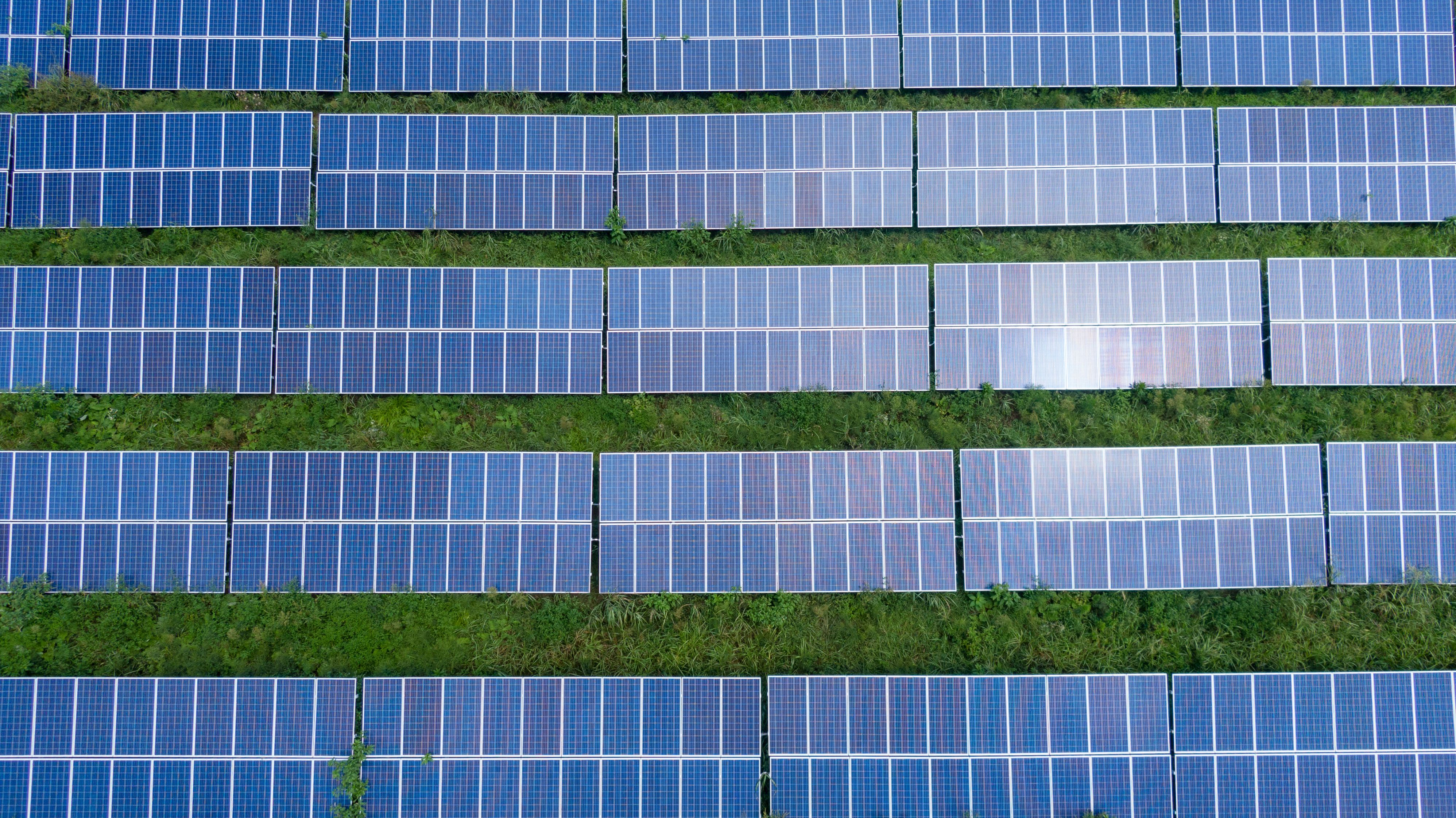
Enbridge’s May 19 Cowboy Project announcement matters because it is not just another renewable procurement headline. The stronger signal is that Wyoming’s large-load tariff structure is being used to package solar, storage, and data-center service into a utility product that aims to add capacity without pushing ordinary retail customers into the bill path.

Read article: OpenAI and Dell Turn Codex Into a Hybrid Enterprise Control LayerAI AutomationRows of high-density server racks inside an enterprise data center with blue lighting
AI AutomationMay 21, 20266 min read

OpenAI and Dell Turn Codex Into a Hybrid Enterprise Control Layer

OpenAI’s May 18 partnership with Dell is worth publishing because it moves Codex out of the pure cloud story and into the controlled enterprise environments where regulated data, internal systems, and real operating workflows still live. That makes deployment topology part of the product.

Read article: NVIDIA’s New Data Center Split Turns AI Spend Into a Two-Market StoryMarketsRows of servers inside a modern data center with blue lighting and high-density racks
MarketsMay 21, 20266 min read

NVIDIA’s New Data Center Split Turns AI Spend Into a Two-Market Story

NVIDIA’s May 20 earnings release matters not just because revenue hit another record, but because the company changed how it wants the market to read AI demand. By splitting data-center exposure into Hyperscale and ACIE, NVIDIA is signaling that the next valuation question is not only how much the cloud giants are still spending. It is how quickly AI factories, sovereign builds, industrial operators, and enterprise deployments become a second demand engine.

AI

Models and intelligence shifts

View section
Read article: OpenAI for Singapore Turns Forward-Deployed AI Engineering Into a National Infrastructure ExportAISingapore skyline at dusk with illuminated office towers reflected across the waterfront
AIMay 21, 20266 min read

OpenAI for Singapore Turns Forward-Deployed AI Engineering Into a National Infrastructure Export

OpenAI's Singapore launch matters because it turns applied AI engineering into part of national infrastructure strategy. With more than S$300 million behind the initiative, an Applied AI Lab in Singapore, and more than 200 local technical roles planned, the story is no longer just model access. It is about where frontier labs place deployment talent, public-sector partnerships, and operator support on the map.

Read article: Inference Economics Are Becoming the Real AI Product BattleAITeam collaborating in an office around laptops and a whiteboard
AIMay 7, 20265 min read

Inference Economics Are Becoming the Real AI Product Battle

Model quality still matters, but the product market is shifting toward who can deliver useful intelligence at a price and speed that works repeatedly in production. That makes inference economics a front-page product question, not just a backend one.

Energy

Power, grid, and load growth

View section
Read article: EIA’s Data Center Server Forecast Says AI Could Reach One-Third of Commercial Power DemandEnergy GridEIA chart showing U.S. data server energy use by commercial building type from 2020 to 2050
Energy GridMay 22, 20266 min read

EIA’s Data Center Server Forecast Says AI Could Reach One-Third of Commercial Power Demand

EIA’s May 19 breakdown is publishable because it does more than repeat that data centers use a lot of electricity. It changes the planning frame by separating server demand from broader commercial computing, showing how flat, always-on AI load can reshape commercial-sector intensity, cooling needs, and long-range grid assumptions.
Read article: Enbridge and Meta Turn Wyoming’s Cowboy Project Into a Large-Load Power ModelEnergy GridUtility-scale solar farm in Wyoming representing Enbridge and Meta’s Cowboy Project for data center power delivery
Energy GridMay 21, 20266 min read

Enbridge and Meta Turn Wyoming’s Cowboy Project Into a Large-Load Power Model

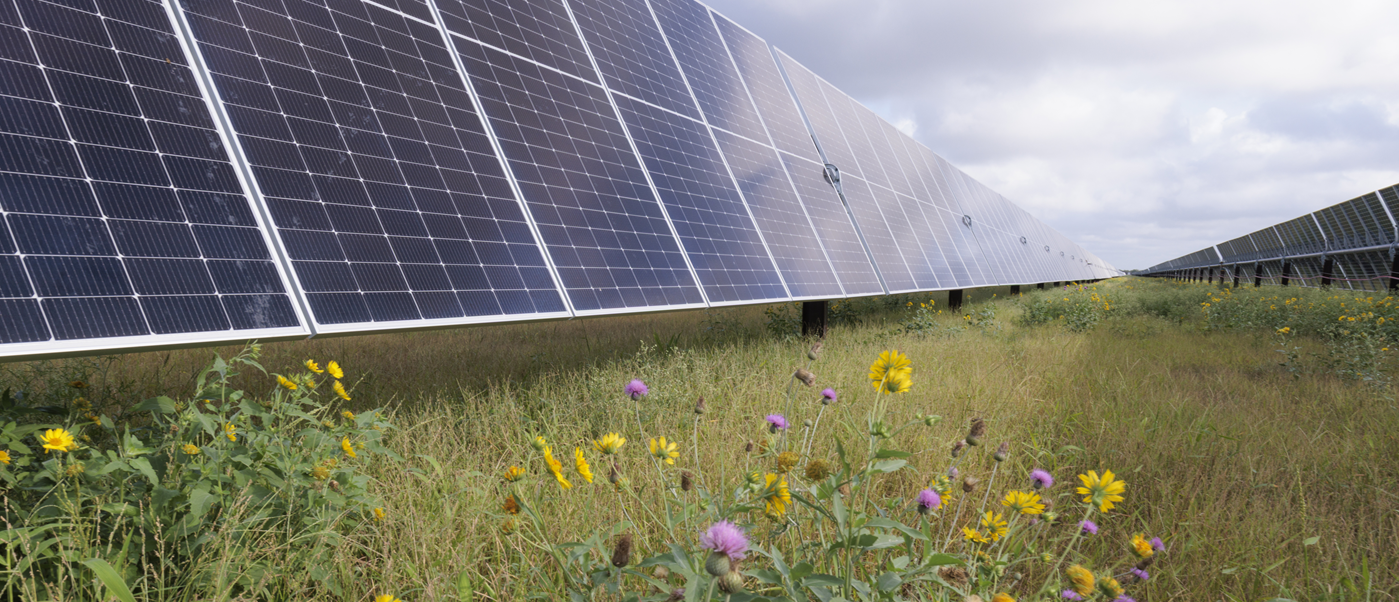
Enbridge’s May 19 Cowboy Project announcement matters because it is not just another renewable procurement headline. The stronger signal is that Wyoming’s large-load tariff structure is being used to package solar, storage, and data-center service into a utility product that aims to add capacity without pushing ordinary retail customers into the bill path.

Read article: DOE’s Emergency Order Turns Data Center Backup Generators Into a Grid Relief ToolEnergy GridHigh-voltage electrical substation with steel structures and power lines at dawn
Energy GridMay 21, 20266 min read

DOE’s Emergency Order Turns Data Center Backup Generators Into a Grid Relief Tool

The Department of Energy’s May 18 emergency order is worth publishing because it shows what happens when large-load growth outruns normal planning. Backup generators once treated mainly as private resilience equipment are starting to function as emergency grid-relief capacity, with real implications for operators, regulators, and data-center developers promising firm megawatts.

Infrastructure

Datacenters, chips, and capacity

View section
Read article: NVIDIA’s Vera Delivery Turns Agentic AI Into a CPU Infrastructure StoryInfrastructureRows of high-density server racks inside a modern compute facility with blue lighting
InfrastructureMay 22, 20266 min read

NVIDIA’s Vera Delivery Turns Agentic AI Into a CPU Infrastructure Story

NVIDIA’s May 18 Vera delivery is worth publishing because it marks the point where “agentic AI needs different infrastructure” stops being conference-stage language and turns into hardware in the hands of OpenAI, Anthropic, SpaceXAI, and Oracle Cloud Infrastructure. The stronger signal is that CPUs are moving back into the critical path of AI factories as agents do more orchestration, tool use, sandboxing, and code execution.

Read article: NVIDIA and IREN Turn 5GW AI Capacity Into a Power-Readiness StoryInfrastructureLarge data center corridor with server racks and blue lighting
InfrastructureMay 10, 20266 min read

NVIDIA and IREN Turn 5GW AI Capacity Into a Power-Readiness Story

NVIDIA and IREN’s new 5GW partnership is easy to read as another giant AI infrastructure headline. The more important reading is narrower: power-ready data center capacity is becoming scarce enough that the market now rewards developers who can stage GPUs, land, interconnection, and operating infrastructure as one coordinated product.

Read article: OpenAI’s 10GW Push Turns AI Power Into a Grid-and-Construction Timing StoryInfrastructureLarge electrical substation with transmission infrastructure
InfrastructureMay 9, 20266 min read

OpenAI’s 10GW Push Turns AI Power Into a Grid-and-Construction Timing Story

OpenAI says it has already surpassed the 10GW U.S. AI infrastructure commitment it laid out for 2029, with more than 3GW added in the last 90 days alone. That changes the AI infrastructure story again: the constraint is not whether labs want more compute, but how quickly power, land, interconnection, cooling, and construction can be staged into real operating capacity.

AI Automation

Agents, workflows, and execution

View section
Read article: OpenAI and Dell Turn Codex Into a Hybrid Enterprise Control LayerAI AutomationRows of high-density server racks inside an enterprise data center with blue lighting
AI AutomationMay 21, 20266 min read

OpenAI and Dell Turn Codex Into a Hybrid Enterprise Control Layer

OpenAI’s May 18 partnership with Dell is worth publishing because it moves Codex out of the pure cloud story and into the controlled enterprise environments where regulated data, internal systems, and real operating workflows still live. That makes deployment topology part of the product.

Read article: OpenAI’s Guaranteed Capacity Turns Compute Access Into an Enterprise ContractAI AutomationLong corridor of illuminated server racks inside a large-scale compute facility
AI AutomationMay 21, 20266 min read

OpenAI’s Guaranteed Capacity Turns Compute Access Into an Enterprise Contract

OpenAI’s new Guaranteed Capacity offering is worth publishing because it turns a familiar AI complaint, unreliable access to scarce compute, into a formal procurement product. Once enterprises can commit to one-to-three-year reserved capacity for production systems, agents, and customer-facing workflows, the competition is no longer just about model quality. It is about who can sell certainty.

Read article: Anthropic's Stainless Deal Turns Agent Connectivity Into a Platform Control LayerAI AutomationHands typing code on a laptop with a software development interface visible on screen
AI AutomationMay 21, 20266 min read

Anthropic's Stainless Deal Turns Agent Connectivity Into a Platform Control Layer

Anthropic's acquisition of Stainless is worth publishing because it shows where agent competition is moving next. If SDK generation, CLI tooling, and MCP server infrastructure get pulled inside the model platform, the real product is no longer just model quality. It is how reliably agents can reach external systems without burning tokens, breaking integrations, or collapsing into brittle tool sprawl.

Markets

Capital, pricing, and power economics

View section
Read article: CME’s Compute Futures Launch Turns GPU Capacity Into a Real Commodity MarketMarketsFinancial market charts and trading screens representing benchmark pricing for AI compute capacity
MarketsMay 22, 20265 min read

CME’s Compute Futures Launch Turns GPU Capacity Into a Real Commodity Market

CME Group’s May 12 announcement is publishable because it pushes compute out of the private-negotiation era and toward benchmarked market structure. The stronger signal is not the product launch alone. It is that GPU rental capacity is becoming specific enough, liquid enough, and expensive enough to justify a futures market for pricing, hedging, and capital planning.

Read article: NextEra and Dominion Turn Utility Scale Into an AI-Power AdvantageMarketsHigh-voltage transmission lines and utility infrastructure running across an industrial energy corridor
MarketsMay 22, 20266 min read

NextEra and Dominion Turn Utility Scale Into an AI-Power Advantage

NextEra Energy’s May 18 agreement to acquire Dominion Energy is publishable because it turns a simple merger headline into a sharper infrastructure signal. In the AI power era, the scarce asset is no longer only generation or land. It is the ability to finance, permit, build, and rate-base huge volumes of grid investment fast enough to serve large loads without losing the affordability argument.

Read article: NVIDIA’s New Data Center Split Turns AI Spend Into a Two-Market StoryMarketsRows of servers inside a modern data center with blue lighting and high-density racks
MarketsMay 21, 20266 min read

NVIDIA’s New Data Center Split Turns AI Spend Into a Two-Market Story

NVIDIA’s May 20 earnings release matters not just because revenue hit another record, but because the company changed how it wants the market to read AI demand. By splitting data-center exposure into Hyperscale and ACIE, NVIDIA is signaling that the next valuation question is not only how much the cloud giants are still spending. It is how quickly AI factories, sovereign builds, industrial operators, and enterprise deployments become a second demand engine.

Policy

Rules, permitting, and interconnection

View section
Read article: Who Pays for AI Data Center Grid Upgrades?PolicyLarge electrical substation with transmission lines and utility equipment
PolicyMay 14, 20267 min read

Who Pays for AI Data Center Grid Upgrades?

AI data centers are turning a quiet utility-planning question into a public policy fight: when a massive new load needs substations, transmission, transformers, and reliability work, should the developer pay, should all customers share the cost, or should regulators create a new large-load tariff before the bill lands on households?

Newsletter signup

Get the daily Grid brief in your inbox.

Daily intelligence on AI, energy, infrastructure, systems, and markets with a cleaner, more professional editorial read.

Daily briefPrimary sourcesMarkets + powerFree
Email address

Enter your email once. You’ll get the daily Grid brief and the strongest new reporting.

No spam. Unsubscribe anytime.