- Anthropic's acquisition of Stainless is one of the clearest systems stories in AI this week because it pushes the competitive battle below the model layer and into the plumbing agents rely on to do useful work.
- That matters because agents are only as useful as the systems they can reach.
- Stainless is useful in exactly that layer.
- Section
- AI Automation
- Read time
- 6 min read
- Why this page exists
- The Grid Report publishes operator-grade coverage on AI, power, infrastructure, automation, and markets.
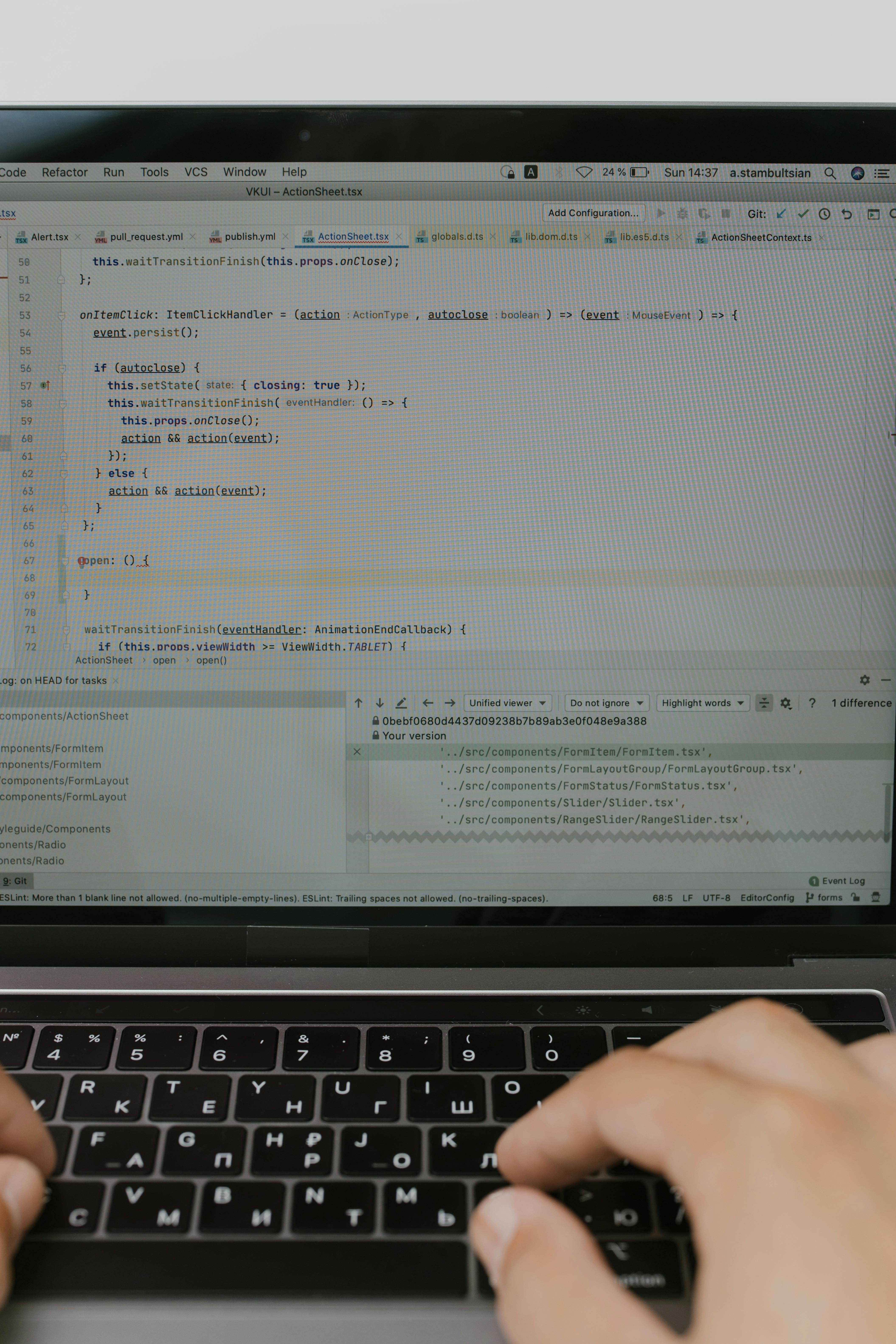
Anthropic's acquisition of Stainless is one of the clearest systems stories in AI this week because it pushes the competitive battle below the model layer and into the plumbing agents rely on to do useful work. Anthropic said on May 18 that it is acquiring Stainless, a company whose tooling has generated every official Anthropic SDK since the early Claude API days and that is used by hundreds of companies to generate SDKs, CLIs, and MCP servers from API specifications.
That matters because agents are only as useful as the systems they can reach. Anthropic said that directly in the announcement, and it is the right framing. The market spent the past year treating agent progress as a reasoning problem, a benchmark problem, or a product-UX problem. Those still matter, but once enterprises want agents to touch internal data, third-party software, and production APIs, connectivity quality becomes part of the product. A weak connector stack does not look like a minor inconvenience. It looks like broken workflows, bloated context, unreliable actions, and higher operating cost.
Anthropic is buying more control over the action layer, where APIs become usable, governable agent behavior.
Stainless is useful in exactly that layer. Its MCP tooling is built around a code-mode architecture rather than exposing one tool per endpoint. In Stainless's documentation, generated MCP servers provide a docs-search tool and an execute tool so an agent can use SDKs and documentation directly, which reduces tool sprawl and token overhead. That is a much more operator-relevant story than generic talk about agents becoming smarter. It is about whether agents can interact with real APIs in a way that is accurate, legible, and maintainable.
This clears the duplicate bar for The Grid Report. The site has already covered workspace agents, user control, and enterprise deployment as workflow products. This story is different. It is about control of the integration layer underneath those products. If Anthropic owns more of the SDK, CLI, and MCP generation stack, it can shape how developers expose APIs to Claude, how efficiently tools fit inside context windows, and how much friction sits between a model and the action surface where money is made or lost.
There is also a platform-governance angle here. Anthropic created MCP and has been expanding connector and custom-connector workflows across Claude products. Pulling Stainless in-house gives it more leverage over the path from API specification to agent-usable interface. That does not mean Anthropic suddenly controls the entire standard. It does mean the company is trying to own more of the highest-friction implementation layer where enterprise developers decide whether an agent actually works in production.
For operators and investors, the signal is that agent competition is becoming infrastructure competition. The winning stack is less likely to be the one that only posts the flashiest benchmark and more likely to be the one that makes APIs easier to expose, easier to govern, and cheaper for agents to use. In that frame, the Stainless acquisition is not a small developer-tools tuck-in. It is Anthropic buying more control over the action layer.
The Grid Report view is that Anthropic's Stainless deal is publishable because it has a real hook, a clear operator consequence, and a search-worthy thesis: agent platforms are consolidating the connector stack. In the next phase of AI, the control point is not only the model. It is the infrastructure that turns APIs into dependable agent behavior.
Sources
Anthropic, “Anthropic acquires Stainless,” May 18, 2026: https://www.anthropic.com/news/anthropic-acquires-stainless
Stainless, “Overview: Generate Model Context Protocol servers from your OpenAPI specification,” accessed May 21, 2026: https://www.stainless.com/docs/targets/mcp/
Stainless, “MCP servers designed for agents, accuracy, and token-efficiency,” accessed May 21, 2026: https://www.stainless.com/products/mcp
Nawaz Lalani
Nawaz Lalani is the creator of The Grid Report and writes about AI infrastructure, grid power demand, automation systems, and the market signals shaping the physical AI economy. His focus is translating technical and industrial shifts into practical coverage for operators, investors, builders, and teams making real deployment decisions.
B.S. in Geology from UT Arlington. Covers AI infrastructure, energy systems, grid constraints, automation workflows, and market signals.
Stories are built from primary sources, utility and infrastructure signals, company disclosures, filings, and operator-grade context. The goal is to explain what changed, why it matters now, and what it means for builders, investors, utilities, and teams making real deployment decisions.
Follow the lane, not just the headline.
The strongest value in The Grid Report comes from following how AI, infrastructure, power, automation, and markets connect over time.