- Enbridge’s May 19 Cowboy Project release is one of the stronger energy-grid stories of the week because it shows a more concrete answer to one of the hardest AI infrastructure questions: how do you serve very large new data-center loads without simply socializing the problem across everyone else on the system?
- The more useful detail is not only the project size.
- That distinction matters because the AI power debate keeps collapsing separate issues into one bucket.
- Section
- Energy
- Read time
- 6 min read
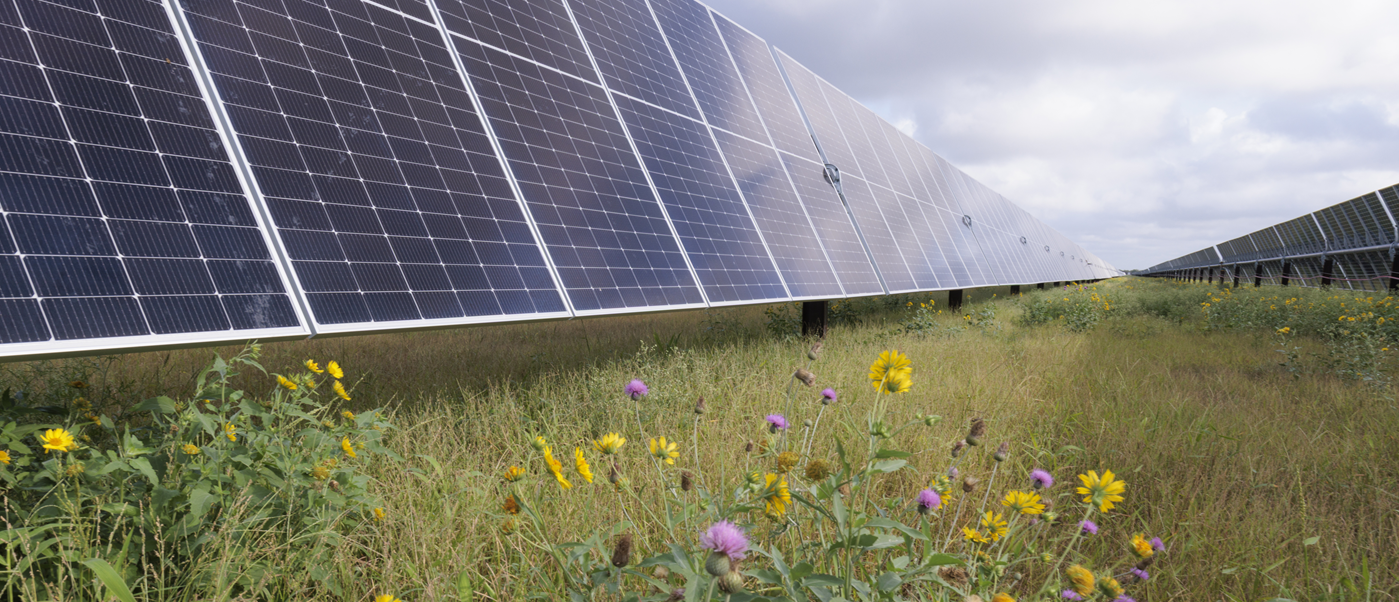
Enbridge’s May 19 Cowboy Project release is one of the stronger energy-grid stories of the week because it shows a more concrete answer to one of the hardest AI infrastructure questions: how do you serve very large new data-center loads without simply socializing the problem across everyone else on the system? Enbridge said the first phase of the Wyoming project will combine 365 megawatts of solar generation with a 200 megawatt and 1,600 megawatt-hour battery system to support Meta’s data center operations near Cheyenne.
The more useful detail is not only the project size. It is the delivery structure. Enbridge said Cheyenne Light, Fuel and Power will serve the project under Wyoming’s Large Power Contract Service tariff, and that the battery capacity is contracted through a long-term tolling agreement under the same framework. That makes this more than a clean-energy procurement story. It turns a large-load tariff into part of the operating design for hyperscale infrastructure.
The important signal is not only more clean megawatts. It is a large-load tariff being used as part of the product that serves hyperscale demand.
That distinction matters because the AI power debate keeps collapsing separate issues into one bucket. There is generation supply, there is grid reliability, there is who pays for new infrastructure, and there is the time-to-power problem for fast-growing campuses. The Cowboy Project touches all four. The storage system is being framed as dispatchable support that can strengthen grid performance, while the tariff structure is meant to let a utility serve a very large customer without routing the commercial risk straight into standard retail rates.
Black Hills Energy’s own Wyoming data-center materials help explain why this is important. The company says its Large Power Contract Service tariff was approved by the Wyoming Public Service Commission in July 2016 to accommodate continued growth from very large loads. In a separate page on its Meta partnership, Black Hills says the model was developed with an early data-center customer and is designed to handle growing industrial and data-center demand while protecting other customers from the risks and rate impacts tied to large-scale capacity additions.
This clears the duplicate bar for The Grid Report. The site has already covered large-load rules, who-pays debates, and power-timing constraints. This article is different. It is not about a queue problem in the abstract. It is about a real project showing what a utility-compatible service model can look like when a hyperscaler wants cleaner power, storage-backed flexibility, and explicit ratepayer insulation in the same package.
There is also an operator lesson here. A lot of AI-campus coverage still treats renewables as if they are only a reputational add-on layered beside the real power story. Cowboy suggests something more practical. Solar plus long-duration battery storage can become part of the commercial structure that makes a large load easier to serve politically and operationally, especially when the tariff already creates a dedicated lane for that customer class.
For utilities, the question is whether more states will move toward similar large-load frameworks that combine customer-specific terms, dedicated resource procurement, and protections against cost shifting. For developers and hyperscalers, the question is whether tariff design will become as strategic as land, transformers, or substation timing. A project that can show a cleaner power path and a cleaner cost-allocation story should have a much easier time surviving scrutiny.
The Grid Report view is that Cowboy is publishable because it has a real event hook, direct search intent, and a distinct thesis. The next useful AI power stories are not only about adding megawatts. They are about building utility products that can carry hyperscale demand without blowing up the surrounding rate and reliability politics.
Sources
Enbridge, “Enbridge and Meta expand partnership with Cowboy Project,” May 19, 2026: https://www.enbridge.com/stories/2026/may/enbridge-meta-expand-partnership-cowboy-project-solar-plus-battery-storage
Black Hills Energy Data Centers, “Wyoming,” accessed May 21, 2026: https://datacenters.blackhillsenergy.com/wyoming
Black Hills Energy Data Centers, “Black Hills Energy partners with Meta to power new data center in Wyoming,” accessed May 21, 2026: https://datacenters.blackhillsenergy.com/resources/black-hills-energy-partners-meta-power-new-data-center-wyoming
By Nawaz Lalani
The Grid Report is written by Nawaz Lalani and focuses on source-backed coverage of AI infrastructure, grid power demand, automation systems, and market signals.
Follow the signal, not just the headline.
Get the daily Grid brief for source-backed coverage on AI power demand, infrastructure timing, automation, and market signals.