- Cummins’ June 16 announcement with Circe Energy clears the publish bar because it shows a more aggressive power posture than the usual backup-generator story.
- That changes how this project should be read.
- Cummins says the system will support Circe’s behind-the-meter power needs for AI HPC campuses using its HSK78 and QSK60 natural-gas platforms, and says the design is intended to operate “without reliance on the grid.” That line is the real hook.
- Section
- Energy
- Read time
- 4 min read
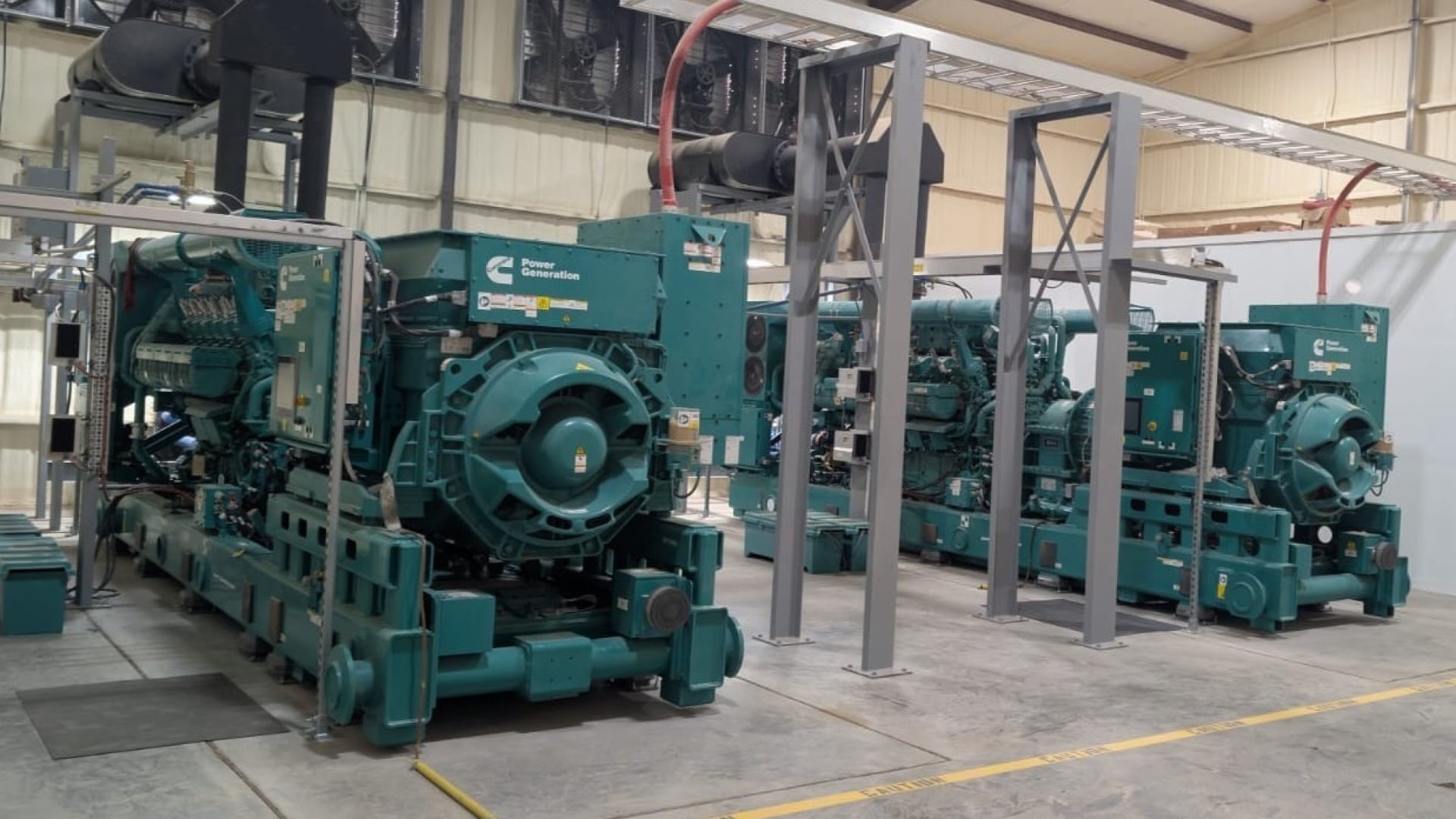
Cummins’ June 16 announcement with Circe Energy clears the publish bar because it shows a more aggressive power posture than the usual backup-generator story. Cummins says it will supply natural-gas generator sets and controls for Circe’s West Texas AI campus development as part of a behind-the-meter prime-power microgrid, with deliveries running from 2026 through 2030. The key phrase is not simply “reliability.” It is that the system is meant to serve the campus as a primary power source rather than waiting on the grid to do all the work first.
That changes how this project should be read. A lot of AI infrastructure coverage still assumes the sequence is land, servers, utility interconnection, and then maybe some standby generation. Circe’s model points to a different order of operations: secure the site, secure fuel-capable generation, energize in phases, and use the grid more as a coordination layer than as the single gating asset. In other words, part of the AI buildout is now starting to look like private power development.
Some AI campuses are no longer waiting for the grid to be ready. They are trying to bring their own primary power to the site first.
Cummins says the system will support Circe’s behind-the-meter power needs for AI HPC campuses using its HSK78 and QSK60 natural-gas platforms, and says the design is intended to operate “without reliance on the grid.” That line is the real hook. It suggests some developers no longer view utility delay as a temporary inconvenience. They are beginning to design around it as a structural constraint.
The original angle here is not that gas generation exists. It is that prime-power architecture is moving from edge case toward productized campus strategy. Cummins frames the offer around phased deployment, microgrid controls, fast-start response, and closing utility power gaps. Those are the features you market when customers care less about a perfect long-run power stack and more about energization speed, uptime control, and the ability to bring expensive compute online before a conventional interconnection path is ready.
For operators and investors, that has two implications. First, AI-capacity announcements should be read partly as fuel-and-generation announcements. Second, the infrastructure winners may include companies that can package engines, controls, switching, and staged buildouts into a credible time-to-power offering. The bottleneck is not always the data hall. Increasingly it is who can convert stranded or delayed grid demand into working megawatts on-site.
The obvious limitation is that this approach does not erase fuel risk, emissions scrutiny, or eventual grid-integration questions. It also does not mean every campus will bypass the utility. But this one is specific enough to matter because it makes the tradeoff visible: some AI campuses may accept a heavier on-site generation footprint in exchange for control over schedule and energization.
The stronger reading is that the next power race is not only about getting more electrons onto the grid. It is about who can assemble a bankable private-power stack fast enough to keep AI construction from stalling at the substation gate.
Sources
Cummins, “Cummins natural gas generators to power large scale data centers in West Texas,” published June 16, 2026: https://www.cummins.com/en-na/news/releases/2026/06/16/cummins-natural-gas-generators-power-large-scale-data-centers-west-texas
By Nawaz Lalani
The Grid Report is written by Nawaz Lalani and focuses on source-backed coverage of AI infrastructure, grid power demand, automation systems, and market signals.
Follow the signal, not just the headline.
Get the daily Grid brief for source-backed coverage on AI power demand, infrastructure timing, automation, and market signals.