- Constellation’s May 11 disclosure that PUCT approved the Freestone net-metering application is worth publishing because the real signal is not simply that another large Texas data center found power.
- The base project was already notable.
- What changed on May 11 is that Constellation said PUCT approved the net-metering application for the co-location of the CyrusOne data center at the Freestone site, subject to conditions.
- Section
- Infrastructure
- Read time
- 6 min read
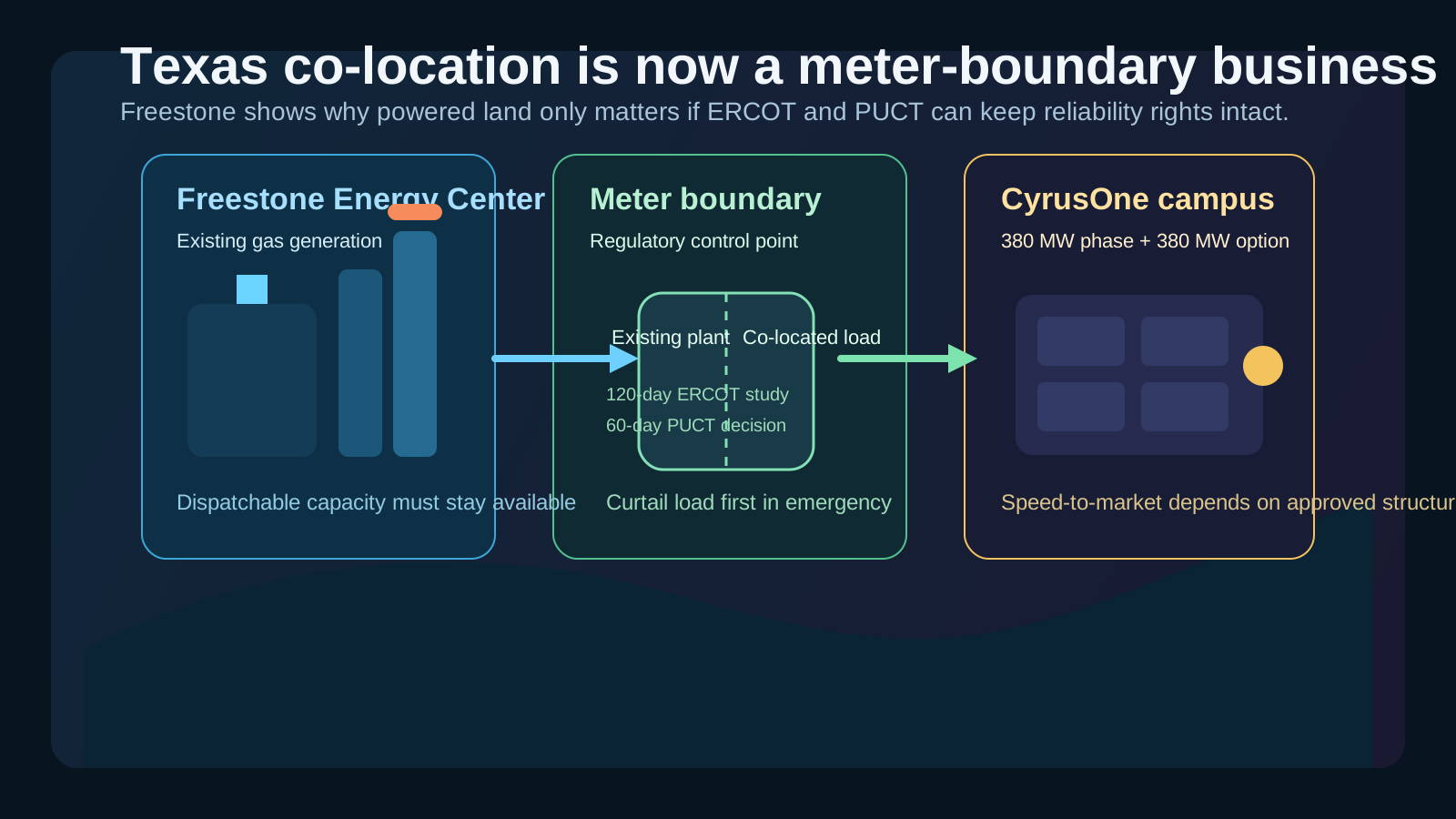
Constellation’s May 11 disclosure that PUCT approved the Freestone net-metering application is worth publishing because the real signal is not simply that another large Texas data center found power. The better signal is that Texas now has a live example of how co-located AI load can be structured around an existing generation asset. That makes Freestone a control-point story about the meter boundary, not just a project-announcement story about megawatts.
The base project was already notable. In February, Constellation said Calpine had signed a 380 megawatt agreement with CyrusOne for a new facility adjacent to the Freestone Energy Center in Freestone County, Texas, plus an exclusive Phase 2 option for another 380 megawatts. The company framed the offer around power, grid connectivity, and site infrastructure. On its own, that could still read like another powered-land pitch.
Powered land is only truly valuable when the meter boundary, telemetry, and emergency-curtailment rules are clear enough that ERCOT can keep reliability rights while the data center still moves fast.
What changed on May 11 is that Constellation said PUCT approved the net-metering application for the co-location of the CyrusOne data center at the Freestone site, subject to conditions. That matters because the hard part of these projects is not only whether a developer can point to a nearby plant. It is whether regulators and ERCOT will allow a large new load to sit next to existing generation without quietly stripping the grid of capacity it thought it could count on.
That is why the March 26 PUCT rulemaking matters to this story. Texas adopted rules for net-metering arrangements involving a large load co-located with an existing generation resource. The rule lays out a 120-day ERCOT study, then a 60-day commission decision window, and it makes clear that emergency conditions can trigger both large-load curtailment and generation dispatch. In practical terms, the state is saying co-location is possible, but not on terms that let a new data center privatize reliability value that the broader system may still need.
That is the original Grid Report angle. Freestone makes “powered land” more precise. The premium asset is not simply land next to a gas plant or next to wires. The premium asset is a site where the legal, metering, telemetry, and emergency-operating structure is solid enough that a large load can move quickly without forcing ERCOT, the utility, and regulators to guess what happens when reserves get tight.
This clears the site’s duplicate block because it is materially different from the recent articles on data-center projects competing on power timing, FERC’s large-load clock, and who pays for upgrades. Those stories focused on timing, federal process, and cost allocation. Freestone is narrower and more current. It is about the state-level structure that decides whether existing generation can be paired with new AI load while preserving ERCOT’s emergency rights.
For operators, the implication is straightforward. If you are evaluating powered-land strategies in Texas, the real diligence now has to include metering design, telemetry, curtailment obligations, utility objections, and site-specific conditions that may surface in the approval process. A site can look power-rich on paper and still be operationally weak if the regulatory structure around it is unresolved.
For investors and developers, the read-through is that sites with credible co-location pathways are becoming more valuable than generic land banks. Freestone suggests that existing generation plus an approved operating framework can compress time-to-power, but it also suggests that the grid will insist on keeping callable reliability value. In other words, speed is available, but not as a free withdrawal from the system.
The strongest reason to publish this now is that it is specific, recent, and structurally useful. Freestone is one of the clearer examples of Texas moving from abstract co-location debate to an actual rule-and-approval path. That makes it more useful than a broad “Texas is hot for data centers” rewrite and more search-worthy than another generic AI-infrastructure financing story.
Sources
Constellation, “Constellation and CyrusOne Announce Agreement to Support New Data Center Facility at Freestone Energy Center in Texas,” published February 9, 2026: https://investors.constellationenergy.com/news-releases/news-release-details/constellation-and-cyrusone-announce-agreement-support-new-data
Constellation, “Constellation Reports First Quarter 2026 Results,” published May 11, 2026: https://investors.constellationenergy.com/news-releases/news-release-details/constellation-reports-first-quarter-2026-results
MAGNIFYI summary of the PUCT rule adoption, citing PUCT Project No. 58479 order adopted March 26, 2026: https://magnifyi.com/puct-issues-order-adopting-net-metering-arrangements-involving-large-load-co-located-with-an-existing-generation-resource/
By Nawaz Lalani
The Grid Report is written by Nawaz Lalani and focuses on source-backed coverage of AI infrastructure, grid power demand, automation systems, and market signals.
Follow the signal, not just the headline.
Get the daily Grid brief for source-backed coverage on AI power demand, infrastructure timing, automation, and market signals.