- One of the strongest unpublished infrastructure stories this week is AMD announcing more than $10 billion of ecosystem investments in Taiwan.
- AMD says the investment plan is meant to accelerate AI infrastructure and support a broader Taiwan ecosystem spanning fabs, advanced packaging, substrates, component manufacturing, and research partnerships.
- The better Grid Report angle is about bottleneck visibility.
- Section
- Infrastructure
- Read time
- 5 min read
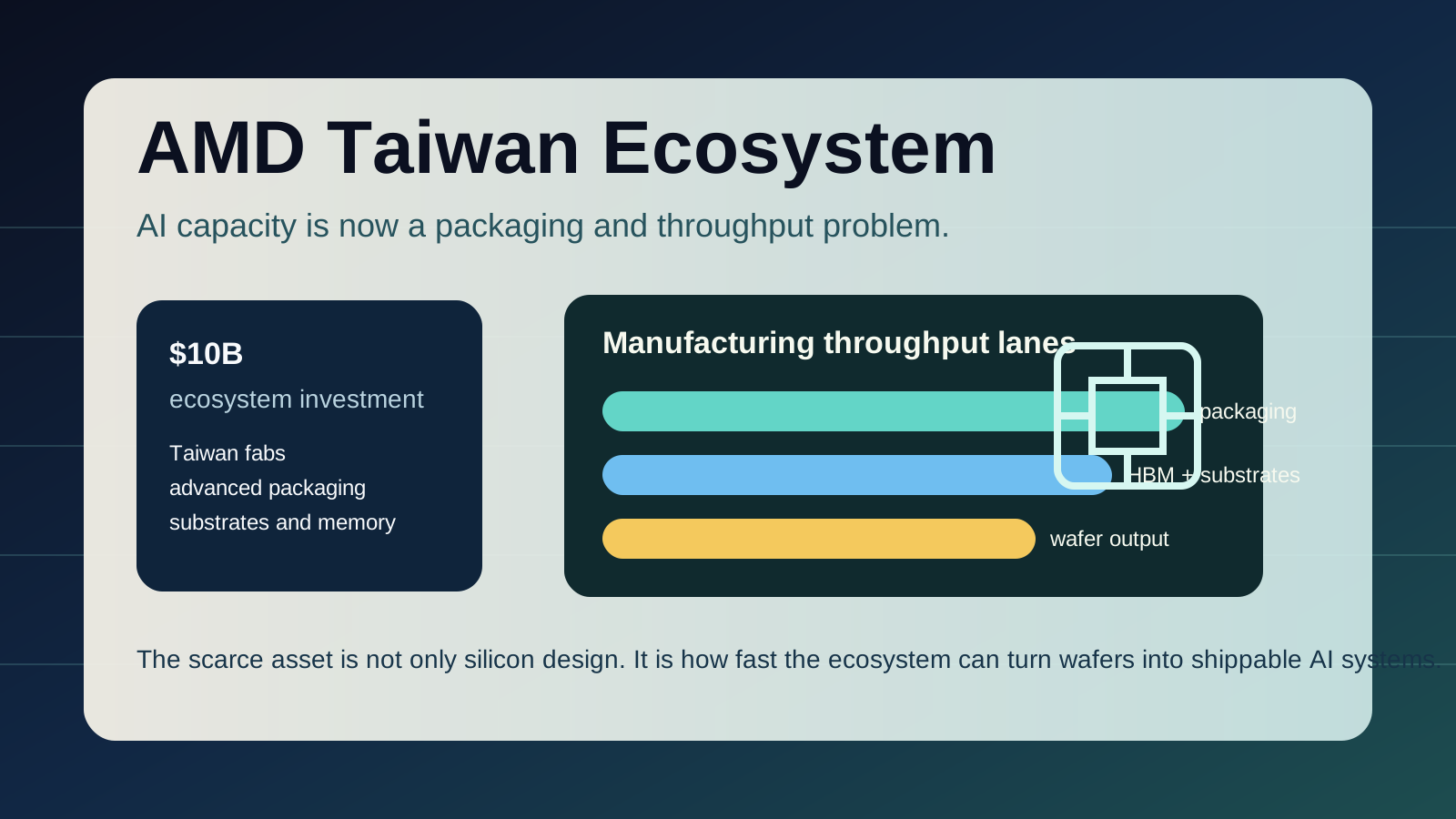
One of the strongest unpublished infrastructure stories this week is AMD announcing more than $10 billion of ecosystem investments in Taiwan. The publishable signal is not merely that another chip company wants more capacity. It is that AMD is naming the less glamorous pieces of the stack, including advanced packaging, substrates, local manufacturing, and memory supply, as part of what determines how much AI infrastructure can actually be delivered.
AMD says the investment plan is meant to accelerate AI infrastructure and support a broader Taiwan ecosystem spanning fabs, advanced packaging, substrates, component manufacturing, and research partnerships. That matters because it shifts the story away from chip-roadmap theater and toward industrial throughput. AI demand does not become usable capacity when the design is finished. It becomes usable capacity when wafers, packaging, memory, and board-level systems all clear together.
The scarce asset is not only accelerator design. It is how fast the ecosystem can package, assemble, and ship AI systems at scale.
The better Grid Report angle is about bottleneck visibility. The site has already covered power timing, optical connectivity, and financed TPU capacity. This article is materially different because it is about the manufacturing middle layer between finished silicon and deployed systems. The useful question is not only whether labs can design stronger accelerators. It is whether the supply chain can package and ship enough of them fast enough for the rest of the AI buildout to matter.
For operators and infrastructure buyers, the implication is practical. Delays in packaging, substrates, or system assembly can look invisible compared with headline shortages in GPUs, but they still stretch delivery schedules and rack commissioning plans. When AMD puts a ten-billion-dollar figure around ecosystem throughput, it is signaling that the capacity race now extends deep into the manufacturing stack that sits behind the final server shipment.
For investors, the signal is that value in AI infrastructure is still broadening. If advanced packaging and adjacent manufacturing lanes stay tight, more of the economics can flow toward substrate suppliers, memory partners, contract manufacturers, and the regional ecosystems that can shorten handoff time between wafer production and shippable systems. That is a harder and more infrastructure-native read than treating AI purely as a model or software story.
The Grid Report view is that this article is publishable because it has a hard official hook, a distinct thesis, and strong search value around AMD’s Taiwan plan. The important shift is not only that AMD is spending more. It is that packaging and manufacturing throughput are now explicit parts of the AI-capacity story.
Sources
AMD, “AMD Announces More Than $10 Billion in Taiwan Ecosystem Investments to Accelerate AI Infrastructure,” May 21, 2026: https://ir.amd.com/news-events/press-releases/detail/1286/amd-announces-more-than-10-billion-in-taiwan-ecosystem-investments-to-accelerate-ai-infrastructure
AMD, newsroom materials on AI infrastructure and rack-scale systems, accessed May 26, 2026: https://www.amd.com/en/newsroom.html
By Nawaz Lalani
The Grid Report is written by Nawaz Lalani and focuses on source-backed coverage of AI infrastructure, grid power demand, automation systems, and market signals.
Follow the signal, not just the headline.
Get the daily Grid brief for source-backed coverage on AI power demand, infrastructure timing, automation, and market signals.