- NVIDIA’s recent disclosures clear the publish bar because they sharpen a market structure that most AI coverage still treats too loosely.
- The reporting split matters because it is a categorization decision by the company sitting closest to the capex pulse of the market.
- The SK Telecom deal makes that segmentation easier to believe.
- Section
- Markets
- Read time
- 5 min read
- Why this page exists
- The Grid Report publishes operator-grade coverage on AI, power, infrastructure, automation, and markets.
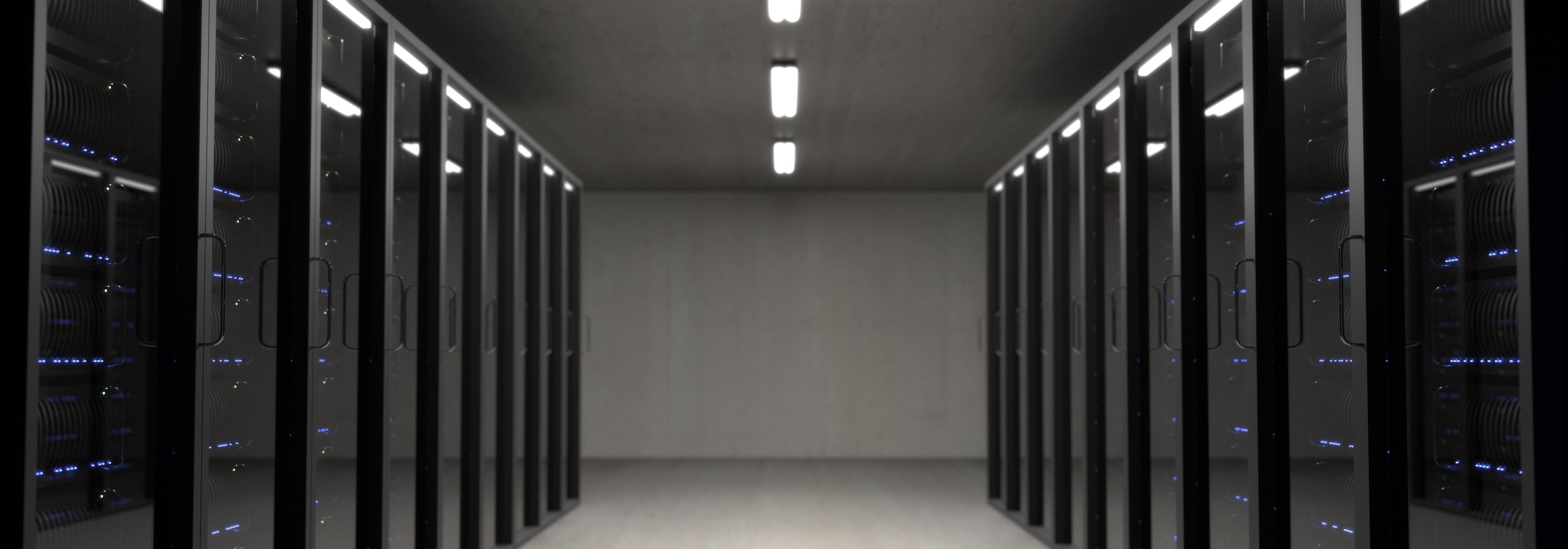
NVIDIA’s recent disclosures clear the publish bar because they sharpen a market structure that most AI coverage still treats too loosely. In its May 20 fiscal Q1 2027 results, NVIDIA said it is moving to a new reporting framework with two Data Center sub-markets: Hyperscale and ACIE, the latter covering AI Clouds, Industrial, and Enterprise. On its own, that looks like an investor-relations detail. But the stronger read-through arrived on June 7, when NVIDIA and SK Telecom announced plans for a gigawatt-scale AI Cloud in Korea using NVIDIA’s DSX AI factory architecture. Together, those releases show that non-hyperscale AI infrastructure is becoming a distinct capital lane rather than an undifferentiated extension of cloud demand.
The reporting split matters because it is a categorization decision by the company sitting closest to the capex pulse of the market. NVIDIA said Hyperscale will include public clouds and the world’s largest consumer internet companies, while ACIE captures purpose-built AI data centers and AI factories across industries and countries. That is not just accounting housekeeping. It is an admission that the company now sees a durable enough revenue base outside the classic hyperscaler cohort to separate it analytically.
NVIDIA is effectively telling the market that AI infrastructure outside the hyperscalers is now coherent enough to track as its own capital lane.
The SK Telecom deal makes that segmentation easier to believe. NVIDIA said SK Telecom plans to build a gigawatt-scale AI Cloud in Korea, with the first AI factory due online in 2027, to support sovereign, physical, and agentic AI services for enterprises and industries. The release also says the project will be built on NVIDIA’s DSX reference architecture and optimized for token performance per megawatt. That is the key phrase. This is not being pitched as generic cloud capacity. It is being framed as national and industrial AI production infrastructure.
That changes the investor story. For the last two years, AI infrastructure coverage has leaned heavily on hyperscalers, frontier labs, and giant US campus buildouts. NVIDIA’s new framing suggests the next leg of spend is broadening into a different buyer set: telecoms, industrial groups, sovereign programs, and enterprise-oriented AI cloud operators that want their own economics, data posture, and regional control. Those buyers do not all behave like Microsoft, Google, or Meta. Their procurement cycles, financing structures, and utilization profiles can look very different.
The more original angle is that sovereign AI is becoming easier to recognize as infrastructure finance rather than branding rhetoric. SK Telecom’s announcement explicitly ties the project to Korea’s telecom, memory, semiconductor, manufacturing, robotics, and mobility base. NVIDIA and SK Group also said they plan joint research on next-generation AI factory architectures, including silicon-to-grid innovation across accelerated computing, memory technologies, and data center operations. That language matters because it extends the buildout from GPUs into energy, facilities, and industrial systems design.
NVIDIA’s earnings release points the same way. The company said data center revenue reached $75.2 billion and also signaled that Edge Computing will house devices for agentic and physical AI, including AI-RAN base stations, robotics, and automotive. In combination with ACIE, that suggests NVIDIA is reorganizing how it communicates the market around where intelligence gets manufactured and where it gets deployed. The segmentation is not only about customers by size. It is about infrastructure roles.
For markets, this is useful because it offers a cleaner way to track the next wave of AI capex. If ACIE grows as a meaningful share of the data center business, the investment questions widen beyond the usual hyperscaler beneficiaries. Telecom infrastructure, regional data-center operators, power equipment, cooling, memory, networking, and sovereign-stack integrators all become more relevant. The category boundary itself becomes signal.
That is enough to publish. Search coverage around sovereign AI still tends to drift into vague national-strategy language. NVIDIA’s reporting split and SK Telecom’s gigawatt plan make the story more concrete. Sovereign and industrial AI buildout is starting to look like a separate capital market with its own buyers, constraints, and infrastructure logic.
Sources
NVIDIA, “NVIDIA Announces Financial Results for First Quarter Fiscal 2027,” published May 20, 2026: https://nvidianews.nvidia.com/news/nvidia-announces-financial-results-for-first-quarter-fiscal-2027
NVIDIA, “SK Telecom and NVIDIA Build AI Infrastructure to Power Korea’s AI Innovation,” published June 7, 2026: https://nvidianews.nvidia.com/news/sk-telecom-ai-infrastructure
Nawaz Lalani
Nawaz Lalani is the creator of The Grid Report and writes about AI infrastructure, grid power demand, automation systems, and the market signals shaping the physical AI economy. His focus is translating technical and industrial shifts into practical coverage for operators, investors, builders, and teams making real deployment decisions.
B.S. in Geology from UT Arlington. Covers AI infrastructure, energy systems, grid constraints, automation workflows, and market signals.
Stories are built from primary sources, utility and infrastructure signals, company disclosures, filings, and operator-grade context. The goal is to explain what changed, why it matters now, and what it means for builders, investors, utilities, and teams making real deployment decisions.
Follow the lane, not just the headline.
The strongest value in The Grid Report comes from following how AI, infrastructure, power, automation, and markets connect over time.