- NVIDIA and Corning’s May 6 partnership is worth publishing because it makes an infrastructure bottleneck explicit that is usually treated as back-end detail.
- The release is unusually specific.
- The original Grid Report angle is that AI infrastructure is becoming an optical supply-chain race.
- Section
- Infrastructure
- Read time
- 5 min read
- Why this page exists
- The Grid Report publishes operator-grade coverage on AI, power, infrastructure, automation, and markets.
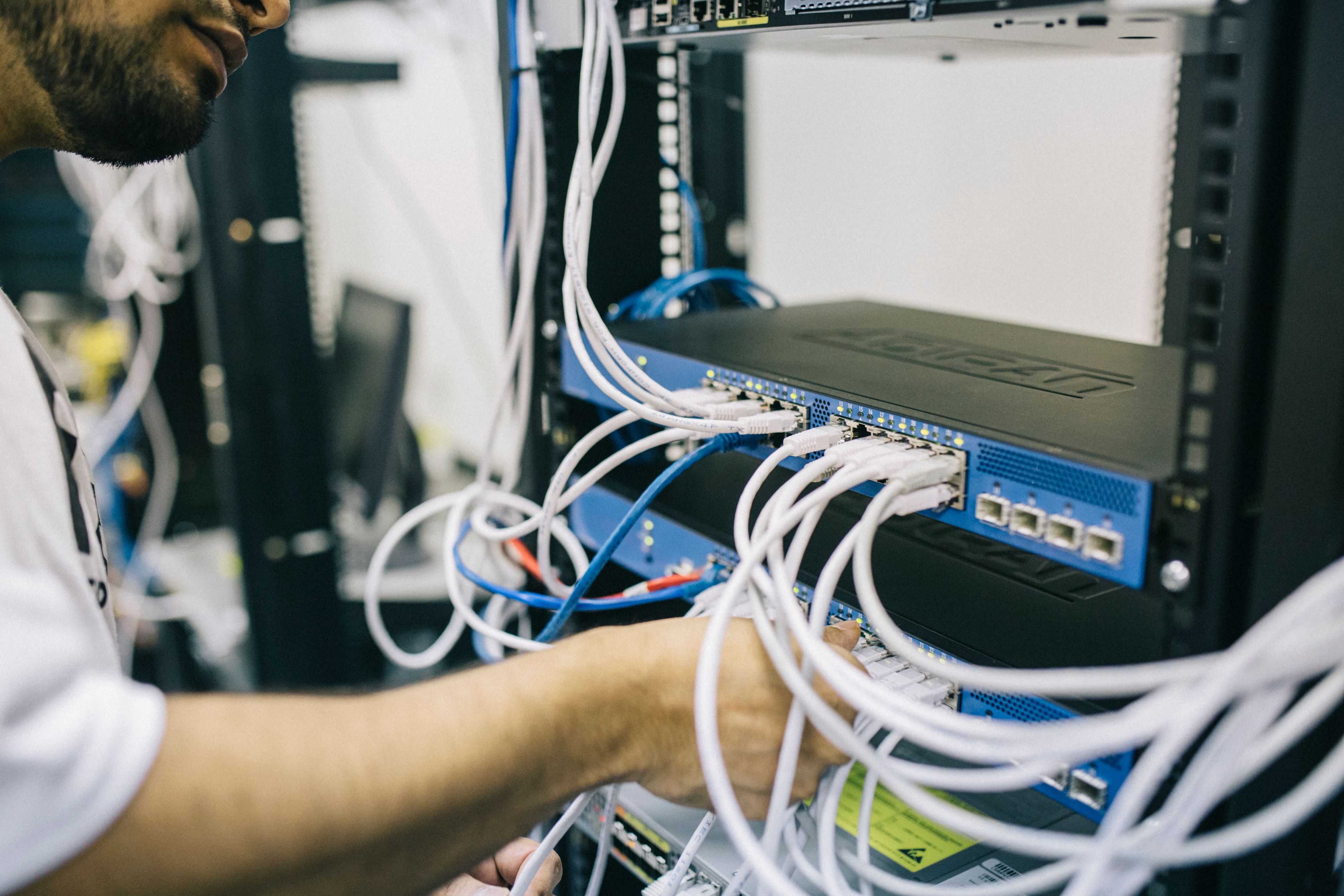
NVIDIA and Corning’s May 6 partnership is worth publishing because it makes an infrastructure bottleneck explicit that is usually treated as back-end detail. The useful signal is not only that AI factories need more GPUs. It is that they need enormous volumes of optical connectivity to keep those GPUs useful once clusters scale. Corning’s role in the announcement makes clear that fiber, photonics, and interconnect manufacturing are no longer background components. They are part of the capacity race itself.
The release is unusually specific. NVIDIA and Corning say Corning will increase its U.S.-based optical connectivity manufacturing capacity by 10x and expand U.S. fiber production capacity by more than 50%. The plan includes three new advanced manufacturing facilities in North Carolina and Texas and more than 3,000 new jobs. Those details are what make the story publishable. This is not a vague reshoring narrative. It is a named response to a named infrastructure constraint.
The next AI infrastructure bottleneck is not only chips or power. It is whether the optical plumbing scales fast enough to keep giant GPU clusters productive.
The original Grid Report angle is that AI infrastructure is becoming an optical supply-chain race. Modern AI workloads require thousands of accelerators moving data across dense scale-up and scale-out fabrics, and NVIDIA says those systems need unprecedented volumes of high-performance optical fiber, connectivity, and photonics. Once that is true, the deployment question changes. It is no longer enough to ask who can secure land, power, and chips. Operators also have to secure the interconnect layer that prevents large GPU clusters from choking on their own internal communications.
This is also why the announcement clears the duplicate block against the site’s existing infrastructure coverage. The AMD Taiwan piece was about advanced packaging, substrates, and rack manufacturing. The Modine story was about cooling capacity becoming a reserved product. The IREN story was about power-ready deployment. This NVIDIA-Corning story is narrower and more useful: optical connectivity is graduating into a first-class manufacturing dependency for AI cluster buildout.
There is a second signal here for U.S. industrial policy and site strategy. NVIDIA is not only buying components. It is helping create domestic manufacturing capacity around one of the least visible but most essential parts of the AI stack. That suggests hyperscale and frontier-cluster economics are starting to justify direct intervention in previously upstream supply categories. For infrastructure investors, that matters because the spend associated with AI campuses is spreading further into materials, process engineering, and factory footprint than many simple GPU narratives imply.
For operators, the takeaway is practical. Large clusters fail economically if interconnect supply lags compute deployment. A rack delivered without enough high-bandwidth optical plumbing is not delayed only cosmetically. It risks underutilizing expensive accelerator capacity and stretching commissioning timelines. Optical readiness is becoming part of what “capacity available” actually means.
The reason to publish this now is that it is specific, original, and clearly better than a commodity recap of AI capex momentum. NVIDIA and Corning answered a more important question than how fast AI demand is growing. They showed which upstream manufacturing layer now has to scale if that demand is going to turn into functioning infrastructure.
Sources
NVIDIA Newsroom, “NVIDIA and Corning Announce Long-Term Partnership to Strengthen US Manufacturing for AI Infrastructure,” published May 6, 2026: https://nvidianews.nvidia.com/news/nvidia-and-corning-announce-long-term-partnership-to-strengthen-us-manufacturing-for-ai-infrastructure
Corning investor release carrying the same partnership details, published May 6, 2026: https://investor.corning.com/news-and-events/news/news-details/2026/NVIDIA-and-Corning-Announce-Long-Term-Partnership-To-Strengthen-U-S--Manufacturing-for-AI-Infrastructure/default.aspx
Nawaz Lalani
Nawaz Lalani is the creator of The Grid Report and writes about AI infrastructure, grid power demand, automation systems, and the market signals shaping the physical AI economy. His focus is translating technical and industrial shifts into practical coverage for operators, investors, builders, and teams making real deployment decisions.
B.S. in Geology from UT Arlington. Covers AI infrastructure, energy systems, grid constraints, automation workflows, and market signals.
Stories are built from primary sources, utility and infrastructure signals, company disclosures, filings, and operator-grade context. The goal is to explain what changed, why it matters now, and what it means for builders, investors, utilities, and teams making real deployment decisions.
Follow the lane, not just the headline.
The strongest value in The Grid Report comes from following how AI, infrastructure, power, automation, and markets connect over time.