- Nidec’s June 2 STC 1.0 prototype is worth publishing because the useful signal is not simply that another supplier has a liquid-cooling product.
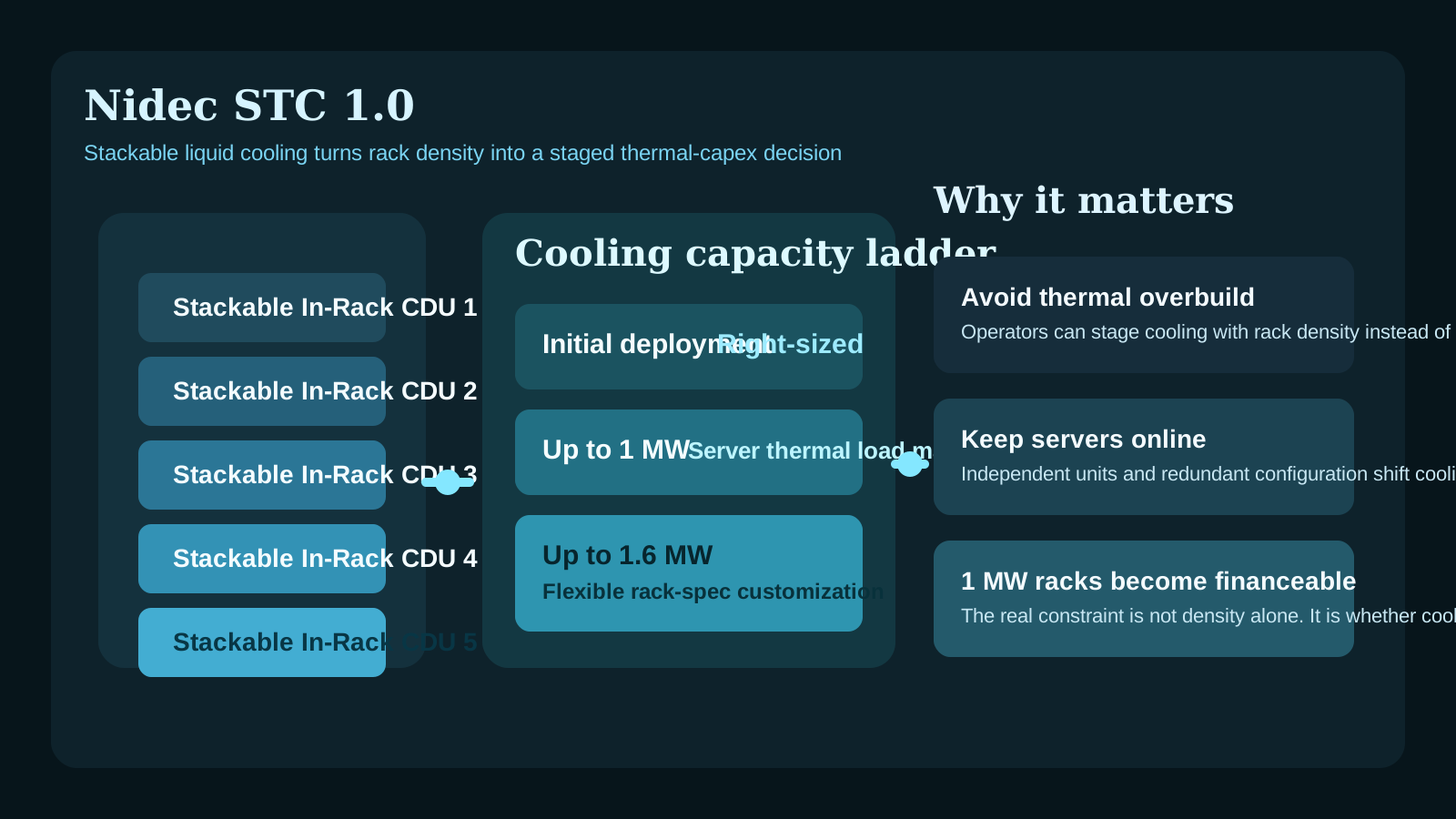
- Nidec says the prototype uses stackable in-rack coolant distribution units that can be configured based on the thermal load of the servers installed, with cooling capacity up to 1 megawatt and flexible rack customization supporting needs up to 1.6 megawatts.
- That is the original Grid Report angle.
- Section
- Infrastructure
- Read time
- 5 min read
- Why this page exists
- The Grid Report publishes operator-grade coverage on AI, power, infrastructure, automation, and markets.
Nidec’s June 2 STC 1.0 prototype is worth publishing because the useful signal is not simply that another supplier has a liquid-cooling product. The stronger signal is that AI rack density is now high enough that cooling can no longer be treated as a one-time facilities decision. It is becoming staged infrastructure capex that has to scale with the actual deployment curve of the servers.
Nidec says the prototype uses stackable in-rack coolant distribution units that can be configured based on the thermal load of the servers installed, with cooling capacity up to 1 megawatt and flexible rack customization supporting needs up to 1.6 megawatts. That matters because the traditional data-center habit has been to buy a large cooling envelope in anticipation of future density. STC 1.0 is being pitched as a way to close the gap between initial deployment and eventual rack power.
The 1MW rack story is not only about how dense the compute becomes. It is about whether the thermal system can scale, stay online, and avoid forcing operators to overbuild the cooling plant too early.
That is the original Grid Report angle. The next bottleneck in AI infrastructure is not only whether the industry can build denser racks. It is whether operators can underwrite the thermal system around those racks without overbuilding the full peak case before revenue-bearing capacity is actually installed. Modular cooling shifts that question from “what box did you choose?” to “how cleanly can your thermal capex follow the ramp?”
The maintainability claim makes the prototype more useful than a generic density headline. Nidec says each unit in the stack is independently configured and that the redundant CDU setup allows maintenance while servers remain online. That turns cooling into an uptime architecture issue, not just a heat-removal issue. Once racks become this dense, the value of the cooling system depends on whether it can be serviced, expanded, and trusted without forcing disruptive outage windows.
This clears the duplicate block against recent Grid Report coverage. The Modine article was about thermal manufacturing backlog becoming reserved infrastructure capacity. The AI storage piece was about density pushing more power and thermal stress into the rack. The diesel-to-gas story was about backup and bridge-power architecture. Nidec is different. It is about how the cooling stack itself may become modular enough to let operators stage thermal spend with much finer granularity.
For operators, the implication is that dense AI buildouts may increasingly be judged by how flexibly they can expand thermal support rather than by peak rack numbers alone. If cooling can scale in cleaner increments, developers may be able to defer some capex, lower early oversizing, and align more of the thermal plant with actual server mix and tenant timing.
For investors and equipment suppliers, the read-through is that cooling economics may fragment. The winners may not only be vendors with the biggest nameplates. They may be the vendors whose systems let customers step into higher-density deployments with less stranded thermal spend and less maintenance risk. In a market chasing 1MW-class rack envelopes, financial flexibility starts looking like a product feature.
The reason to publish this now is that the product language makes the industry’s next infrastructure problem more visible. The 1MW rack conversation is no longer just about GPU draw and chip packaging. It is about whether the surrounding thermal system can be financed, staged, and maintained in sync with real deployment.
Sources
Nidec, “Nidec Develops New Product ‘STC 1.0’ Prototype to Enhance Data Center Design Flexibility,” published June 2, 2026: https://www.mynewsdesk.com/us/nidec/pressreleases/nidec-develops-new-product-stc-1-dot-0-prototype-to-enhance-data-center-design-flexibility-3451658
Nidec, “Nidec Liquid-Cooling Solutions” site launch, published April 7, 2026: https://www.nidec.com/en/product/liquid-cooling-line-up/news/260401/
Nidec, “Interop Tokyo 2026” event page, accessed June 4, 2026: https://www.nidec.com/jp/interop-tokyo2026/
Nawaz Lalani
Nawaz Lalani is the creator of The Grid Report and writes about AI infrastructure, grid power demand, automation systems, and the market signals shaping the physical AI economy. His focus is translating technical and industrial shifts into practical coverage for operators, investors, builders, and teams making real deployment decisions.
B.S. in Geology from UT Arlington. Covers AI infrastructure, energy systems, grid constraints, automation workflows, and market signals.
Stories are built from primary sources, utility and infrastructure signals, company disclosures, filings, and operator-grade context. The goal is to explain what changed, why it matters now, and what it means for builders, investors, utilities, and teams making real deployment decisions.
Follow the lane, not just the headline.
The strongest value in The Grid Report comes from following how AI, infrastructure, power, automation, and markets connect over time.