- One of the strongest unpublished systems stories this month is OpenAI launching what it calls the Deployment Company.
- OpenAI says the new unit will place experts inside customer environments to identify use cases, reshape workflows, and help organizations move from experimentation into production.
- This clears the duplicate block for the site.
- Section
- AI Automation
- Read time
- 5 min read
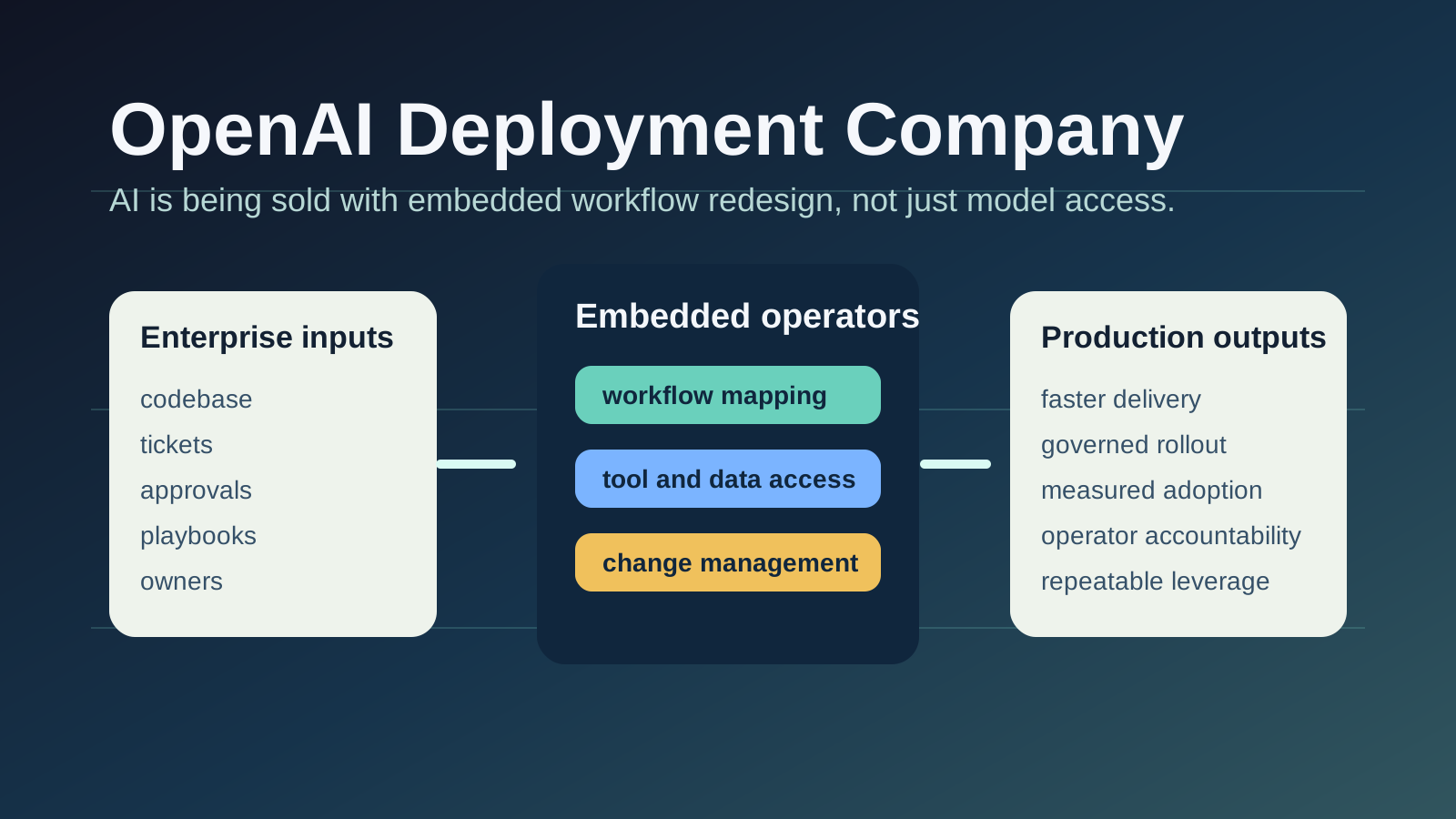
One of the strongest unpublished systems stories this month is OpenAI launching what it calls the Deployment Company. The announcement clears the bar because it is not another vague enterprise adoption update. It makes a much more concrete claim: companies are struggling less with curiosity about AI than with the operational work required to map workflows, change processes, integrate tools, and get real adoption inside the business.
OpenAI says the new unit will place experts inside customer environments to identify use cases, reshape workflows, and help organizations move from experimentation into production. That is what makes the story useful. The lab is effectively admitting that model access alone is not enough to create leverage. Someone still has to do the messy work of process mapping, owner assignment, rollout sequencing, and operational measurement.
The useful signal is not another enterprise AI announcement. It is OpenAI treating workflow redesign and embedded rollout work as part of the product.
This clears the duplicate block for the site. The Grid Report has already covered workspace agents as team products and the Dell-Codex partnership as a hybrid-governance story. This article is materially different because it is about labor structure and go-to-market design. The useful question is not only where the model runs. It is whether frontier AI vendors now need an embedded delivery layer to convert product interest into durable workflow change.
For operators, the implication is practical. Most enterprise AI rollouts stall at the same point: the company can demo the model, but it has not yet decided which workflows matter, who owns exceptions, how performance gets measured, or where human approval remains necessary. A deployment unit exists to close that gap. That makes enterprise AI look less like software procurement and more like a blended operating-change project.
For investors and system builders, the signal is that the market may reward companies that can pair AI capability with implementation discipline. If deployment becomes its own bottleneck, more value can accrue to services, workflow tooling, governance layers, and partners that make adoption measurable rather than theatrical. That is a different market structure than one where labs simply expose an API and wait for customers to figure out the rest.
The Grid Report view is that this article is publishable because it has a hard official hook, a distinct thesis, and clear search value around OpenAI’s Deployment Company. The important shift is not more enterprise buzz. It is frontier AI being sold with embedded operating work.
Sources
OpenAI, “OpenAI launches the OpenAI Deployment Company to help businesses build around intelligence,” May 11, 2026: https://openai.com/index/openai-launches-the-deployment-company/
OpenAI, enterprise and platform materials, accessed May 26, 2026: https://openai.com/enterprise/
By Nawaz Lalani
The Grid Report is written by Nawaz Lalani and focuses on source-backed coverage of AI infrastructure, grid power demand, automation systems, and market signals.
Follow the signal, not just the headline.
Get the daily Grid brief for source-backed coverage on AI power demand, infrastructure timing, automation, and market signals.