- The strongest infrastructure signal from COMPUTEX 2026 is not that vendors brought bigger racks to Taipei.
- NVIDIA’s May 31 DSX launch makes that shift explicit.
- The surrounding vendor announcements reinforce the same turn.
- Section
- Infrastructure
- Read time
- 5 min read
- Why this page exists
- The Grid Report publishes operator-grade coverage on AI, power, infrastructure, automation, and markets.
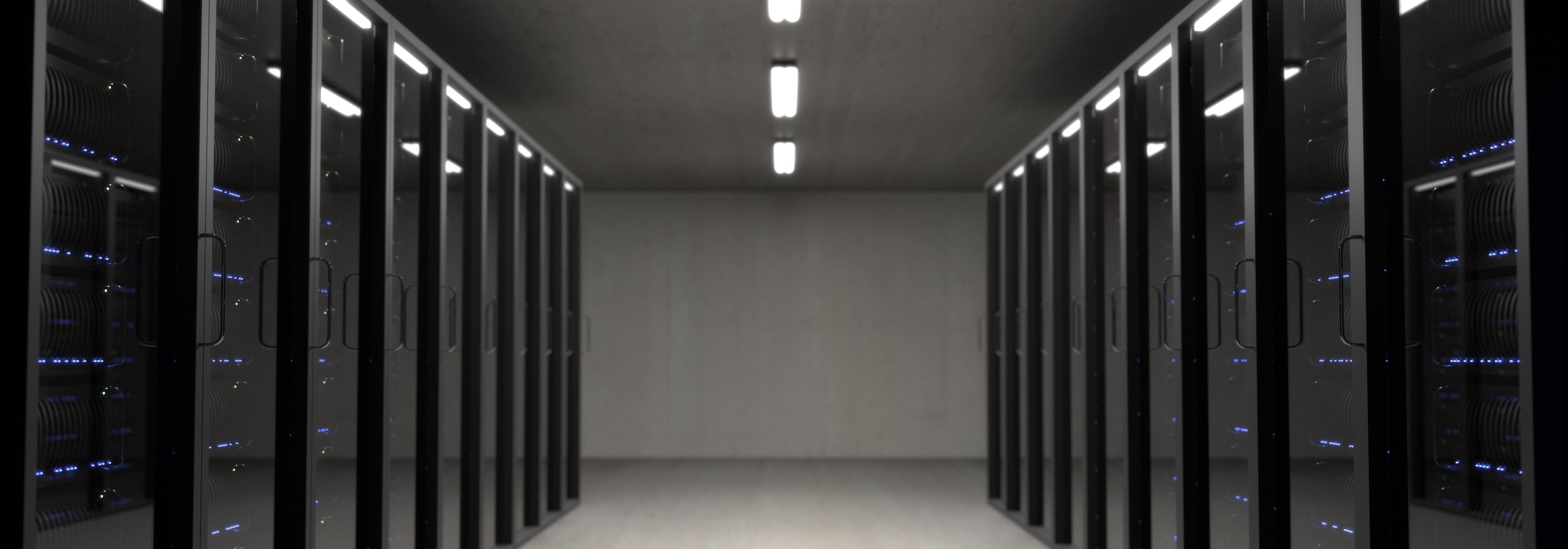
The strongest infrastructure signal from COMPUTEX 2026 is not that vendors brought bigger racks to Taipei. It is that the industry is now openly redesigning the power train around those racks. Once power shelves, capacitive buffering, 800-volt DC distribution, liquid-cooling loops, and prefabricated modules become headline products, the AI buildout stops being just a server story. It becomes a conversion-efficiency and deployment-architecture story.
NVIDIA’s May 31 DSX launch makes that shift explicit. The company is no longer framing AI factories as a loose collection of chips, networking, and partner gear. DSX is presented as a full-stack operating model for design, deployment, and operations, with software aimed at maximizing token performance per megawatt and a reference architecture that reaches all the way into power, cooling, controls, and facility design. That matters because it formalizes a new success metric for builders: not simply how many GPUs they can buy, but how much economically useful output they can extract from a fixed megawatt envelope.
The next AI infrastructure bottleneck is shifting inside the facility: from chip reservation to how efficiently a site converts scarce megawatts into stable rack-level output.
The surrounding vendor announcements reinforce the same turn. Flex used COMPUTEX to push a 110 kW power shelf for NVIDIA Vera Rubin NVL72 systems, a 30 kW capacitive energy storage system for transient AI loads, and explicit support for emerging 800VDC environments. Delta, meanwhile, framed traditional AC-DC designs as nearing their limits for high-density AI and tied its prefabricated AI data-center package to 800VDC in-row power, 3MW liquid-cooling systems, and factory pre-assembly intended to cut deployment time by up to 60%. These are not cosmetic product announcements. They show the infrastructure stack migrating toward higher-voltage internal distribution, more integrated buffering, and more factory-built deployment logic.
That is the original Grid Report angle. The next AI bottleneck is moving downstream from procurement into electrical topology. As rack densities keep rising, operators need lower-loss distribution, tighter power-quality control, and faster commissioning paths inside the facility boundary. In practical terms, the winners may be the groups that can turn a grid connection into stable rack-level power faster, rather than the groups that merely reserve the most chips on paper.
This clears the duplicate block against recent Grid Report coverage. The June 4 diesel piece was about backup and bridge power moving toward gas. The June 3 Generac article was about reserved backup capacity. The June 1 Siemens-NVIDIA-Fluence story was about utility-to-rack control software. This story is narrower and more technical. It is about the internal electrical architecture now being built around the next wave of AI racks.
For operators, the implication is that the data-center design brief is changing. Power shelves, HVDC readiness, liquid-cooling compatibility, and transient-load smoothing are no longer niche engineering details delegated to the end of the project. They shape rack density, uptime behavior, deployment speed, and ultimately whether a site can monetize scarce megawatts fast enough to justify the capital stack behind it.
For investors, the read-through is that more value may accrue to the less glamorous part of the AI chain: power conversion, thermal systems, prefab integration, and facility controls. If token economics increasingly depend on megawatt efficiency and commissioning speed, then component suppliers and integrators sitting between the substation and the accelerator board gain strategic leverage that does not show up in a simple GPU narrative.
The search-worthy question from this week is therefore not who unveiled the flashiest AI box at COMPUTEX. It is whether 2026 becomes the year AI infrastructure shifts decisively toward 800VDC architectures and factory-built deployment packages. If that shift holds, builders will be judged less by theoretical compute density and more by how cleanly they can convert power into reliable, revenue-generating inference capacity.
Sources
NVIDIA, “NVIDIA DSX Gives Infrastructure Builders the Playbook for AI Factories,” published May 31, 2026: https://investor.nvidia.com/news/press-release-details/2026/NVIDIA-DSX-Gives-Infrastructure-Builders-the-Playbook-for-AI-Factories/default.aspx
Flex, “Flex Showcases Scalable Power Solutions for Next-Generation AI Infrastructure at COMPUTEX 2026,” published June 1, 2026: https://www.prnewswire.com/news-releases/flex-showcases-scalable-power-solutions-for-next-generation-ai-infrastructure-at-computex-2026-302787411.html
Delta Electronics, “Delta Debuts Prefabricated AI Modular Data Center Solution at COMPUTEX 2026 to Reduce Deployment Time by Up to 60%,” published June 2, 2026: https://www.prnewswire.com/news-releases/delta-debuts-prefabricated-ai-modular-data-center-solution-at-computex-2026-to-reduce-deployment-time-by-up-to-60-302788523.html
Nawaz Lalani
Nawaz Lalani is the creator of The Grid Report and writes about AI infrastructure, grid power demand, automation systems, and the market signals shaping the physical AI economy. His focus is translating technical and industrial shifts into practical coverage for operators, investors, builders, and teams making real deployment decisions.
B.S. in Geology from UT Arlington. Covers AI infrastructure, energy systems, grid constraints, automation workflows, and market signals.
Stories are built from primary sources, utility and infrastructure signals, company disclosures, filings, and operator-grade context. The goal is to explain what changed, why it matters now, and what it means for builders, investors, utilities, and teams making real deployment decisions.
Follow the lane, not just the headline.
The strongest value in The Grid Report comes from following how AI, infrastructure, power, automation, and markets connect over time.