- One of the strongest unpublished markets stories this week is Blackstone and Google creating a new TPU cloud company.
- Blackstone said on May 18 that it will make an initial $5 billion equity commitment and expects the venture to bring its first 500 megawatts of capacity online in 2027, with plans to scale significantly over time.
- The stronger Grid Report angle is that TPUs are moving one step closer to infrastructure asset status.
- Section
- Markets
- Read time
- 6 min read
- Why this page exists
- The Grid Report publishes operator-grade coverage on AI, power, infrastructure, automation, and markets.
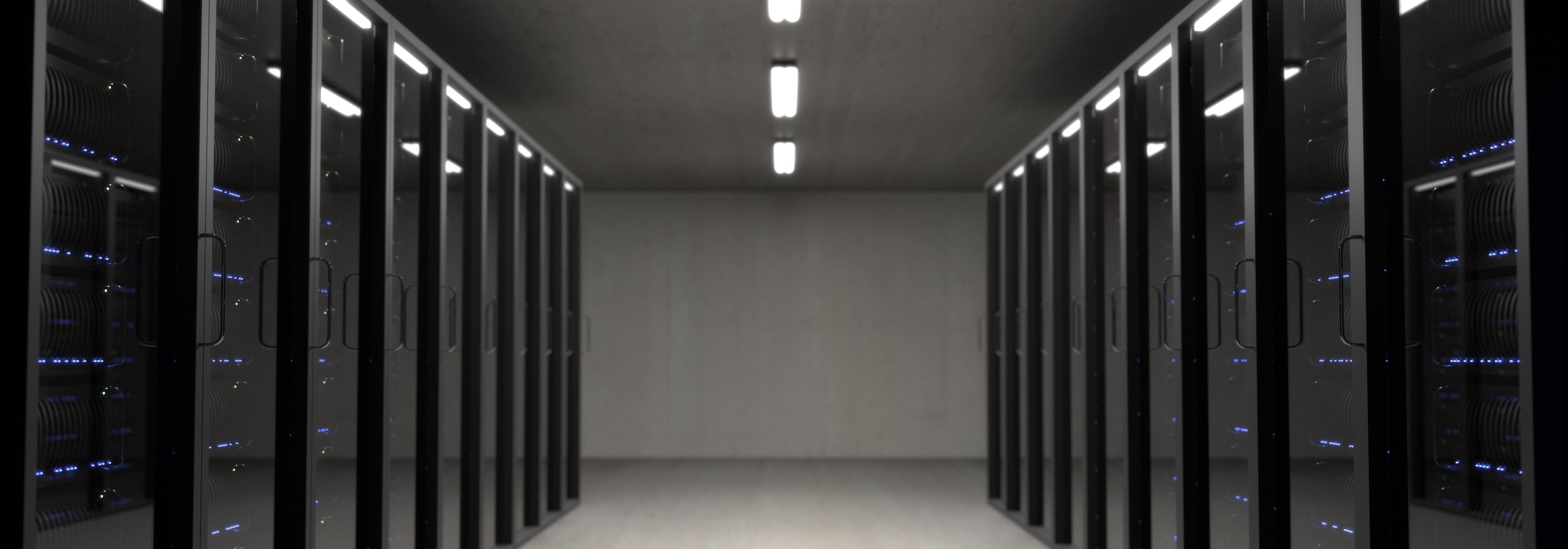
One of the strongest unpublished markets stories this week is Blackstone and Google creating a new TPU cloud company. The publishable signal is not simply that another giant investor wants AI exposure. It is that Google is separating a portion of frontier compute access into a dedicated capital structure backed by Blackstone, with infrastructure, networking, operations, and Google Cloud TPUs packaged together as a compute-as-a-service product outside the ordinary path of buying capacity directly from a hyperscaler.
Blackstone said on May 18 that it will make an initial $5 billion equity commitment and expects the venture to bring its first 500 megawatts of capacity online in 2027, with plans to scale significantly over time. Google will supply the hardware, including TPUs, plus software and services. That combination is what makes the story publishable. This is not a loose strategic alliance. It is an attempt to turn scarce AI compute into a dedicated operating company with its own capital stack, management team, and capacity roadmap.
The important shift is not only more TPU capacity. It is advanced compute being packaged into a dedicated infrastructure company that private capital can underwrite.
The stronger Grid Report angle is that TPUs are moving one step closer to infrastructure asset status. For years, the compute debate has mostly been framed around hyperscaler capex and chip competition. This venture suggests another route is emerging: private capital funds dedicated capacity, a partner supplies the specialized silicon and software, and the resulting platform sells access to customers who want high-end AI compute without building the whole stack themselves. That is a materially different market structure from simply renting generic cloud instances.
This clears the duplicate block for the site. The Grid Report has already covered enterprise coding agents, GPU power-readiness, and optical bottlenecks. This article is materially different because it is about the ownership and financing model around frontier compute capacity. The useful question is not only who has the best chips. It is whether advanced AI compute is becoming a standalone infrastructure asset class that private capital can underwrite directly.
For operators and builders, the implication is practical. If dedicated TPU capacity can be financed and brought online through a separate platform, buyers may get another route to large-scale training and inference without relying exclusively on standard hyperscaler allocation queues. For Google, it is also a way to widen the distribution channel for TPUs while keeping the software and hardware stack tightly integrated.
For investors, the signal is even cleaner. The AI buildout is pushing value into structures that combine land, power, data center operations, networking, and specialized silicon under one roof. Once a firm like Blackstone is willing to put $5 billion of initial equity behind that model, compute stops looking like a purely technical product and starts looking more like a financeable infrastructure category.
The Grid Report view is that this article is publishable because it has a hard official hook, a distinct thesis, and clear search value. The important change is not only more TPU capacity. It is TPUs being packaged as a private-capital infrastructure product.
Sources
Blackstone, “Blackstone Announces Joint Venture with Google to Create New TPU Cloud,” May 18, 2026: https://www.blackstone.com/news/press/blackstone-announces-joint-venture-with-google-to-create-new-tpu-cloud/
Nawaz Lalani
Nawaz Lalani is the creator of The Grid Report and writes about AI infrastructure, grid power demand, automation systems, and the market signals shaping the physical AI economy. His focus is translating technical and industrial shifts into practical coverage for operators, investors, builders, and teams making real deployment decisions.
B.S. in Geology from UT Arlington. Covers AI infrastructure, energy systems, grid constraints, automation workflows, and market signals.
Stories are built from primary sources, utility and infrastructure signals, company disclosures, filings, and operator-grade context. The goal is to explain what changed, why it matters now, and what it means for builders, investors, utilities, and teams making real deployment decisions.
Follow the lane, not just the headline.
The strongest value in The Grid Report comes from following how AI, infrastructure, power, automation, and markets connect over time.