- BHP’s June 3 copper announcement clears the publish bar because it connects AI directly to one of the physical bottlenecks behind the AI buildout itself.
- The original angle is not that a miner is trying AI.
- Microsoft’s side of the story matters because it shows where agentic AI becomes economically interesting.
- Section
- Markets
- Read time
- 5 min read
- Why this page exists
- The Grid Report publishes operator-grade coverage on AI, power, infrastructure, automation, and markets.
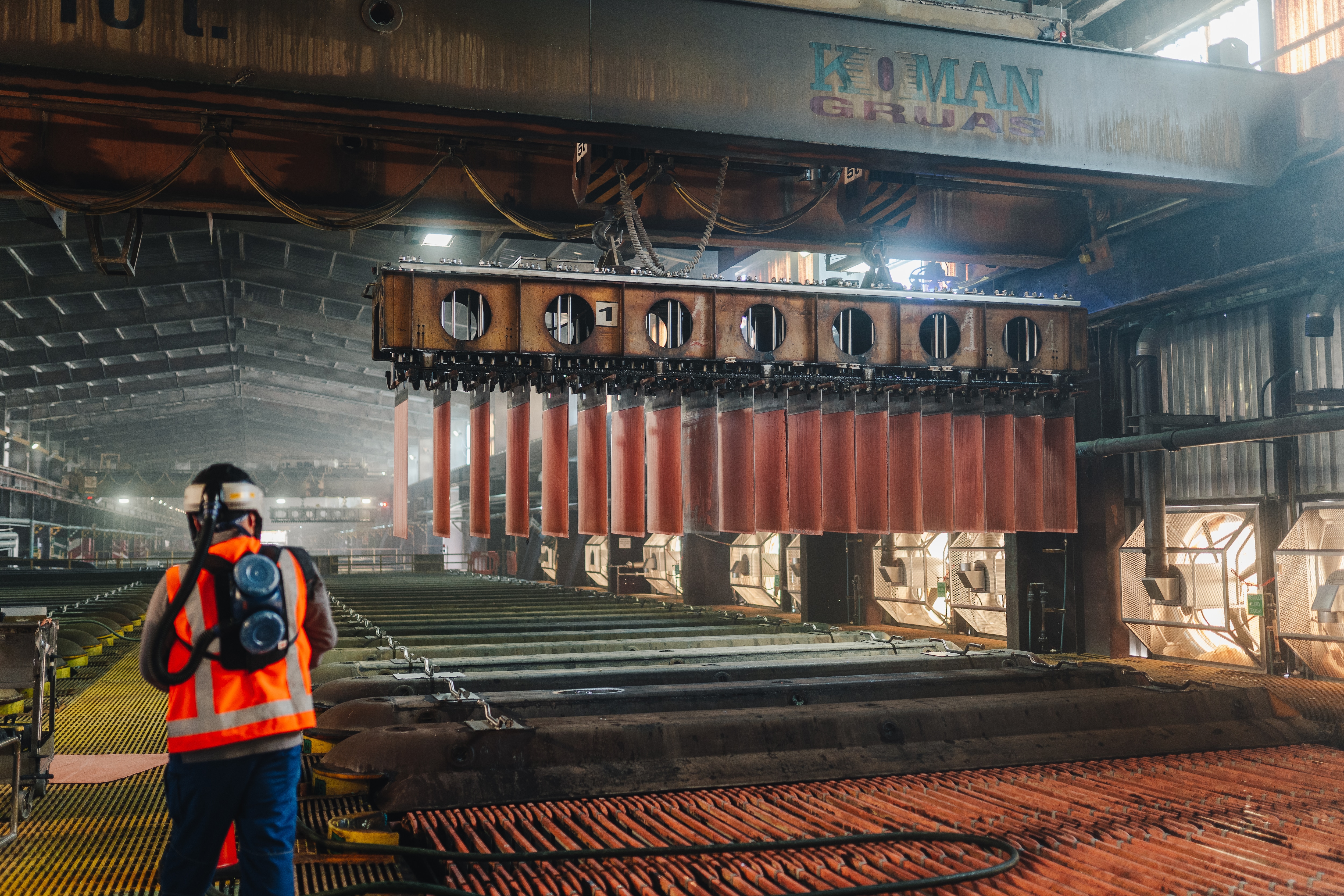
BHP’s June 3 copper announcement clears the publish bar because it connects AI directly to one of the physical bottlenecks behind the AI buildout itself. BHP said it is using Microsoft Discovery, along with Prescience Insilico, to screen more than 500,000 molecules and run tens of thousands of quantum chemistry calculations to find better copper-leaching solutions. That is useful because the copper problem is no longer abstract. Copper sits inside grid upgrades, transformers, electrical equipment, motors, renewables, and the broader infrastructure stack needed to power and wire AI growth.
The original angle is not that a miner is trying AI. It is that the supply response may come from recovery rates before it comes from new giant discoveries. BHP says new deposits are becoming harder and more expensive to develop, and that better recovery from existing ores is a critical lever for future supply. For investors and operators, that shifts attention from only greenfield supply narratives toward process efficiency, metallurgy, and how quickly existing assets can produce more useful output from tougher material.
The next copper supply response may come from better recovery on harder ore before it arrives from brand-new mines.
Microsoft’s side of the story matters because it shows where agentic AI becomes economically interesting. Microsoft Discovery is now generally available as a platform for governed agentic workflows across scientific and engineering disciplines, with an emphasis on reproducibility, reviewability, and connection to specialist tools. That matters more than a generic “AI for science” headline because mining organizations do not need poetic brainstorming. They need systems that can narrow a search space fast enough to matter while staying grounded in operational constraints.
BHP’s own framing supports the point. The company said the models are grounded in the real conditions of ore at its operations, and Jessica Farrell said the candidates are being tested against ore-body realities and operating constraints. That is what makes the signal stronger than a lab-only curiosity. The workflow is aimed at finding molecules that could actually be deployed across global copper operations, with a target mix of better recovery, lower cost, and lower environmental impact.
This matters for the Grid Report readership because copper increasingly sits underneath both sides of the AI story. On one side, AI drives more demand for power, transmission, substations, and data-center equipment. On the other, AI is starting to be used to accelerate the industrial R&D needed to unlock more of the materials that those systems consume. The AI economy is beginning to work on its own supply chain constraints.
The market implication is practical. If recovery improvements become a faster route to supply than waiting for new mines to permit and ramp, then the next important commodity signal may be which producers have the process, data, and computational stack to squeeze more output from existing assets. That does not eliminate the long mine-development cycle. It does make metallurgical productivity more investable as an AI-adjacent theme.
There are limits. BHP has not disclosed commercial recovery gains, timeline-to-deployment, or whether the candidate molecules will scale into production economics. Microsoft and BHP are also describing an active R&D program, not reporting a finished operating result. So the right conclusion is not that AI has solved copper scarcity. It is that serious producers are now using AI in places where marginal recovery can have strategic value.
The stronger reading is that the AI buildout is no longer only a demand shock for materials. It is also starting to shape the tools used to expand supply. BHP’s Microsoft collaboration matters because it turns copper from a pure scarcity headline into a process-improvement story with real infrastructure consequences.
Sources
BHP, “BHP innovates with Microsoft for copper growth,” published June 3, 2026: https://www.bhp.com/news/articles/2026/06/bhp-innovates-with-microsoft-for-copper-growth
Microsoft Signal, “BHP uses AI to find better ways to extract copper,” published June 9, 2026: https://news.microsoft.com/signal/articles/microsoft-discovery-bhp-copper/
Microsoft Azure Blog, “Announcing Microsoft Discovery general availability and Microsoft Discovery app preview,” published June 2, 2026: https://azure.microsoft.com/en-us/blog/announcing-microsoft-discovery-general-availability-and-microsoft-discovery-app-preview/
Nawaz Lalani
Nawaz Lalani is the creator of The Grid Report and writes about AI infrastructure, grid power demand, automation systems, and the market signals shaping the physical AI economy. His focus is translating technical and industrial shifts into practical coverage for operators, investors, builders, and teams making real deployment decisions.
B.S. in Geology from UT Arlington. Covers AI infrastructure, energy systems, grid constraints, automation workflows, and market signals.
Stories are built from primary sources, utility and infrastructure signals, company disclosures, filings, and operator-grade context. The goal is to explain what changed, why it matters now, and what it means for builders, investors, utilities, and teams making real deployment decisions.
Follow the lane, not just the headline.
The strongest value in The Grid Report comes from following how AI, infrastructure, power, automation, and markets connect over time.